The 2012 Kavli Prizes
The prestigious Kavli Prizes recognize scientists for major advances in three research areas: astrophysics, nanoscience and neuroscience—the big, the small and the complex. The 2012 winners, sharing a cash award of $1 million in each field, will be announced via live satellite from the Norwegian Academy of Science and Letters in Oslo. Delivering opening remarks is John Holdren, director of the White House Office of Science and Technology Policy, and co-chair of President Obama’s Council of Advisors on Science and Technology. Following the announcement of the winners, three renowned scientists—nanoscientist Angela Belcher, neuroscientist Thomas Jessell and astrophysicist Claire Max—will join ABC News’ chief health and medical editor Richard Besser for a discussion of the scientific achievements of the Kavli Laureates and provide insightful commentary on the next wave of research and opportunities within these dynamic fields.
Moderator
-
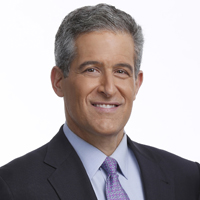
Richard Besser
Richard Besser is ABC News’ chief health and medical editor. In this role, he provides medical analysis and commentary for all ABC News broadcasts and platforms, including World News with Diane Sawyer, Good Morning America, and Nightline. More »
Participants
-
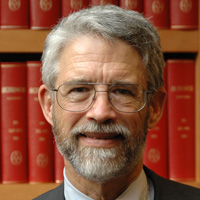
John Holdren
Physicist, Engineer John Holdren is the director of the White House Office of Science and Technology Policy and President Barack Obama’s senior science and technology advisor. More » -
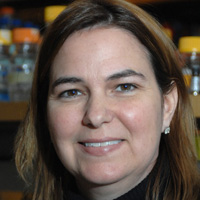
Angela Belcher
Materials Scientist, Biological Engineer Angela Belcher is the W. M. Keck Professor of Energy at MIT. She combines chemistry, molecular biology and electrical engineering to understand how living things make molecular-scale materials and incorporate their tricks into new organic-inorganic hybrid technologies. More » -
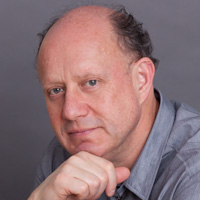
Thomas Jessell
Neuroscientist, Biochemist Thomas Jessell has made fundamental contributions to neuroscience by revealing the basic principles of how our nervous system communicates. More » -
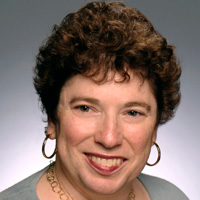
Claire Max
Astrophysicist Claire Max studies adaptive optics, a technology that can remove the blurring effects of the earth’s atmosphere and let telescopes on the ground “see” as clearly as if they were in space. She has worked to develop new adaptive optics techniques such as laser guide stars, artificial “stars” projected from the ground to help instruments adjust for that atmospheric distortion, and used them to study supermassive black holes in faraway colliding galaxies. More »