

John Kovac

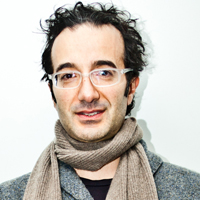
John Kovac is an associate professor in the Astronomy and Physics Departments at Harvard University. His cosmology research focuses on observations of the cosmic microwave background (CMB) to reveal signatures of the physics that drove the birth of the universe, the creation of its structure, and its present-day expansion.
Kovac’s research over the past two decades has involved the design, deployment, and operation of multiple generations of radio telescopes at the Amundsen-Scott Station at the South Pole. During his graduate studies at the University of Chicago, he led the Degree Angular Scale Interferometer (DASI) telescope’s polarization measurements which achieved the first detection of CMB polarization in 2002, for which he was awarded the Grainger Prize Fellowship. During his subsequent years at the California Institute of Technology as a Millikan Postdoctoral and Killroy Research Fellow, he worked on the first bolometric polarimeters (QUAD and BICEP) designed specifically to target the B-mode signature of an Inflationary origin of the universe. Their South Pole-based observations provide the most powerful published constraints of this signal. The generation of telescopes now operating at Pole (BICEP2 and SPUD) achieve sufficient sensitivity to test definitively the leading models of the physics of the Big Bang. The goals of the next generation of telescopes (POLAR-1/POLAR Array) include a complete high-redshift lensing survey of southern sky, measurements of neutrino mass and dark energy.
John Kovac teaches courses at Harvard which include an advanced astrophysics lab (Ay191) in which undergraduates detect their own evidence for the Big Bang. He has authored over 30 refereed publications on his research and has co-organized meetings on astrophysics from Antarctica including NSF workshops, SCAR working groups, and an upcoming IAU 2012 special Symposium. He is an Alfred P. Sloan Research Fellow.
 Share
Share