




Participants
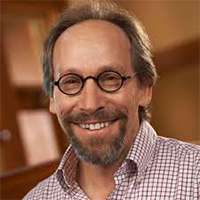
Lawrence Krauss is an internationally known theoretical physicist and best-selling author. His research focuses on the intersection of cosmology and elementary particle physics. Krauss’s work addresses questions about the origin of matter in the universe.
Read More
Andrea Lommen has been a pioneer in detecting gravitational waves with pulsars. Dr. Lommen’s research, and that of the team she leads, has taken theoretical concepts and transformed them into experimental practice.
Read More
Rai Weiss is known for his pioneering measurements of the spectrum of the cosmic microwave background radiation and his seminal leadership in the conception, design and operation of the laser interferometer gravitational wave detector; remarkable scientific achievements recognized by his roles as a co-founder and an intellectual leader of both the COBE Project and LIGO.
Read More
John M. Grunsfeld was named Associate Administrator for the Science Mission Directorate at NASA Headquarters in Washington, D.C. in 2012. He previously served as the Deputy Director of the Space Telescope Science Institute in Baltimore.
Read More
Andrew Hamilton is an astrophysicist known for his scientifically accurate general relativistic visualizations of black holes, which have appeared on a number of TV documentary programs, including Nova and National Geographic, in a show at the Denver Museum of Nature and Science and on the web, including on YouTube.
Read More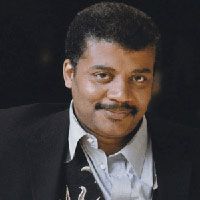
Neil deGrasse Tyson is the Frederick P. Rose Director of the Hayden Planetarium at the American Museum of Natural History in New York City. He is the author of several books and hosts the NOVA ScienceNow program on PBS. Tyson is best known as an ardent popularizer of astronomy and astrophysics.
Read More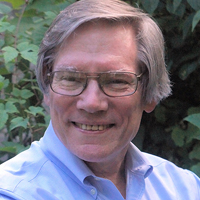
Alan Guth is a professor of physics at MIT, and world-renowned for his discovery of inflationary cosmology, the dominant cosmological paradigm for over two decades. His current research focuses on developing mathematical tools for quantitatively analyzing inflation’s suggestion that there are an infinite number of universes.
Read More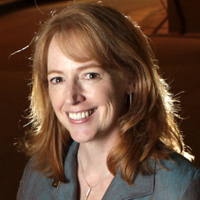
Evalyn Gates is the Assistant Director of the Kavli Institute for Cosmological Physics at the University of Chicago and a Senior Research Associate in the Department of Astronomy and Astrophysics. Her research focuses on theoretical cosmology and particle astrophysics.
Read More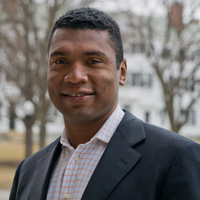
Theoretical physicist Stephon Alexander explores unresolved questions about the early universe. Also an accomplished jazz musician, Alexander has collaborated with Grammy Award-winning musician Will Calhoun.
Read More
Dirac Medalist
Paul J. Steinhardt is the Albert Einstein Professor in Science and Director of the Princeton Center for Theoretical Science at Princeton University, where he is also on the faculty of …
Read More
Theoretical astrophysicist Michael S. Turner is a recognized figure in pioneering the interdisciplinary field of particle astrophysics and cosmology, for which he shared the 2010 Dannie Heineman Prize. In collaboration with Edward Kolb, he initiated the Fermilab astrophysics program.
Read More
Glennys Farrar is a collegiate professor of physics at New York University. She has made seminal contributions to theoretical particle physics, including demonstrating that quarks are not just mathematical constructs but are actually physically present in matter and pioneering the search for supersymmetry.
Read More
Elena Aprile is a professor of physics at Columbia University and is internationally recognized for her experimental work with noble liquid detectors for research in gamma-ray astrophysics and particle astrophysics. She is the founder and spokesperson of the XENON Dark Matter experiment.
Read More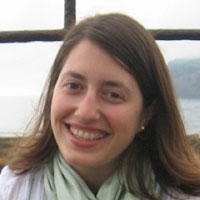
Jocelyn Monroe is an assistant professor of physics in MIT’s Laboratory for Nuclear Science who works on experimental searches for new particles. Her current research focus is on directly detecting dark matter particle interactions with the MiniCLEAN and DMTPC experiments.
Read More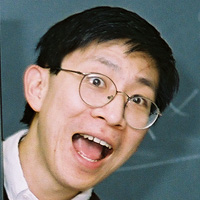
Charles Liu is a professor of astrophysics at the City University of New York’s College of Staten Island and an associate with the Hayden Planetarium and Department of Astrophysics at the American Museum of Natural History in New York. His research focuses on colliding galaxies, quasars, and the star formation history of the Universe.
Read More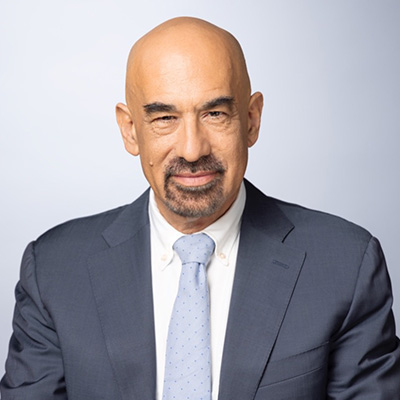
David Spergel studies the big questions in cosmology and astrophysics: How large is the universe, and what is its shape? Is it finite? What are the dark matter and dark …
Read More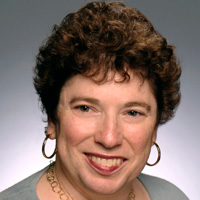
Claire Max studies adaptive optics, a technology that can remove the blurring effects of the earth’s atmosphere and let telescopes on the ground “see” as clearly as if they were in space.
Read More
Natalie Batalha is a UC Presidential Chair, Professor of Astronomy and Astrophysics, and Director of Astrobiology at the University of California, Santa Cruz. She will lead the Early Release Science program for transiting exoplanets — a scientific community effort to acquire some of the first observations of exoplanets with the James Webb Space Telescope.
Read More
John Carlstrom studies the origin and evolution of the universe from the very bottom of the Earth. Carlstrom is the Subramanyan Chandrasekhar Professor of Astronomy, Astrophysics, and Physics at the University of Chicago, and deputy director of the Kavli Institute for Cosmological Physics.
Read More
Britt Reichborn-Kjennerud is an experimental astrophysicist who uses measurements of the cosmic microwave background, the afterglow of the big bang, to understand the origin, composition, and evolution of the universe.
Read More
John Kovac is an associate professor in the Astronomy and Physics Departments at Harvard University. His cosmology research focuses on observations of the cosmic microwave background to reveal signatures of the physics that drove the birth of the universe.
Read More
Kelle Cruz is an Assistant Professor in the Physics and Astronomy Department at Hunter College and a Research Associate at the American Museum of Natural History (AMNH), Department of Astrophysics.
Read More
Peter Staley has been a long-term AIDS and gay rights activist, first as a member of ACT UP New York, then as the founding director of TAG, the Treatment Action Group. He served on the board of the American Foundation for AIDS Research (amfAR) for 13 years.
Read More
Emily Rice is an assistant professor at the College of Staten Island, City University of New York and a research associate in the astrophysics department of the American Museum of Natural History. She earned her Ph.D. at UCLA studying enigmatic objects called brown dwarfs, which form like stars but then cool and fade to resemble gas giant planets.
Read More
Meg Schwamb is an astronomer and planetary scientist. She is currently a National Science Foundation (NSF) astronomy and astrophysics postdoctoral fellow at Yale University’s Center for Astronomy and Astrophysics (YCAA).
Read More
Gianfranco Bertone is an Associate Professor at the University of Amsterdam, where he investigates topics at the interface between Particle Physics and Cosmology.
Read More
Marco Bersanelli is Professor of Astronomy and Astrophysics and Director of the Ph.D. School in Physics, Astrophysics and Applied Physics at the University of Milan, Italy.
Read More
Michelle Thaller is a nationally recognized spokesperson for astronomy and science and the Assistant Director of Science at NASA’s Goddard Spaceflight Center. She has a Bachelor’s in astrophysics from Harvard and a Ph.D. from Georgia State University.
Read More
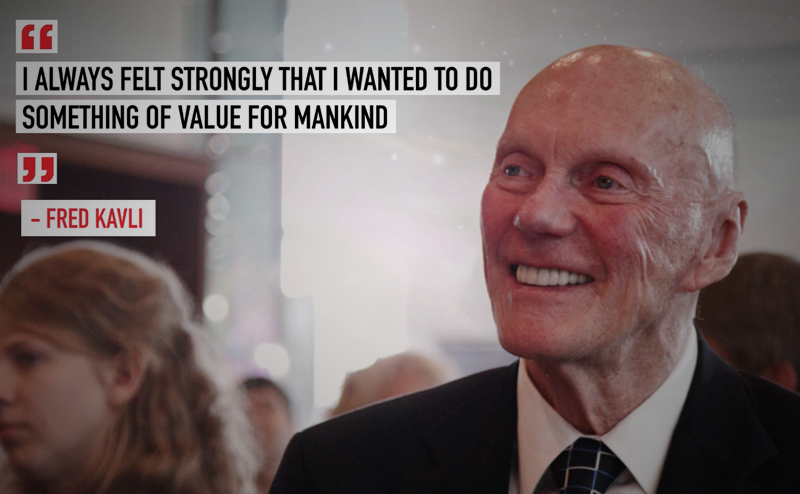
Fred Kavli, a Norwegian-born U.S. citizen, was a physicist, entrepreneur, business leader, innovator and philanthropist dedicated to supporting research and education that has a positive, long-term impact on the human condition.
Read More
Maria Spiropulu is the Shang-Yi Ch’en Professor of Physics at the California Institute of Technology. Born and educated in Macedonia/Greece, she moved to the U.S. to pursue her Ph.D. at …
Read More
Dr. Emily Rauscher received her B.A. from the University of California at Berkeley in Physics and Astrophysics. Rauscher then came to New York City for grad school, obtaining a Ph.D. in Astronomy from Columbia University.
Read More
Statia Luszcz Cook is a postdoctoral fellow in the Department of Astrophysics at the American Museum of Natural History. Her research focuses on observing and modeling planetary atmospheres. She is an enthusiastic observer, having spent more than 50 days and nights at CARMA, a millimeter array in Eastern California; and several nights at the Palomar and W.M. Keck Observatories in California and Hawaii, respectively.
Read More
Steve B. Howell is currently the Head of Space Science and Astrobiology for the NASA Ames Research Center. He previously was the project scientist for
NASA’s premier exoplanet finding missions: Kepler and K2. Howell has written over 800 scientific publications, numerous popular and technical articles, and has authored and edited eight books on astronomy and astronomical instrumentation.
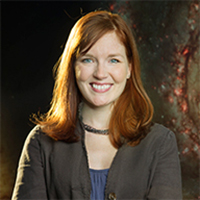
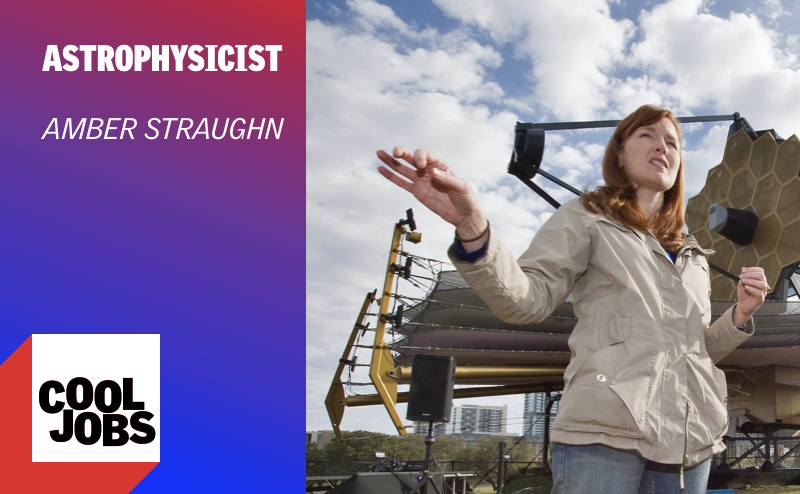
Amber Straughn is an astrophysicist at NASA and a member of the James Webb Space Telescope Project Science Team. Straughn grew up in the small farming town of Bee Branch, Arkansas where her fascination with astronomy began under beautifully dark, rural skies.
Read More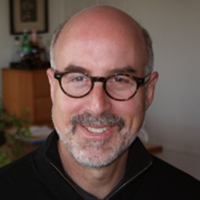
Josh Frieman is a senior staff scientist at the Fermi National Accelerator Laboratory and Professor of Astronomy & Astrophysics. He’s also a member of the Kavli Institute for Cosmological Physics at the University of Chicago.
Read More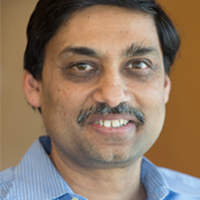
Samir Mathur is a physicist who has spent over two decades working on the black hole information paradox. He has proposed that this paradox is resolved because the structure of black holes is radically altered in string theory: Instead of having all their mass at their center, black holes are “fuzzballs” with no regular horizon or singularity.
Read More
Alex Young is a solar astrophysicist and the associate director for Science in the Heliophysics Science Division at NASA’s Goddard Space Flight Center. Young received a Masters and Ph.D. in high-energy astrophysics studying cosmic gamma-ray bursts and solar gamma-ray flares.
Read More
France A. Córdova is an astrophysicist and the 14th director of the National Science Foundation (NSF), the only government agency charged with advancing all fields of scientific discovery, technological innovation, and science, technology, engineering and mathematics (STEM) education.
Read More
Pedro G. Ferreira is Professor of Astrophysics at the University of Oxford. Originally from Portugal, he has studied and worked in London, Berkeley and at CERN in Geneva. His area of expertise is cosmology, focusing on the physics of the early universe and with a special interest in Einstein’s general theory of relativity.
Read More
Laura Overdeck is the founder of Bedtime Math, a nonprofit that aims to help kids love math like playtime or dessert. Over a quarter million families enjoy Overdeck’s wacky nightly math problems. Bedtime Math is also the creator of Crazy 8s Club, a lively hands-on after-school math club for grades K-5 which has served nearly 90,000 kids in just 2 years.
Read More
Dr. Jackie Faherty received a Bachelors in Science as a Physics major from the University of Notre Dame in 2001. She received her Ph.D. in Physics from Stony Brook University in 2010 with a thesis entitled the Brown Dwarf Kinematics Project, for which she received the University’s highest honors.
Read More
Matias Zaldarriaga is a professor at the Institute for Advanced Study in Princeton. He has a PhD from MIT and is the recipient of a MacArthur Fellowship, the Gribov Medal from the European Physical Society, and the Helen B. Warner Prize from the American Astronomical Society.
Read More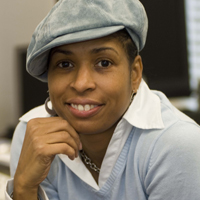
Dr. Aprille J. Ericsson is the first female to receive a Ph.D. in Mechanical Engineering from Howard University, and the first African-American civil servant female to receive a Ph.D. in Engineering at NASA GSFC. She received her B.S. in Aeronautical/Astronautical Engineering from MIT.
Read More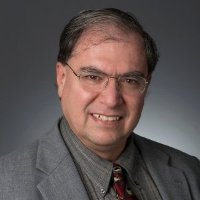
Dr. Kirk Borne is the Principal Data Scientist in the Strategic Innovation Group at Booz-Allen Hamilton since 2015. He was Professor of Astrophysics and Computational Science in the George Mason University (GMU) School of Physics, Astronomy, and Computational Sciences during 2003-2015
Read More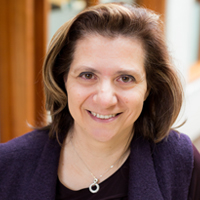
Vicky Kalogera directs the Center for Interdisciplinary Exploration and Research in Astrophysics (CIERA), and is the Daniel I. Linzer Distinguished University Professor in the Department of Physics and Astronomy at Northwestern. Kalogera is lead astrophysicist in the LIGO Scientific Collaboration (LSC)
Read More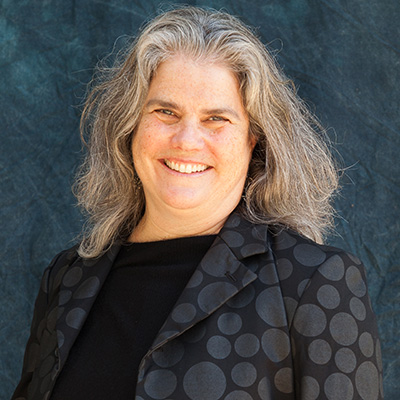
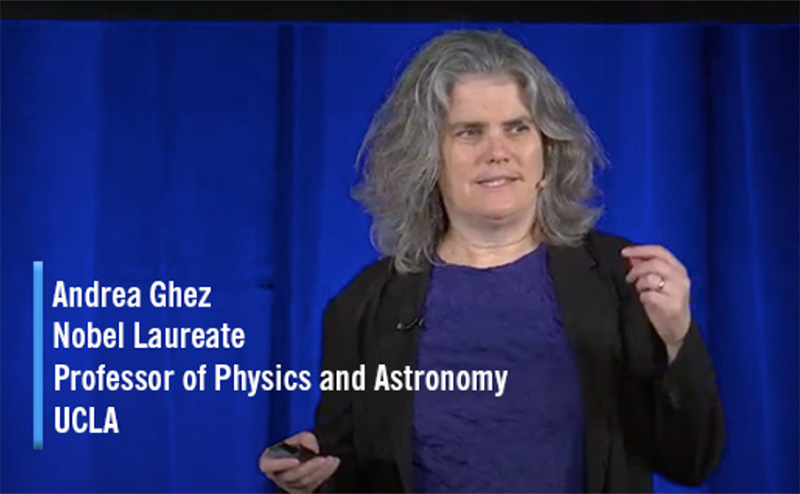
Nobel Laureate
Andrea M. Ghez, professor of Physics and Astronomy and Lauren B. Leichtman & Arthur E. Levine chair in Astrophysics, is one of the world’s leading experts in observational astrophysics and …
Read More
Breakthrough Prize
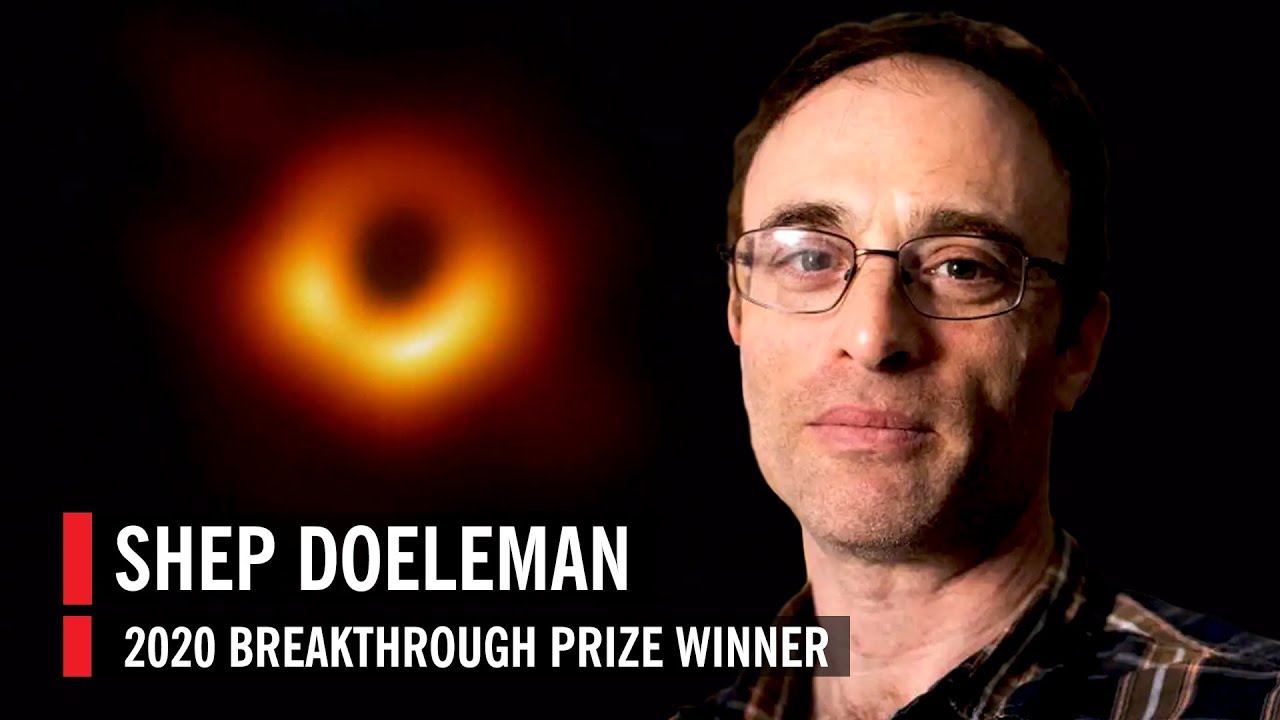
Shep Doeleman is an astrophysicist at the Harvard-Smithsonian Center for Astrophysics, and the Founding Director of the Event Horizon Telescope Collaboration. He led the international team that three years ago …
Read More
Jocelyn Read is an assistant professor in the Gravitational Wave Physics and Astronomy Center of California State University, Fullerton. She has spent more than a decade studying neutron star astrophysics and gravitational waves.
Read More
David Kipping is a Professor of Astronomy at Columbia University where he leads the Cool Worlds Lab – a research team primarily focussed on discovering new planets and moons. Kipping’s …
Read More
Irwin Shapiro is the Timken University Professor at Harvard University. He is best known for his tests of general relativity, especially the so-called fourth test of what is known as the Shapiro delay, the predicted slowing down of light signals passing massive objects.
Read More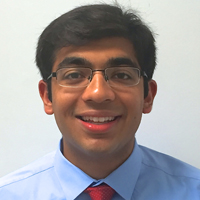
Neeraj Sakhrani is a rising sophomore at Columbia University planning to major in mathematics and pre-medicine. Accompanying his academic pursuits, Sakhrani is an associate editor for the Journal of Global Health.
Read More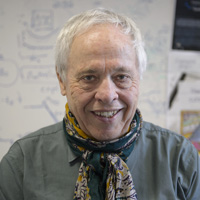
Joseph Silk is Homewood Professor of Physics and Astronomy at Johns Hopkins University in Baltimore, a researcher at Institut d’Astrophysique de Paris, and a Senior Fellow at the Beecroft Institute for Particle Astrophysics and Cosmology at the University of Oxford.
Read More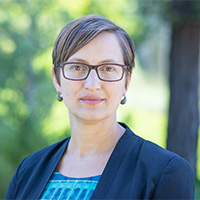
Risa Wechsler is the Director of the Kavli Institute for Particle Astrophysics and Cosmology and an associate professor of Physics at Stanford and the SLAC National Accelerator Laboratory. Her work combines numerical simulations and modeling with data from the largest existing and future galaxy surveys to model and map out the evolution and contents of the Universe from its earliest moments to the present day.
Read More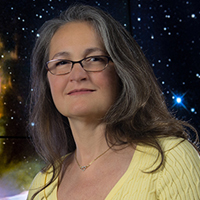
Padi Boyd is the project scientist for the Transiting Exoplanet Survey Satellite (TESS) Mission (a NASA Explorer Mission launched in 2018), and chief of the Exoplanets and Stellar Astrophysics Laboratory in the Astrophysics Science Division, at NASA’s Goddard Space Flight Center.
Read More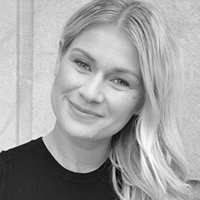
Dr. Sarah Pearson is a Danish astrophysicist who received her PhD from Columbia University in New York City, where she specialized in colliding galaxies and dark matter.
Read More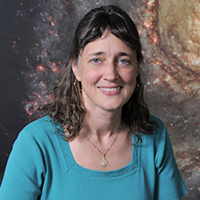
Dr. Jennifer Wiseman is a senior astrophysicist at NASA’s Goddard Space Flight Center in Greenbelt, Maryland, where she serves as the senior project scientist for the Hubble Space Telescope.
Read More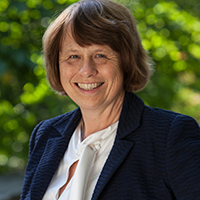
Ewine van Dishoeck is Professor of molecular astrophysics at the Leiden Observatory in the Netherlands. She is co-editor of the Annual Review of Astronomy and Astrophysics, and was president of the International Astronomical Union between 2018 and 2021.
Read More
Conny Aerts is Professor of Astronomy and Vice-Dean of Communication & Outreach in the Faculty of Science at KU Leuven. She is also a part-time professor of Asteroseismology at the …
Read More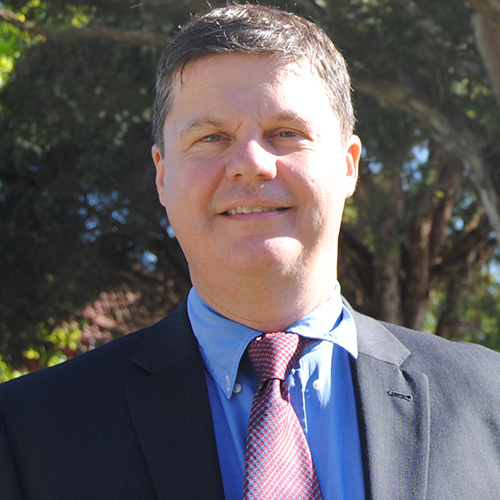
Karl Glazebrook is a Distinguished Professor of Astronomy at the Centre for Astrophysics and Supercomputing at Swinburne University of Technology in Melbourne. Karl is an observational astronomer whose research interests …
Read More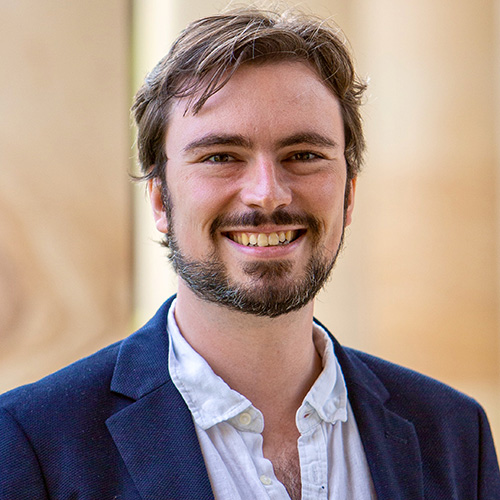
Benjamin Pope is a Lecturer in Astrophysics & ARC DECRA Fellow at the University of Queensland. He is interested in the direct imaging of exoplanets and is co-investigator on three …
Read More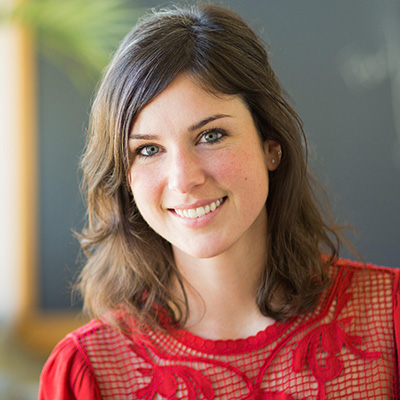
Newton Lacy Pierce Prize
Erin Kara is MIT’s Class of 1958 Career Development Assistant Professor of Physics. Her research focuses on how black holes grow and affect their environments. She also works to develop …
Read More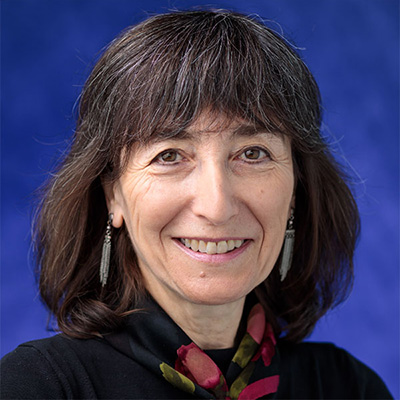
Wendy Freedman is the John and Marion Sullivan University Professor in Astronomy and Astrophysics at the University of Chicago. Her research is in observational cosmology (measures of the expansion rate …
Read MoreBrian Schmidt shares the 2011 Nobel Prize in Physics with Adam Riess and Saul Perlmutter for their discovery of the accelerating expansion of the universe through observations of distant supernovae. …
Read More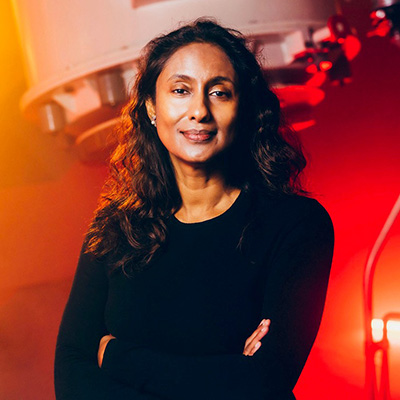
Hiranya Peiris is the 1909 Professor of Astrophysics at the University of Cambridge, the first woman to hold this prestigious chair in its 115-year history. She is a leading cosmologist …
Read More