

Participants
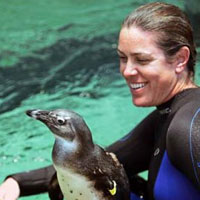
Pamela Schaller is the primary biologist for a charismatic colony of African penguins and designed and implemented the first-ever penguin wetsuit, which helped a balding bird re-grow his feathers and stay warm.
Read More
Mark Moffett began doing research in biology in college and went on to complete a PhD at Harvard. Moffett is known for documenting new animal species and behaviors during his exploration of remote places in more than a hundred countries.
Read More
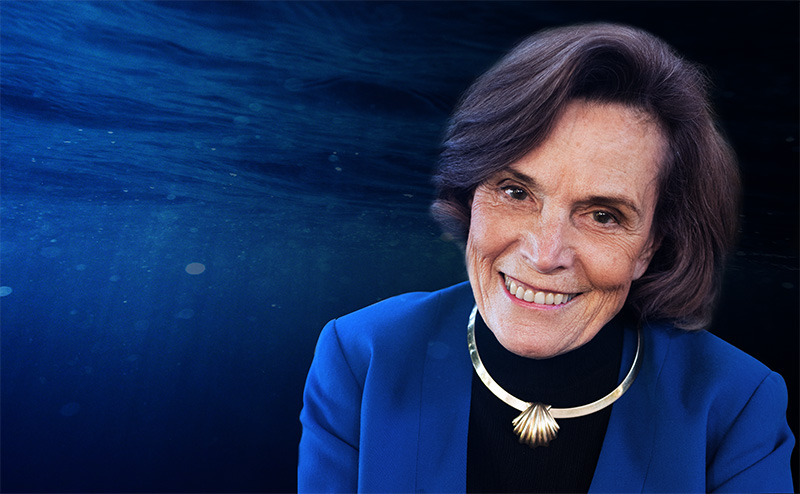
National Geographic Society Explorer-in-Residence Dr. Sylvia A. Earle is an oceanographer, explorer, author, and lecturer who has been called a “Living Legend” by the Library of Congress and “Hero for the Planet” by TIME magazine.
Read More
David E. Guggenheim, also known as the “Ocean Doctor,” is a marine scientist, conservation policy specialist, submarine pilot and ocean explorer.
Read More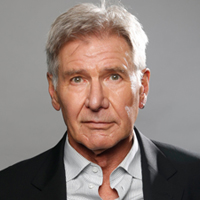
Over the course of his career, Harrison Ford has become one of the most popularly acclaimed actors of our time. His body of work includes 41 feature films, eleven of which have exceeded $100 million each at the box office.
Read More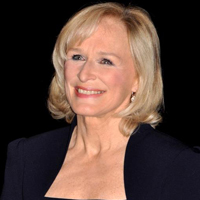
Emmy, Golden Globe and Tony Award-winning actress Glenn Close is best known for her riveting performances of complex women. The star of Damages for FX, Close’s portrayal of the high-stakes litigator Patty Hewes won her both an Emmy Award as “Best Actress in a Drama Series” and a Golden Globe for “Best Actress in a TV Drama.”
Read More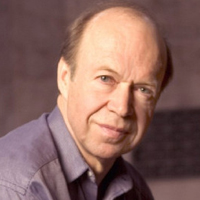
Dr. James Hansen is director of the NASA Goddard Institute for Space Studies and Adjunct Professor at Columbia University’s Earth Institute. An active researcher in planetary atmospheres and climate science for nearly 40 years, Hansen is best known for his Congressional testimonies on climate change that widely elevated the awareness of global warming.
Read More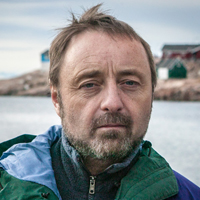
One of the great nature photographers of our time, Frans Lanting’s images of nature and wildlife have been published in National Geographic, Audubon and Time as well as exhibitions around the world. His most recent work, LIFE: A Journey Through Time, is a multimedia event that combines the music of Philip Glass with incredible photographs that document the history of the big bang to life on present day Earth.
Read More
Thomas Lovejoy holds the Biodiversity Chair at the Heinz Center for Science, Economics, and the Environment based in Washington, DC, and is a recipient of the prestigious Tyler Prize for Environmental Achievement and the BBVA Foundation Frontiers of Knowledge Award.
Read More
By examining historical maps and archeological records in combination with geographic computer modeling and scientific sleuthing, Eric Sanderson has reimagined the old growth forests, wetlands and meadows that Henry Hudson saw when he first arrived on the shores of Manhattan in 1609.
Read More
Alan McDonald is Head, Programme Coordination Group, Department of Nuclear Energy, International Atomic Energy Agency (IAEA). The Department of Nuclear Energy supports interested Member States in improving the performance of nuclear power plants and the nuclear fuel cycle.
Read More
Betsy Taylor is the president of the board of directors of the non-profit organization 1Sky, founded in 2007 to mobilize a grass-roots campaign demanding federal action to reverse climate change. She has spent more than 20 years leading efforts to organize, fund and advise groups devoted to promoting energy conservation and community building.
Read More
A leading authority on landscape management and plant conservation, Edward Toth is Director of the Greenbelt Native Plant Center, which collects and raises specimens of New York’s indigenous flora and maintains a seed bank for the preservation of local species.
Read More
Beth Shapiro is an evolutionary biologist who specializes in the genetics of ice age animals and plants. A pioneer in the young field called “ancient DNA,” Beth travels extensively in the Arctic regions of Alaska, Siberia and Canada collecting bones and other remains of long-dead creatures.
Read More
Edward Fredkin’s computer career started in 1956 when the Air Force assigned him to work at MIT’s Lincoln Laboratories. In 1968 he started at MIT as a full professor. From 1971 to 1974 he was the Director of CSAIL and he spent a year at Caltech as a Fairchild Distinguished Scholar, working with Richard Feynman.
Read More
Hannah Waters writes about science for Nature Medicine and her blog Culturing Science. Before that, she studied the epigenetics of aging in Philadelphia, marine food webs off the coast of Oregon, and coastal conservation in Maine.
Read More
Ed Green has helped pioneer the use of advanced genetic sequencing technology to read ancient DNA extracted from fossilized bones. In 2010, he and large collaboration of other scientists announced that they had used 40,000-year-old bone fragments excavated in a cave in Croatia to map out the genetic code of Neanderthals, humans’ long-dead ancestral cousins.
Read More
Francesca Casadio directs the Art Institute of Chicago’s state-of-the-art conservation science laboratory. A chemist by training, she is in charge of planning and carrying out research to help preserve and study the museum’s paintings, drawings, textiles and other works of art.
Read More
Nancy Knowlton researches the ecology, evolution, and conservation of coral reef organisms as the Sant Chair in Marine Science at the Smithsonian’s National Museum of Natural History.
Read More
Jarod Miller is a young naturalist, zoologist, pet expert, and regular guest lecturer for zoos, universities, and promotional events, having lectured on captive management and wildlife conservation at venues including the White House.
Read More
James Casey is a Brooklyn-based conservation biologist. Currently, Casey is an Adjunct Laboratory Instructor in the Department of Biology at Barnard College of Columbia University and the Screenings Director for Wicked Delicate Films LLC—a documentary film and advocacy company.
Read More
Peter Staley has been a long-term AIDS and gay rights activist, first as a member of ACT UP New York, then as the founding director of TAG, the Treatment Action Group. He served on the board of the American Foundation for AIDS Research (amfAR) for 13 years.
Read More
Richard Matthew is a professor in the schools of social ecology and social science at the University of California at Irvine, and founding director of the Center for Unconventional Security Affairs.
Read More
Scott McVay is founding executive director of the Robert Sterling Clark and Geraldine R. Dodge Foundations, and the 16th president of the Chautauqua Institution. A graduate of Princeton, he discovered and documented the six-octave song of the Humpback whale and, with Roger Payne, published a cover article in Science.
Read More
Hannah Morris is an archaeologist studying how humans and plants interacted in the past. She is founder of the paleoethnobotanical consulting company, Chena Consulting Services, and is working on a long-term project with the American Museum of Natural History on St. Catherine’s Island, Georgia.
Read More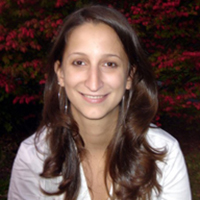
Janelle Robbins is the executive director at Bedford Audubon Society. She began her career championing clean water and strong communities as the staff scientist at Waterkeeper Alliance.
Read More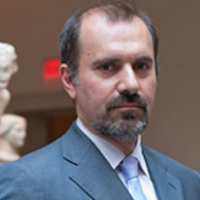
Marco Leona is the David H. Koch Scientist in Charge of the Department of Scientific Research at the Metropolitan Museum of Art. He studied in Italy where he obtained a Laurea in Chimica (M.Sc., Chemistry), and a Ph.D. in Crystallography and Mineralogy from the Universita’ degli Studi di Pavia.
Read More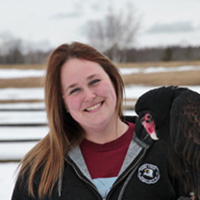
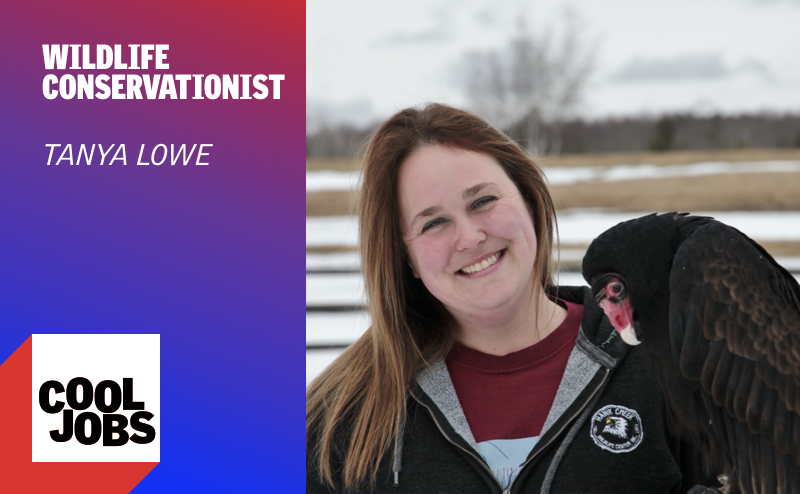
Tanya Lowe has worked with Hawk Creek Wildlife Center, Inc., since 2004. As the director of wildlife education, she has presented Hawk Creek’s free-flying bird shows at the Bronx Zoo, Central Park, and the New York State Fair.
Read More
Tina Walsh is the environmental educator with Hudson River Park Trust. She received her Bachelor of Science in biology and chemistry from St. John’s University. Since then she has been active in the field of urban environmental education.
Read More
Merry Camhi is director of the Wildlife Conservation Society’s New York Seascape program. This initiative, based at the NY Aquarium, seeks to raise public awareness and action to conserve threatened marine wildlife and habitats in the New York Bight, through field research, improved policy, and education.
Read More
Keith Ellenbogen is an award-winning underwater conservation photographer that works at the intersection of art, science, and technology. He is 2015-16 Visiting Artist in Residence at Massachusetts Institute of Technology.
Read More
Dr. Eleanor Sterling is Chief Conservation Scientist at the American Museum of Natural History’s Center for Biodiversity and Conservation. She has over thirty years of international field research and community outreach experience in terrestrial and marine systems.
Read More
Russell Burke’s longstanding interest in reptiles was the major influence in his decision to pursue a career in biology. As a child, he collected local snakes in northern Ohio and kept them in captivity. He earned a B.S. in zoology from Ohio State University, where he fell in love with sea turtles.
Read More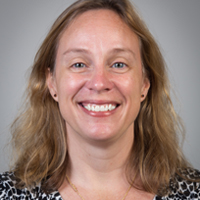
Dr. Eugenia (Genia) Naro-Maciel is a Clinical Assistant Professor of Liberal Studies at New York University and a graduate of Yale University. She received her M.A. and Ph.D. degrees in Ecology, Evolution, and Environmental Biology from Columbia University. She has co-authored numerous educational materials on protected areas and biodiversity conservation.
Read More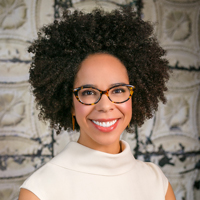
Dr. Ayana Elizabeth Johnson is a marine biologist, policy expert, conservation strategist, and Brooklyn native. She is founder and principal of Ocean Collectiv.
Read More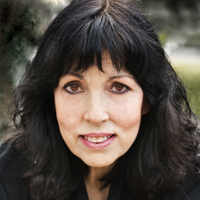
Dr. Diana Reiss is a cognitive psychologist, marine mammal scientist, and professor in the Department of Psychology at Hunter College and the Animal Behavior and Comparative Psychology Doctoral program at The Graduate Center, CUNY.
Read More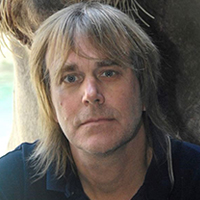
Hans Walters is an animal department supervisor at the Wildlife Conservation Society’s New York Aquarium in Brooklyn NY, and a field scientist with WCS’ New York Seascape Program. As animal supervisor, he oversees the daily care of sharks and rays, sea turtles and numerous marine fishes and invertebrates.
Read More
Lily Xu is a PhD student studying computer science at the University of Southern California. She is part of the USC Center for AI in Society (CAIS), which aims to leverage artificial intelligence to address issues in conservation, public health, and public security.
Read More
Dr Helen Scales teaches at Cambridge University, where she completed her PhD in Marine Biology. She is an avid scuba diver, and author of several bestselling books, most recently The …
Read More