

Participants
Richard Besser is ABC News’ chief health and medical editor. In this role, he provides medical analysis and commentary for all ABC News broadcasts and platforms, including World News with David Muir, Good Morning America, and Nightline.
Read More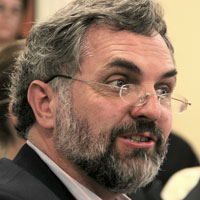
Oliver Goodenough’s research and writing at the intersection of law, economics, finance, media, technology, neuroscience and behavioral biology make him an authority in several emerging areas of law and its application in society.
Read More
Dr. Robert W. Corell, Vice President of Programs & Policy for The H. John Heinz III Center for Science, Economics, and the Environment is also a Council Member for the Global Energy Assessment and a Senior Policy Fellow at the Policy Program of the American Meteorological Society.
Read More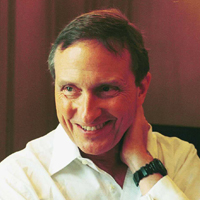
Thomas Lovejoy holds the Biodiversity Chair at the Heinz Center for Science, Economics, and the Environment based in Washington, DC, and is a recipient of the prestigious Tyler Prize for Environmental Achievement and the BBVA Foundation Frontiers of Knowledge Award.
Read More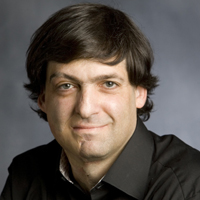
Dan Ariely studies people’s irrational behavior in the marketplace. He is the founder of the Center for Advanced Hindsight, author of the book Predictably Irrational, and the Alfred P. Sloan Professor of Behavioral Economics at the Massachusetts Institute of Technology in Cambridge.
Read More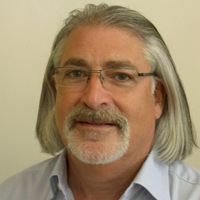
Sociologist Nikolas Rose is interested in how genomics affects personal identity and the social and legal ramifications of studying the human genome. He is the James Martin White Professor of Sociology and the Director of the BIOS Centre for the Study of Bioscience, Biomedicine, Biotechnology and Society at the London School of Economics.
Read More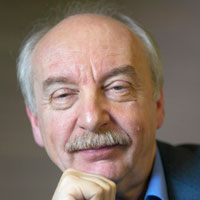
Gerd Gigerenzer is director of the Max Planck Institute for Human Development in Berlin. He has trained U.S. Federal Judges, physicians, and top managers in decision-making and understanding risks and uncertainties.
Read More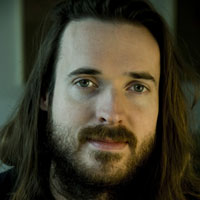
Since a young age, Mike Cahill would experiment with filmmaking on Fisher Price and VHS camcorders. He began working for National Geographic, first as an intern, but within a few months, he became the youngest field producer, editor, and cinematographer on the NG staff.
Read More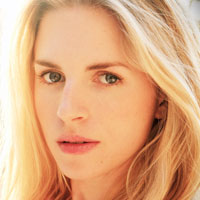
Brit Marling is a rising actress, writer, and producer, whose emerging talent made a mark at the 2011 Sundance Film Festival as the first female multi-hyphenate to have two films premiere side by side.
Read More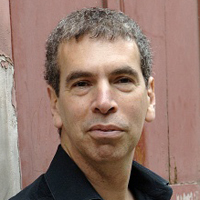
David Bodanis is known to a wide audience as an author of popular science books such as the highly acclaimed E=mc²: A Biography of the World’s Most Famous Equation and Electric Universe, which won the 2006 Royal Society Aventis Prize for Science Books.
Read More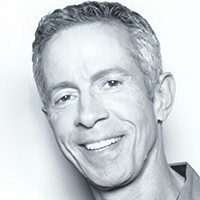
Peter Staley has been a long-term AIDS and gay rights activist, first as a member of ACT UP New York, then as the founding director of TAG, the Treatment Action Group. He served on the board of the American Foundation for AIDS Research (amfAR) for 13 years.
Read More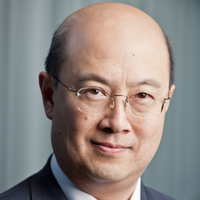
Andrew W. Lo is a professor at the MIT Sloan School of Management, the director of MIT’s Laboratory for Financial Engineering, a principal investigator at MIT’s Computer Science and Artificial Intelligence Lab, and an affiliated faculty member of the MIT Department of Electrical Engineering and Computer Science.
Read More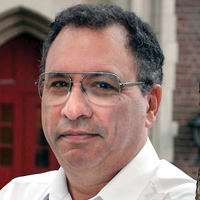
Simon Levin is a professor of biology and director of the Center for BioComplexity at Princeton University. His research centers on understanding how macroscopic patterns are maintained at the level of ecosystems and finding parallels between ecological and economic systems.
Read More
Amanda Gefter is a physics and cosmology writer and a consultant for New Scientist magazine, where she formerly served as books and arts editor and founded CultureLab.
Read More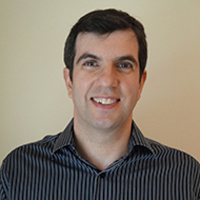
A.J. Jacobs is the author of four New York Times bestsellers about self-experimentation, including Drop Dead Healthy, The Year of Living Biblically, My Life as an Experiment and The Know-It-All. He is the editor at large at Esquire magazine and a correspondent for NPR.
Read More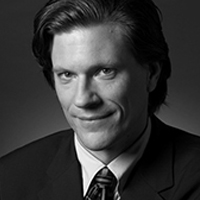
Rick Karr’s been reporting for NPR’s news magazines for more than 20 years and for various PBS shows for more than a decade. Much of his work examines the intersection of technology, culture, and law.
Read More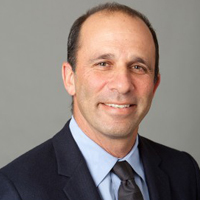
Paul Glimcher began his professional career as a neurobiologist interested in how the brain makes decisions. Over the years he has explored many other scientific disciplines that are also concerned with how we make decisions.
Read More
Justin M. Rao is a researcher at Microsoft Research in New York City. He did his undergraduate work at the University of North Carolina at Chapel Hill and his Ph.D. in economics at the University of California in San Diego.
Read More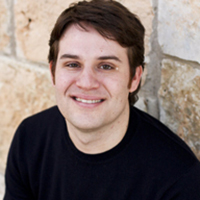
Brian Elbel is an associate professor of population health and health policy at the NYU School of Medicine, where he heads the section on health choice, policy and evaluation within the department of population health, and at the NYU Wagner Graduate School of Public Service.
Read More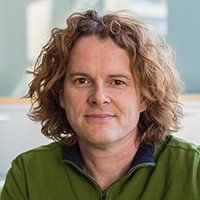
Jan L. Plass, Ph.D., is the Paulette Goddard Chair of Digital Media and Learning Sciences, Professor in the Steinhardt School of Culture, Education, and Human Development at New York University, and he co-directs the Games for Learning Institute.
Read More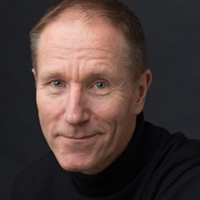
Steve Lohr has covered technology, business, and economics for The New York Times for more than twenty years. In 2013, he was part of the team awarded the Pulitzer Prize for Explanatory Reporting. He is the author of Data-ism, which examines the field of data science and decision-making.
Read More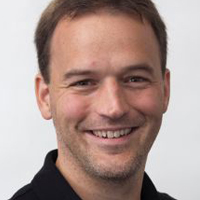
Brett Frischmann is The Charles Widger Endowed University Professor in Law, Business, and Economics at Villanova University. He is also an affiliated scholar of the Center for Internet and Society at Stanford Law School, and a trustee for the Nexa Center for Internet & Society, Politecnico di Torino.
Read More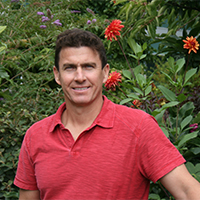
Dr. Joe Henrich is currently a Harvard professor and Chair of the Department of Human Evolutionary Biology. Before moving to Harvard, he was a professor of both economics and psychology at the University of British Columbia, where he held the Canada Research Chair in Culture, Cognition and Coevolution.
Read More
Jens Ludwig is the Edwin A. and Betty L. Bergman Distinguished Service Professor of Public Policy at the University of Chicago, director of the University of Chicago Crime Lab, and an elected member of the National Academy of Medicine.
Read More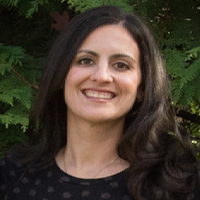
Christine Constantinople is a neuroscientist interested in how we make decisions, and the neural mechanisms of suboptimal decision-making and behavioral variability.
Read More