


Participants
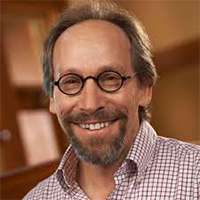
Lawrence Krauss is an internationally known theoretical physicist and best-selling author. His research focuses on the intersection of cosmology and elementary particle physics. Krauss’s work addresses questions about the origin of matter in the universe.
Read More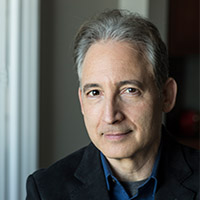
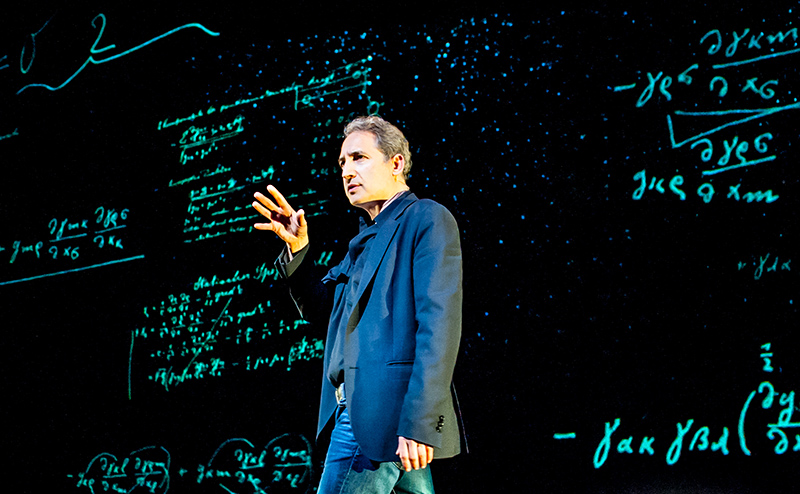
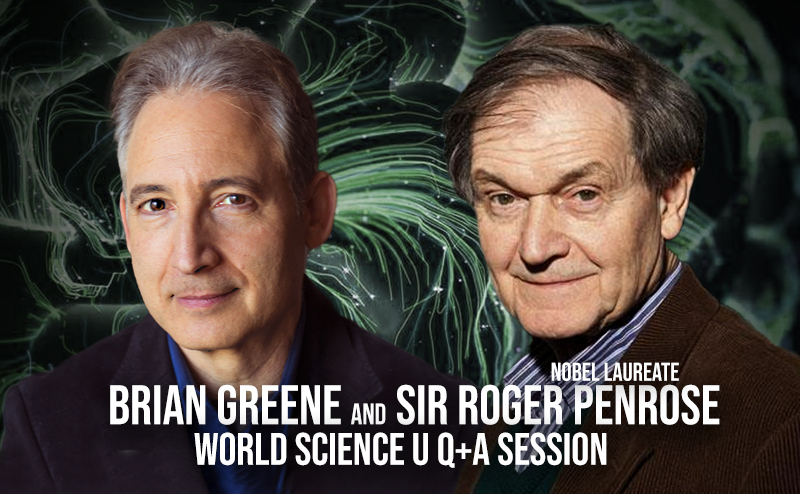
Brian Greene is a professor of physics and mathematics at Columbia University, and is recognized for a number of groundbreaking discoveries in his field of superstring theory. His books, The Elegant Universe, The Fabric of the Cosmos, and The Hidden Reality, have collectively spent 65 weeks on The New York Times bestseller list.
Read More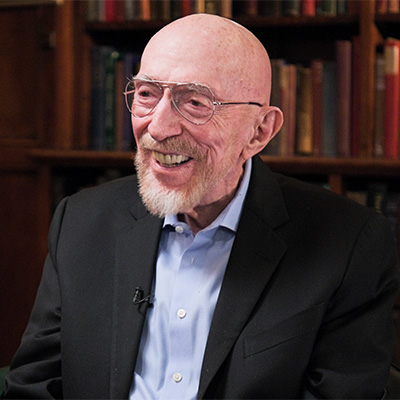
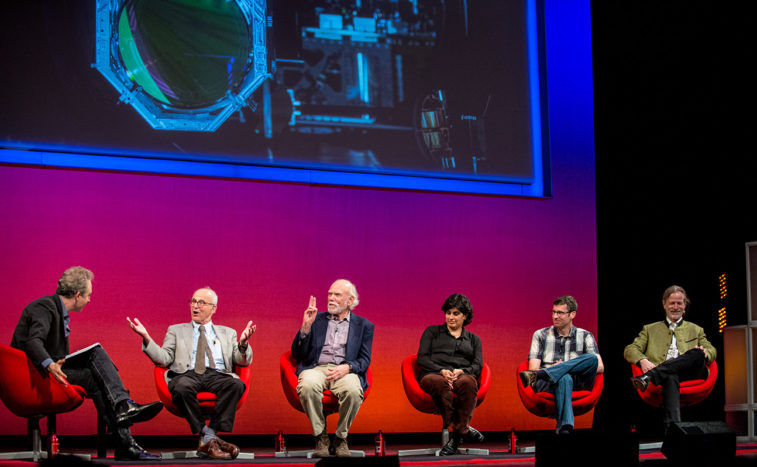
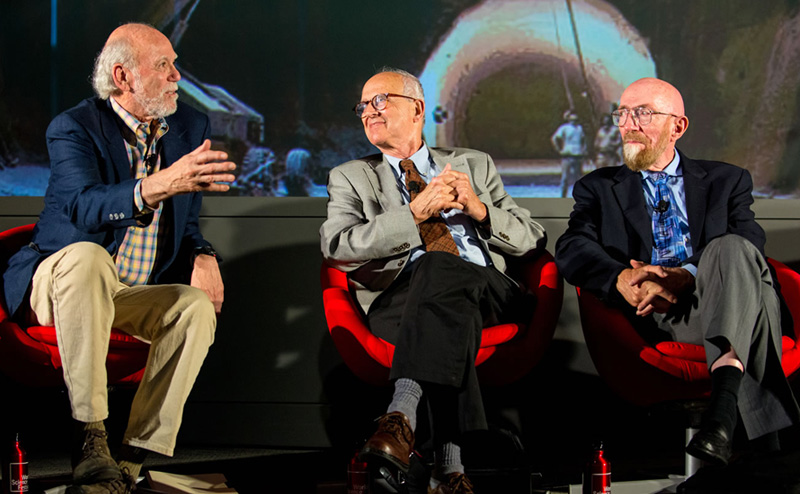
Kip Thorne is the Feynman Professor of Theoretical Physics, Emeritus, at Caltech. He was the co-founder (with Rai Weiss and Ron Drever) of the LIGO (Laser Interferometer Gravitational Wave Observatory) Project and he chaired the steering committee that led LIGO in its earliest years.
Read More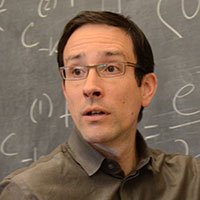
Raphael Bousso is recognized for discovering the general relation between the curved geometry of space-time and its information content, known as the “covariant entropy bound.” This allowed for a precise and general formulation of the holographic principle, which is believed to underlie the unification of quantum theory and Einstein’s theory of gravity.
Read More
Linda Dalrymple Henderson is the acknowledged expert on the history of modern artists’ engagement with a possible fourth dimension of space, a widespread cultural preoccupation in the early 20th century before the popularization of the temporal fourth dimension of Einstein’s Relativity Theory.
Read More
Rai Weiss is known for his pioneering measurements of the spectrum of the cosmic microwave background radiation and his seminal leadership in the conception, design and operation of the laser interferometer gravitational wave detector; remarkable scientific achievements recognized by his roles as a co-founder and an intellectual leader of both the COBE Project and LIGO.
Read More
Born in Baltimore, Maryland, Philip Glass is a graduate of the University of Chicago and the Juilliard School. In the early 1960s, Glass spent two years of intensive study in Paris with Nadia Boulanger and while there, earned money by transcribing Ravi Shankar’s Indian music into Western notation.
Read More
Andrew Hamilton is an astrophysicist known for his scientifically accurate general relativistic visualizations of black holes, which have appeared on a number of TV documentary programs, including Nova and National Geographic, in a show at the Denver Museum of Nature and Science and on the web, including on YouTube.
Read More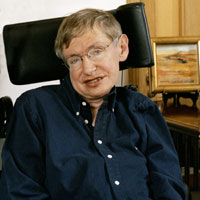
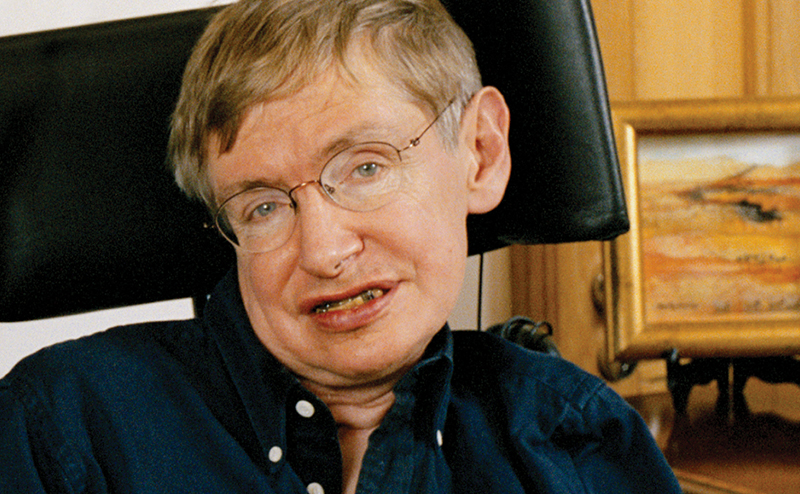
Stephen W. Hawking is one of the world’s foremost theoretical physicists. His dramatic breakthroughs into the origin of the universe and the properties of black holes are among the most revolutionary insights into the nature of the cosmos since the work of Albert Einstein.
Read More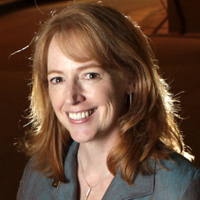
Evalyn Gates is the Assistant Director of the Kavli Institute for Cosmological Physics at the University of Chicago and a Senior Research Associate in the Department of Astronomy and Astrophysics. Her research focuses on theoretical cosmology and particle astrophysics.
Read More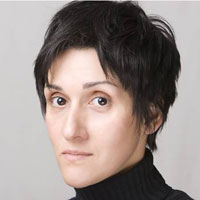
A founding member and faculty at the Perimeter Institute for Theoretical Physics in Canada, a research institute devoted to foundational issues in theoretical physics, Fotini Markopoulou-Kalamara is a leading researcher in the problem of quantum gravity.
Read More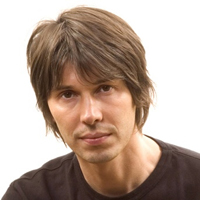
Brian Cox is a physicist and BBC television and radio presenter who appears in programs such as In Einstein’s Shadow, Bitesize and Horizon.
Read More
Alan Friedman is a consultant in the areas of museum development and science communication. He has consulted for over sixty institutions around the world. From 1984 to 2006, Friedman was the Director and CEO of the New York Hall of Science. He is co-author of the book, Einstein as Myth and Muse.
Read More
Alan Lightman is a writer, astrophysicist, and educator. He is professor of the practice of the humanities at the Massachusetts Institute of Technology (MIT). As a theoretical physicist, he has contributed to the understanding of the unusual radiation processes, black holes, and stellar dynamics.
Read More
Dirac Medalist
Paul J. Steinhardt is the Albert Einstein Professor in Science and Director of the Princeton Center for Theoretical Science at Princeton University, where he is also on the faculty of …
Read More
A 1978 Harvard graduate, Todd Sacktor completed his M.D. at the Albert Einstein College of Medicine and his neurology residency at Columbia University, where he began studying the role of the enzyme protein kinase C (PKC) in the short-term memory of Aplysia (marine snails).
Read More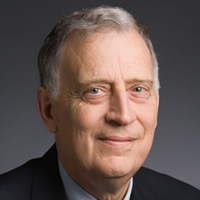
Ralph J. Cicerone work on atmospheric chemistry, climate change, and energy has involved him in shaping science and environmental policy at the highest levels.
Read More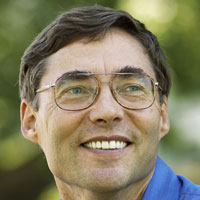
Carl Wieman was a Distinguished Professor of Physics and Presidential Teaching Scholar at the University of Colorado at Boulder from 1984 to 2006 and still retains a part-time appointment at that institution as Director of the Colorado Science Education Initiative.
Read More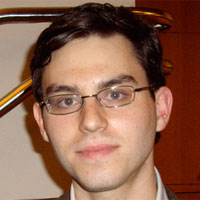
Joshua Foer was born in Washington, DC and lives in New Haven, CT with his wife Dinah. His writing has appeared in National Geographic, Esquire, Slate, Outside, The New York Times, and other publications. He is the co-founder of the Atlas Obscura, an online guide to the world’s wonders and curiosities. He is also the co-founder of the design competition, Sukkah City. Moonwalking with Einstein is his first book.
Read More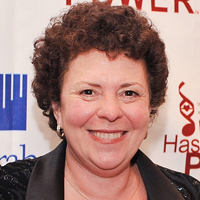
Concetta Tomaino is the executive director and co-founder of the Institute for Music and Neurologic Function. Dr. Tomaino is also the senior vice president for Music Therapy at CenterLight Health System where she has worked since 1980.
Read More
Peter Staley has been a long-term AIDS and gay rights activist, first as a member of ACT UP New York, then as the founding director of TAG, the Treatment Action Group. He served on the board of the American Foundation for AIDS Research (amfAR) for 13 years.
Read More
Amanda Gefter is a physics and cosmology writer and a consultant for New Scientist magazine, where she formerly served as books and arts editor and founded CultureLab.
Read More
Frederick E. Lepore is Professor of Neurology and Ophthalmology at Rutgers University/Robert Wood Johnson Medical School. He was formerly Chief of the Neurology Service at Robert Wood Johnson University Hospital and Acting Chairman of the medical school’s Department of Neurology.
Read More
Thomas Levenson is Professor of Science Writing and Director of the Graduate Program in Science Writing at MIT. He has written five books on science and the history of science, including Newton and the Counterfeiter, Einstein in Berlin and Measure for Measure: A Musical History of Science.
Read More
Nobel Laureate
Adam Riess is the Thomas J. Barber Professor in Space Studies at the Johns Hopkins University Krieger School of Arts and Sciences, a distinguished astronomer at the Space Telescope Science …
Read More
Dean Falk divides her time between Florida and New Mexico. She is the Hale G. Smith Professor of Anthropology and a Distinguished Research Professor at Florida State University in Tallahassee, and she serves as a senior scholar at the School for Advanced Research in Santa Fe. Falk is interested in the evolution of the brain and cognition.
Read More
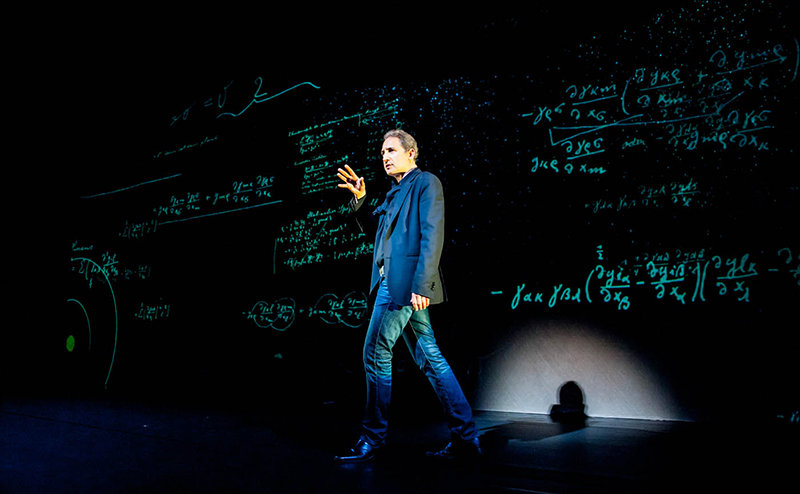
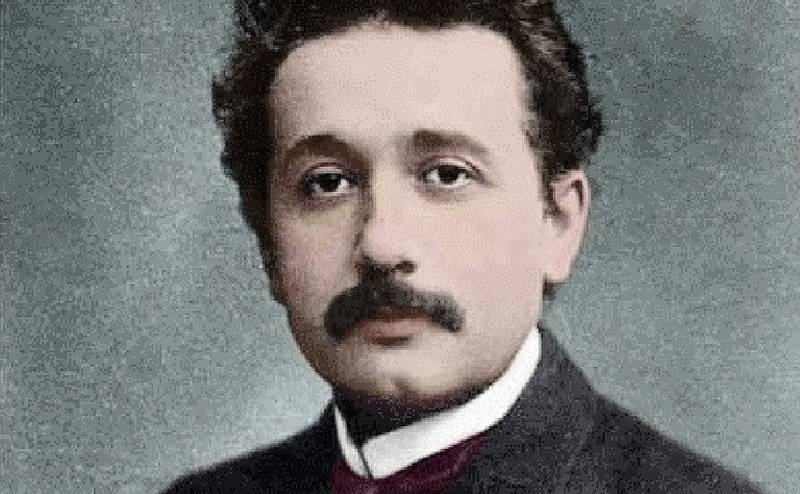
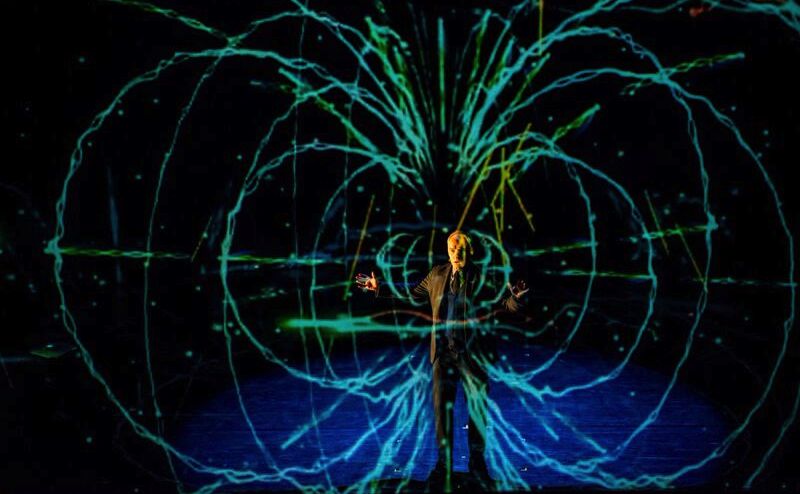
Michael Winther has appeared on Broadway in 33 Variations, Mamma Mia, 1776, Artist Descending a Staircase, The Crucible, and Damn Yankees. His recent credits include “Bruce standby” Fun Home National Tour, “Albert Einstein” in physicist Brian Greene’s Light Falls in New York and Princeton, Australia.
Read More
Paul R. Marantz (MD, MPH) is associate dean for Clinical Research Education, and professor in the Departments of Epidemiology and Population Health, and Medicine, at the Albert Einstein College of Medicine and Montefiore Health System.
Read More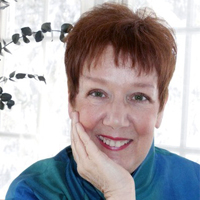
Marcia Bartusiak is an author, journalist, and Professor of the Practice of the Graduate Program in Science Writing at MIT. She writes about the fields of astronomy and physics. Bartusiak has been published in National Geographic, Discover, Astronomy, Sky & Telescope, Science, Popular Science, and more.
Read More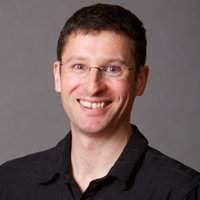
Frans Pretorius is a Professor of Physics at Princeton University. His primary field of research is general relativity, specializing in numerical solution of the Einstein equations.
Read More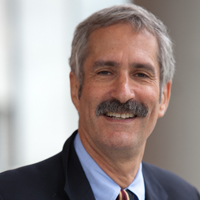
Harry Ostrer, M.D. is professor of Pathology and Pediatrics at Albert Einstein College of Medicine. He develops new technologies and investigates the genetic basis of common and rare disorders, then translates the findings into tests that can be used to identify people’s risks for having a disease or for predicting its outcome.
Read More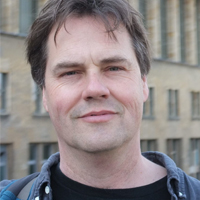
Pedro G. Ferreira is Professor of Astrophysics at the University of Oxford. Originally from Portugal, he has studied and worked in London, Berkeley and at CERN in Geneva. His area of expertise is cosmology, focusing on the physics of the early universe and with a special interest in Einstein’s general theory of relativity.
Read More
A Guggenheim Fellow in Science Writing, Richard Panek received the American Institute of Physics Science Communication Award in 2012. He teaches in the Writing Seminars at Johns Hopkins University and in the MFA Writing program at Goddard College.
Read More
Doris A. Taylor, Ph.D., FACC, FAHA is the Director, Regenerative Medicine Research, and Director, Center for Cell and Organ Biotechnology at the Texas Heart Institute in Houston.
Read More
Kely Norel is a research staff member in the Computational Biology Center at the IBM T. J. Watson Research Center. She received a B.Sc. degree in Computer Engineering from Universidad de Chile, a M.Sc. degree in Computer Science from Weizmann Institute, Israel and a Ph.D. in Computer Science from Tel Aviv University, Israel.
Read More
Breakthrough Prize
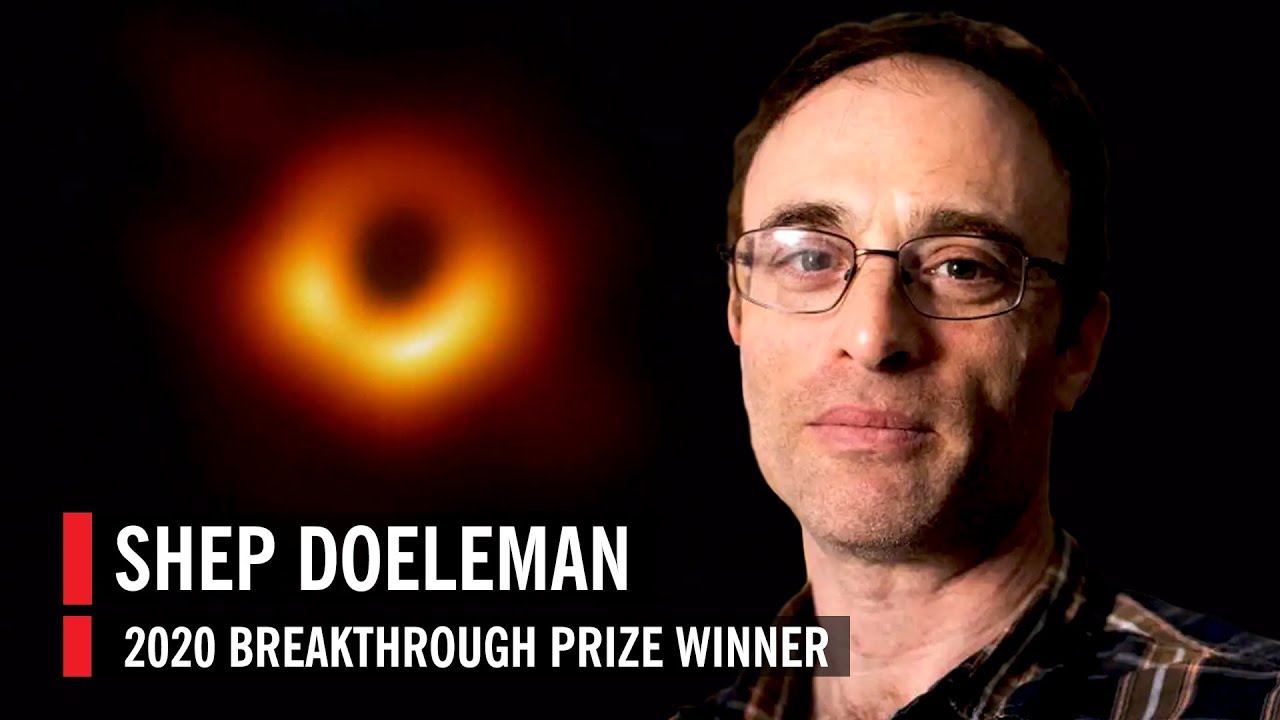
Shep Doeleman is an astrophysicist at the Harvard-Smithsonian Center for Astrophysics, and the Founding Director of the Event Horizon Telescope Collaboration. He led the international team that three years ago …
Read More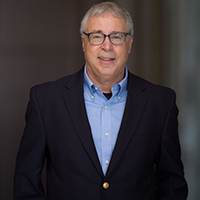
Nir Barzilai is the founding director of the Institute for Aging Research, the Nathan Shock Center of Excellence in the Basic Biology of Aging and the Paul F. Glenn Center …
Read More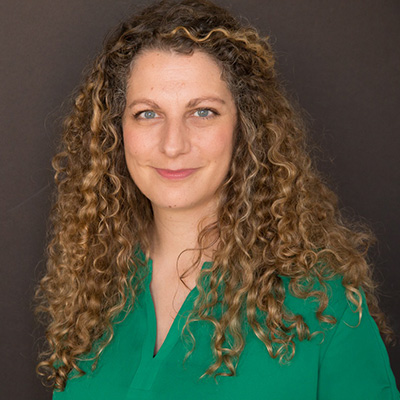
Author, Physics Historian
Elise Crull received a B.Sc. with Honors in Physics and Astronomy at Calvin University and an M.A. and Ph.D. in History & Philosophy of Science from the University of Notre …
Read More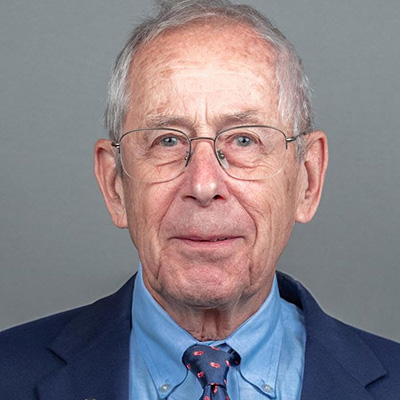
James Peebles is the Albert Einstein Professor of Science (Emeritus) at Princeton University and is regarded as one of the greatest theoretical cosmologists of the last 50 years. His work …
Read More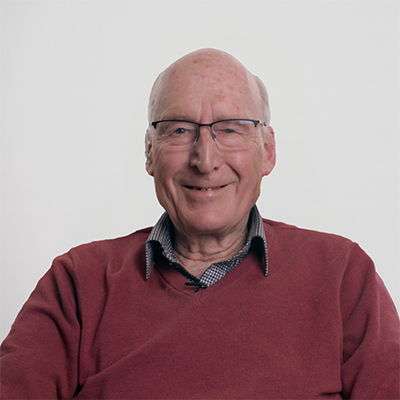
Julian Barbour is a British theoretical physicist renowned for his work on the nature of time and quantum gravity. Largely independent from academic institutions, he has pursued research outside traditional …
Read More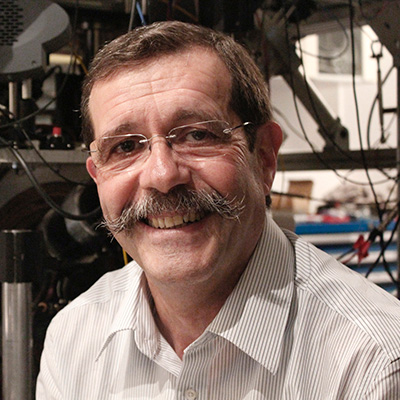
Alain Aspect is a former student of ENS Cachan and Paris-Sud University (now Université Paris-Saclay). He has held positions at the Institut d’Optique, ENS Yaoundé (Cameroon), ENS Cachan, the ENS/Collège …
Read More