




Participants
Gregory Chaitin is a mathematician and computer scientist who began making lasting contributions to his field while still a student at the Bronx High School of Science. His approach to mathematics views the field as much as an art form as science and inextricably linked with philosophical questions.
Read More
Marc Hauser’s award-winning research, at the interface between evolutionary biology and cognitive neuroscience, is aimed at understanding how the minds of human and nonhuman animals evolved.
Read More
Lawrence Parsons is a Professor of Cognitive Neuroscience at the University of Sheffield in the United Kingdom. His early research on action, spatial reasoning and object recognition was followed by his current work in reasoning, language, emotion and the improvisation of music and dancing.
Read More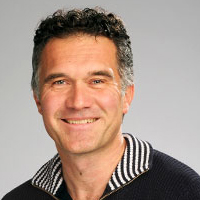
Klaus Zuberbühler’s award-winning work on the communication and cognition of non-human primates in their natural habitats in Africa, South America and Asia has had a considerable impact on our understanding of primate cognition and, more generally, what it means to be human.
Read More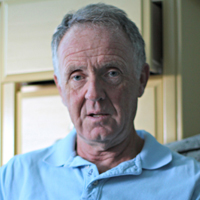
Colin McGinn is a professor and Cooper Fellow at University of Miami. In 2006, he joined the UM philosophy department, having taught previously at University of London, University of Oxford, and Rutgers University.
Read More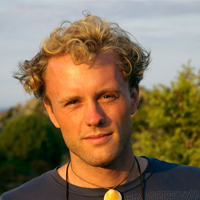
Combining elements of computer science, anthropology, visual art and storytelling, Jonathan Harris designs systems to explore and explain the human world. He has made projects about human emotion, human desire, modern mythology, science, news, anonymity, and language.
Read More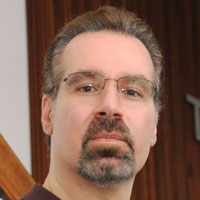
David Ferrucci is the lead researcher and principal investigator for the Watson/Jeopardy! project. He has been a Research Staff Member at IBM’s T.J. Watson’s Research Center since 1995 where he heads up the Semantic Analysis and Integration department.
Read More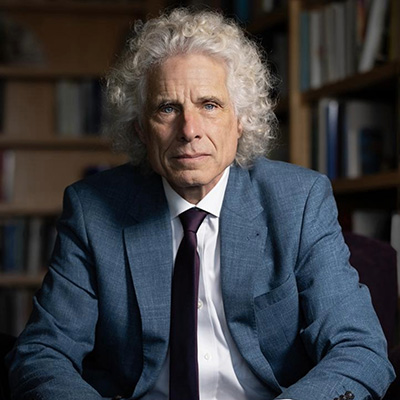
Steven Pinker serves as the Johnstone Family Professor of Psychology at Harvard University, where he conducts research on language, cognition, and human nature. He is the author of several bestselling books, …
Read More
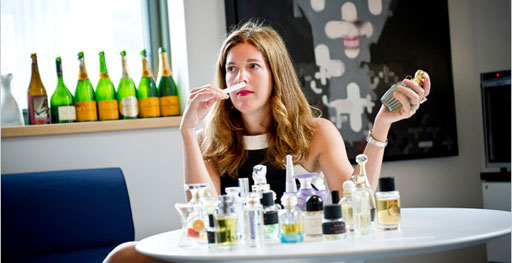
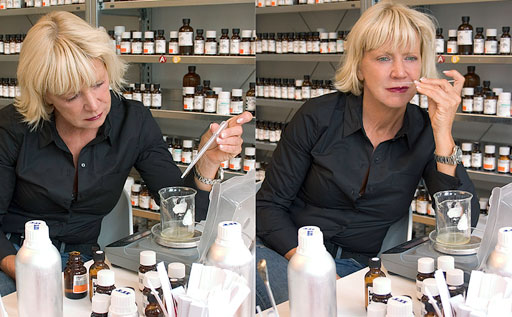
Sissel Tolaas’s work focuses on smell, language, and communication while spanning science, art, and industry. She has identified the smell molecules in worn coats and covered the walls of an MIT gallery with chemically reproduced molecules from the sweat of men who suffer fear attacks.
Read More
Bill Bryson is a best-selling writer of 17 books (and counting) on travel, science, and the English language, and the current chancellor of Durham University in northern England.
Read More
Timothy Ferris is the author of a dozen books (most recently The Science of Liberty), plus 200 articles and essays, and three documentary films—The Creation of the Universe, Life Beyond Earth, and Seeing in the Dark—seen by over 20 million viewers
Read More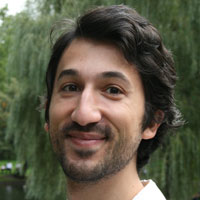
Aaron Berkowitz is the author of The Improvising Mind: Cognition and Creativity in the Musical Moment, which explores improvisation from the perspectives of cognitive neuroscience, musicology/ethnomusicology, and music pedagogy.
Read More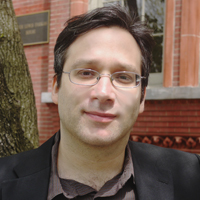
Gary Marcus, scientist, bestselling author, and entrepreneur, is Professor of Psychology and Neural Science at NYU and CEO and Co-Founder of the recently-formed Geometric Intelligence, Inc.
Read More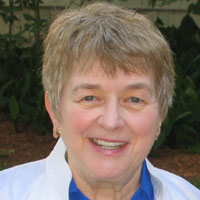
Jean Berko Gleason is one of the world’s leading experts on children’s language and one of the founding mothers of the field of psycholinguistics. She created the famous Wug Test, which reveals how children learn the rules of language, such as how to make singular words plural.
Read More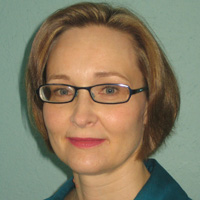
Daniela O’Neill has spent more than 20 years researching child psychology, with a focus on how children learn to communicate and understand their own and other people’s minds.
Read More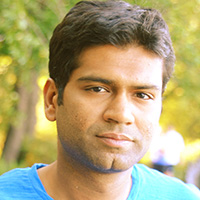
Apoorv Agarwal is a fourth year doctoral student in the Computer Science department at Columbia University, New York City. His areas of interest and specialization are Natural Language Processing and Machine Learning.
Read More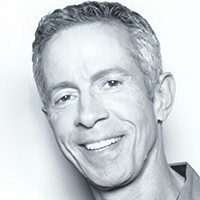
Peter Staley has been a long-term AIDS and gay rights activist, first as a member of ACT UP New York, then as the founding director of TAG, the Treatment Action Group. He served on the board of the American Foundation for AIDS Research (amfAR) for 13 years.
Read More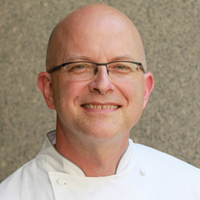
William Yosses previously worked as White House executive pastry chef, where he was closely involved with Mrs. Obama’s “Let’s Move” initiative with the goal of reducing childhood health problems related to diet. Other executive pastry chef experience include The Dressing Room in Westport Connecticut, Josephs Citarella in New York City, Bouley Bakery, and Bouley Restaurant.
Read More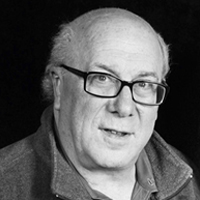
Philip Rubin is the principal assistant director for science at the Office of Science and Technology Policy (OSTP) in the Executive Office of the President of the United States, where he also leads the White House Neuroscience Initiative.
Read More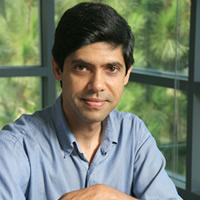
Aniruddh D. Patel is associate professor in the Department of Psychology at Tufts University. After attending the University of Virginia as a Jefferson Scholar, he received a Ph.D. in organismic and evolutionary biology from Harvard University in 1996.
Read More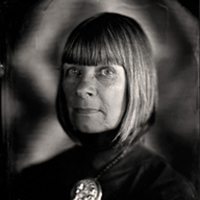
Dean Falk divides her time between Florida and New Mexico. She is the Hale G. Smith Professor of Anthropology and a Distinguished Research Professor at Florida State University in Tallahassee, and she serves as a senior scholar at the School for Advanced Research in Santa Fe. Falk is interested in the evolution of the brain and cognition.
Read More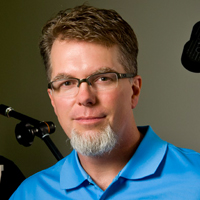
Michael Weisend is a neuroscientist whose research uses structural and functional neuroimaging to investigate normal memory, epilepsy, mental illness, and cognitive dysfunction.
Read More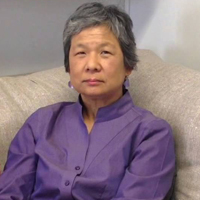
Chiye Aoki majored in biology at Barnard College, Columbia University. She entered the world of neuroscience during those years by participating in research that monitored brain activities of animals undergoing the natural transition from wakefulness to REM sleep to answer the question: Why do we need to sleep?
Read More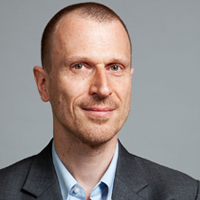
Matthias Scheutz is a professor at Tufts University School of Engineerings Computer Science Department, and is director of the Human-Robot Interaction Laboratory.
Read More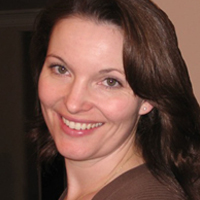
Chantel Prat is an associate professor of Psychology with an appointment at the Institute for Learning and Brain Sciences at University of Washington. She is also faculty in the Neuroscience graduate program, at the Institute for Neuroengineering, and at the Center for Sensorimotor Neural Engineering.
Read More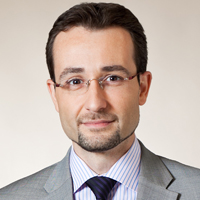
Juan Manuel Benitez is a political reporter for the 24-hour news television station NY1. He hosts the weekly current-affairs program Pura Política on NY1 Noticias. Benitez also teaches journalism at CUNY and Columbia University. He is a frequent contributor to WNYC Radio and MSNBC.
Read More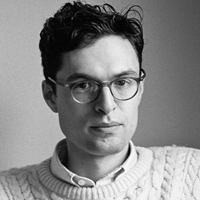
Timo Andres is a composer and pianist who studied at Yale University. A Nonesuch Records artist, his album, Home Stretch, has been hailed by The Guardian for its “playful intelligence and individuality.” Notable works include Strong Language, a string quartet for the Takacs Quartet, and The Blind Banister, a piano concerto for Jonathan Biss and the Saint Paul Chamber Orchestra, which was a 2016 Pulitzer Prize Finalist.
Read More
Early Morning Opera (EMO) is a genre-bending performance and art lab whose works explore emerging technologies, live audiences, and unclassifiable experience, while reflecting artistic director Lars Jan’s background in progressive activism.
Read More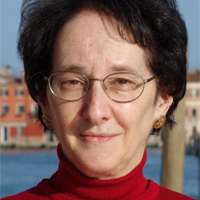
Naomi S. Baron is Professor of Linguistics and Executive Director of the Center for Teaching, Research, and Learning at American University in Washington, DC. For over thirty years, she has been studying the impact of technology on language.
Read More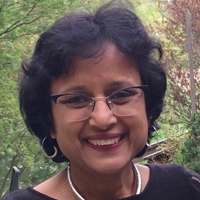
Dr. Bhavna Agrawal, a leading researcher at IBM, is bringing education and artificial intelligence technology together to help solve various problems in elementary and higher education. Some of her latest work involved working with automatic recognition of children’s speech.
Read More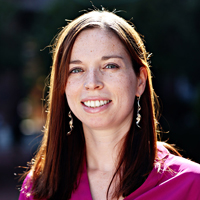
Karen Lewis is an Assistant Professor of Philosophy at Barnard College, Columbia University. She specializes in philosophy of language, with a particular focus on the interface between semantics and pragmatics. Her work is informed both by philosophy and linguistics and much of it seeks to explain how a conversational context affects what a speaker communicates, and vice versa.
Read More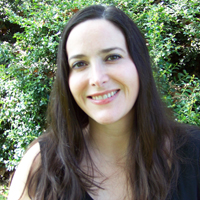
Meagan Curtis is an Associate Professor of Psychology at Purchase College SUNY. Her research explores the evolutionary origins of music, its links with language, and the multitude of ways in which music can be utilized as a tool.
Read More
Florian Pinel is a Senior Technical Staff Member and Master Inventor in the Watson Content and IoT group at IBM. He is the co-inventor of IBM Chef Watson, an application that uses machine learning and natural language processing to demonstrate computational creativity and suggest original recipe ideas.
Read More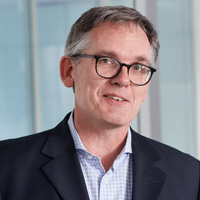
David Poeppel is the Director of the Department of Neuroscience at the Max-Planck-Institute (MPIEA) in Frankfurt, Germany and a Professor of Psychology and Neural Science at NYU. Trained at MIT in cognitive science, linguistics, and neuroscience, Poeppel did his post-doctoral training at the University of California San Francisco, where he focused on functional brain imaging.
Read More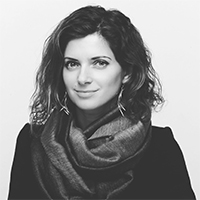
Lera Boroditsky is an associate professor of cognitive science at University of California San Diego. She previously served on the faculty at MIT and Stanford. Her research is on the relationships between mind, world, and language (or how humans get so smart).
Read More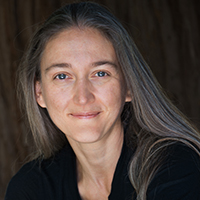
Monica Gagliano is a research associate professor in evolutionary ecology. She is based at the University of Sydney as a Research Affiliate at the Sydney Environment Institute and a Senior Research Fellow at the School of Life and Environmental Sciences.
Read More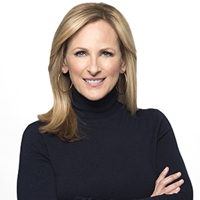
Marlee Matlin’s first film Children of a Lesser God garnered her the Academy Award for Best Actress. At 21 she became the youngest recipient and only one of four actresses to receive the honor for a film debut.
Read More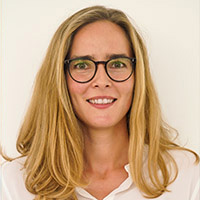
Silvia Jonas is a philosopher and Marie-Sklodowska-Curie Fellow at the Munich Center for Mathematical Philosophy. Her primary areas of research are in philosophy of mathematics and science, epistemology, and metaphysics.
Read More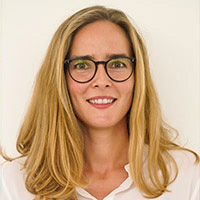
Silvia Jonas is a philosopher and Marie-Sklodowska-Curie Fellow at the Munich Center for Mathematical Philosophy. Her primary areas of research are in philosophy of mathematics and science, epistemology, and metaphysics. …
Read More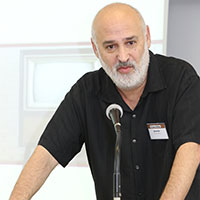
Daniel Dor, a linguist, media researcher and political activist, received his Ph.D. in Linguistics from Stanford University (1996). He is a professor at Tel Aviv University. Dor is the author …
Read More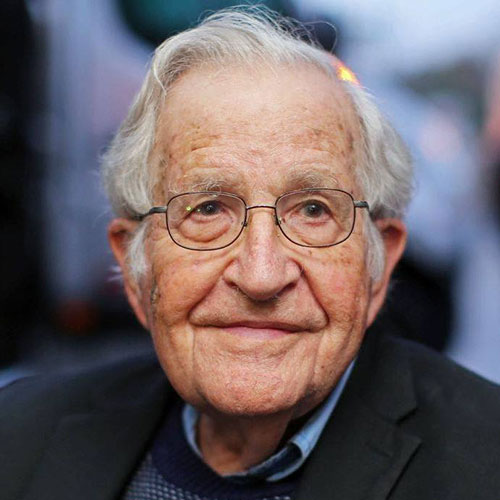
Noam Chomsky is a seminal figure in the field of linguistics, and ranks among the most cited widely scholars in modern history. In 1959, he revolutionized the study of modern …
Read More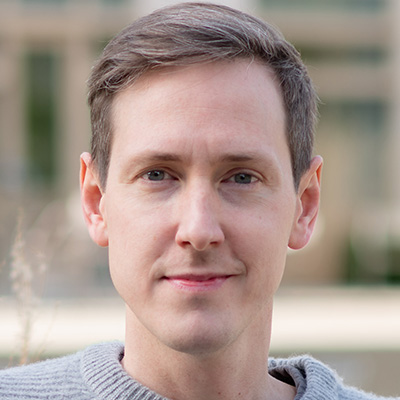
Microsoft
Sébastien Bubeck is a Partner Research Manager at Microsoft Research (MSR). He won multiple awards for his machine learning results around robustness and optimization. Most recently, he has been interested …
Read More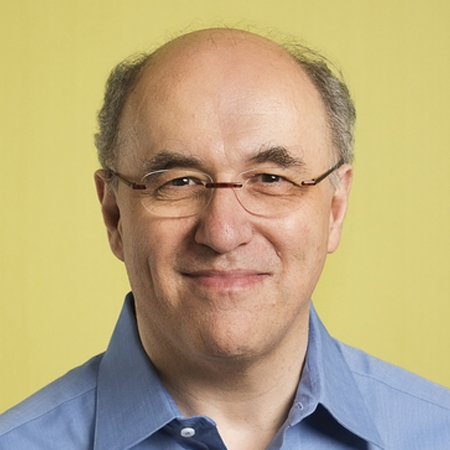
Stephen Wolfram is the creator of Mathematica, Wolfram|Alpha and the Wolfram Language; the originator of the Wolfram Physics Project; and the founder and CEO of Wolfram Research. Over the course …
Read More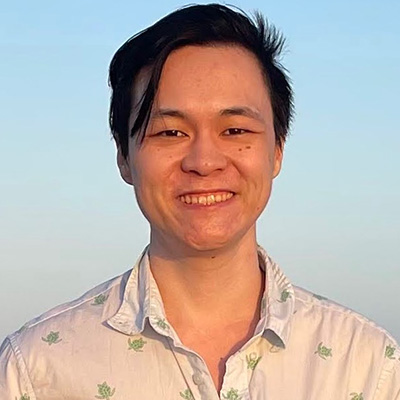
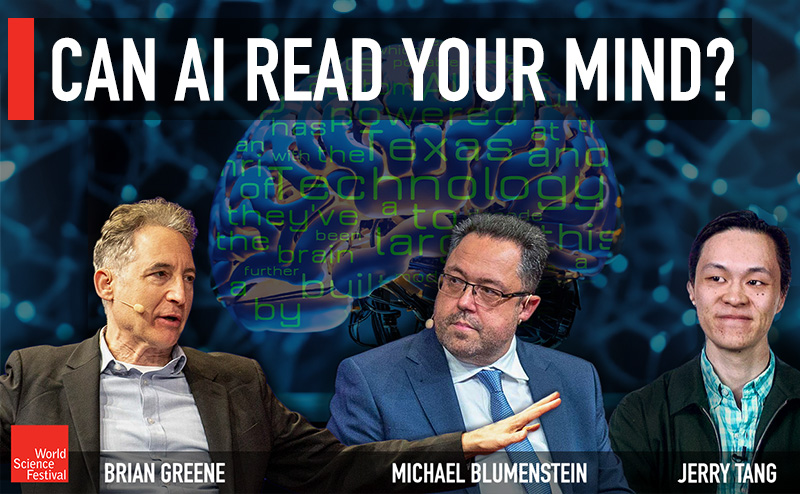
Jerry Tang is a PhD student in the Department of Computer Science at the University of Texas Austin whose focus is on language neuroscience and brain decoding. He is the …
Read More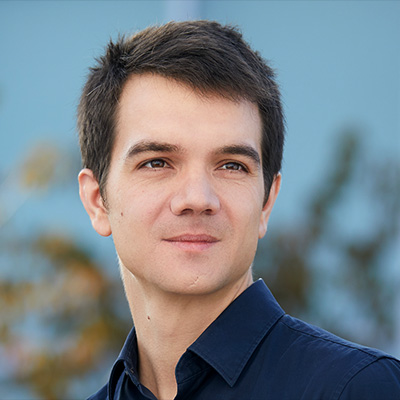
Jean-Rémi King is a CNRS researcher currently detailed to Meta AI in Paris, where he leads the Brain & AI team. His research focuses on uncovering the neural and computational …
Read More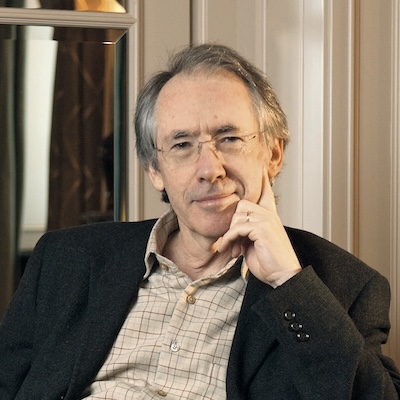
Ian McEwan is a prolific British author whose novels have established him as one of the leading voices in contemporary English-language literature. Winner of the 1998 Booker Prize for Amsterdam, he …
Read More