


Participants
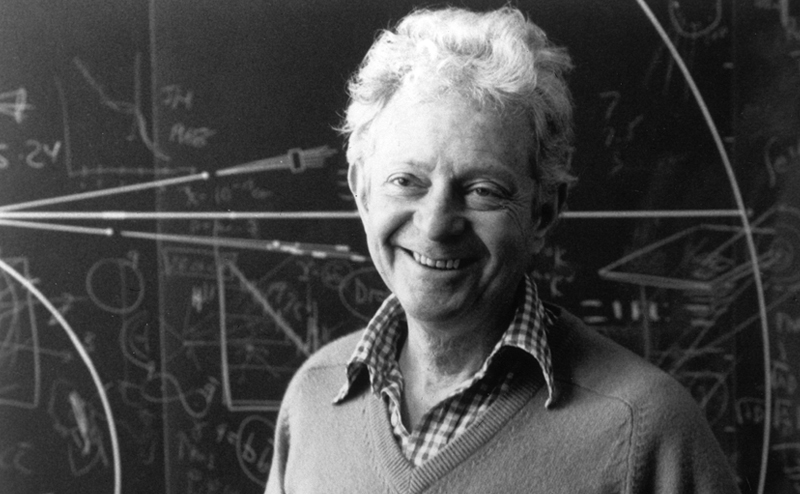
Leon Lederman is the Director Emeritus of Fermi National Accelerator Laboratory in Batavia, Illinois, and Pritzker Professor of Science at Illinois Institute of Technology in Chicago; for his contributions to neutrino physics, he shared the 1988 Nobel Prize in Physics.
Read More
Elena Aprile is a professor of physics at Columbia University and is internationally recognized for her experimental work with noble liquid detectors for research in gamma-ray astrophysics and particle astrophysics. She is the founder and spokesperson of the XENON Dark Matter experiment.
Read More
Jocelyn Monroe is an assistant professor of physics in MIT’s Laboratory for Nuclear Science who works on experimental searches for new particles. Her current research focus is on directly detecting dark matter particle interactions with the MiniCLEAN and DMTPC experiments.
Read More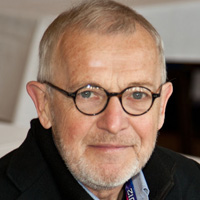
Francis Halzen has spent over 20 years working on telescopes that detect not light, but neutrinos—tiny, high-energy particles released by violent astronomical events like exploding stars, gamma-ray bursts and crashing black holes.
Read More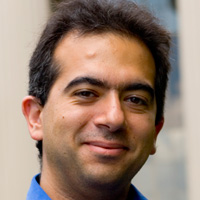
Joseph Formaggio explores the properties of neutrinos, one of nature’s most elusive particles, and their deep connections to particle physics and cosmology.
Read More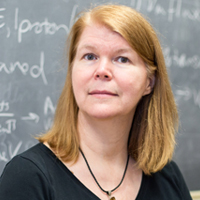
Janet Conrad’s work focuses on the lightest known particle of matter, the neutrino. The number of neutrinos in the universe far exceeds the number of atoms, yet we know surprisingly little about them. Conrad is now exploring whether neutrinos have other unexpected properties and is working to develop an updated model for particle physics that incorporates these new surprises.
Read More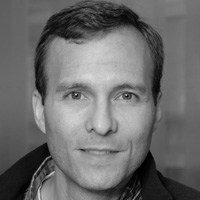
John Kovac is an associate professor in the Astronomy and Physics Departments at Harvard University. His cosmology research focuses on observations of the cosmic microwave background to reveal signatures of the physics that drove the birth of the universe.
Read More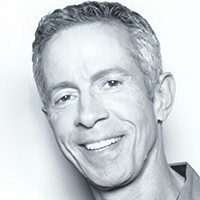
Peter Staley has been a long-term AIDS and gay rights activist, first as a member of ACT UP New York, then as the founding director of TAG, the Treatment Action Group. He served on the board of the American Foundation for AIDS Research (amfAR) for 13 years.
Read More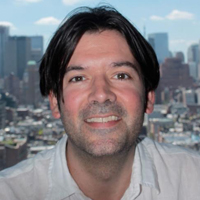
Neal Weiner received his undergraduate degree in Physics and Mathematics from Carleton College and a PhD in Physics from the University of California, Berkeley. After completing his postdoctoral training at the University of Washington, Dr. Weiner joined the faculty of the Department of Physics at NYU in 2004.
Read More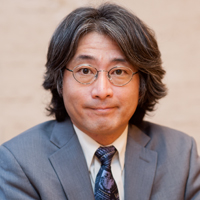
Hitoshi Murayama is a theoretical physicist who works on the connection between the physics of the small (elementary particles) and the large (the Universe). He is also a founding director of the Kavli Institute for the Physics and Mathematics of the Universe at the University of Tokyo and he’s a member of American Academy for Arts and Sciences, as well as Science Council of Japan.
Read More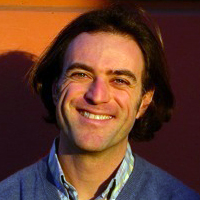
Andrea Pocar joined the physics faculty at UMass-Amherst in 2009, where his research in experimental nuclear/particle physics includes searches for neutrino-less double beta decay, for weakly-interacting dark matter particles, and solar neutrinos.
Read More