



Participants
Buzz Hays is one of the pioneers in the field of 3D production, who in recent years was responsible for overseeing the adaptation of standard-release feature films into three-dimensional stereoscopic versions for the IMAX 3D and Real D platforms.
Read More
Aneela Gillani, a junior at Manhattan Center for Science and Mathematics, is passionate about biology and is working towards a career in medicine. Her extracurricular activities include Model United Nations and the National Honors Society, and she’s also enrolled in the Advanced Science Research program.
Read More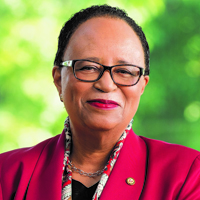
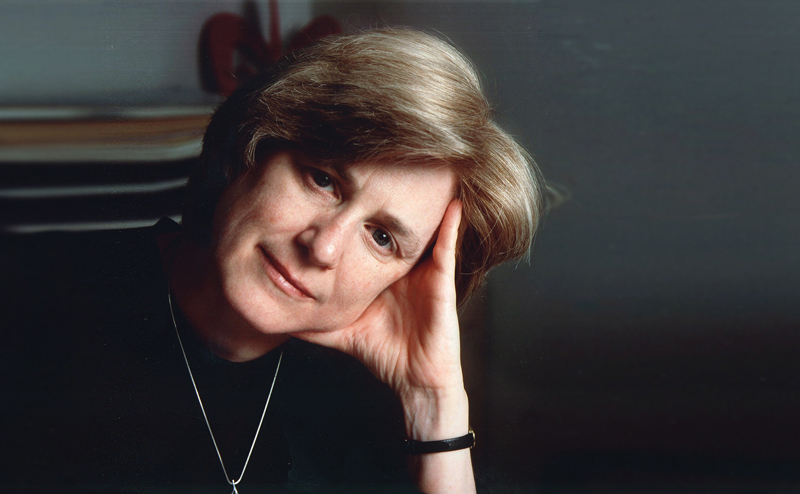
Described by Time Magazine as “perhaps the ultimate role model for women in science,” the Honorable Shirley Ann Jackson, Ph.D., has served as the 18th president of Rensselaer Polytechnic Institute since 1999.
Read More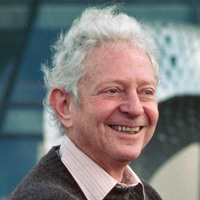
Leon Lederman is the Director Emeritus of Fermi National Accelerator Laboratory in Batavia, Illinois, and Pritzker Professor of Science at Illinois Institute of Technology in Chicago; for his contributions to neutrino physics, he shared the 1988 Nobel Prize in Physics.
Read More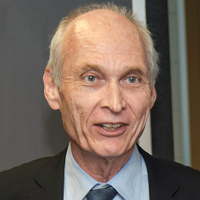
Theoretical astrophysicist Michael S. Turner is a recognized figure in pioneering the interdisciplinary field of particle astrophysics and cosmology, for which he shared the 2010 Dannie Heineman Prize. In collaboration with Edward Kolb, he initiated the Fermilab astrophysics program.
Read More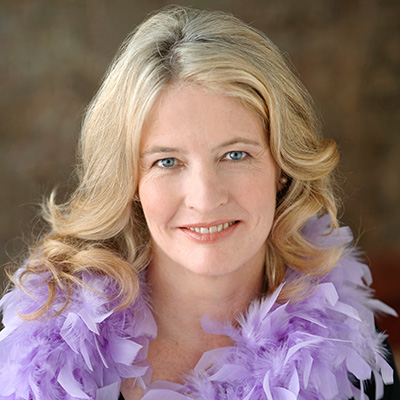
Katherine Freese is the Director of the Weinberg Institute for Theoretical Physics and the Jeff & Gail Kodosky Professor of Physics at the University of Texas at Austin. She is …
Read More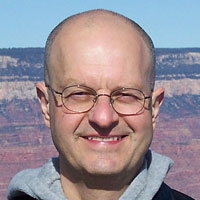
Committed to advancing discoveries in the science of aging and longevity, Leonard Guarente is recognized for his impactful contribution in identifying sirtuins, a group of related proteins that slow aging in model organisms and mitigate aging and diseases in mammals.
Read More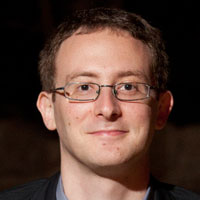
An active member of the research community in the fields of cryptanalysis (breaking ciphers), computer security, and privacy, Orr Dunkelman has published numerous papers analyzing the security of ciphers and cryptosystems. He is widely recognized for his work on the Advanced Encryption Standard (AES).
Read More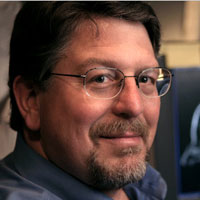
Rex Jung is a leading scientist in the emerging field of positive neuroscience, the study of what the brain does well. His groundbreaking research led to the first model describing a network of brain regions critically linked in the service of intellectual pursuits, known as the Parieto-Frontal Integration Theory (or “P-FIT”).
Read More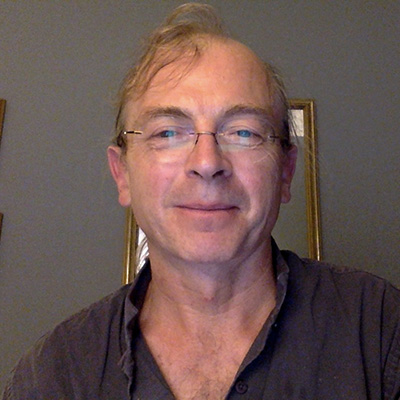
Seth Lloyd was the first person to develop a realizable model for quantum computation and is working with a variety of groups to construct and operate quantum computers and quantum …
Read More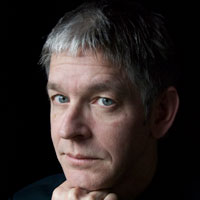
Andrew Dawson is a theatre director, performer, Feldenkrais practitioner, and hand model. He studied dance with Merce Cunningham in New York and theatre in Paris with Phillipe Gaulier, Monika Pagneux, and Jacques Lecoq.
Read More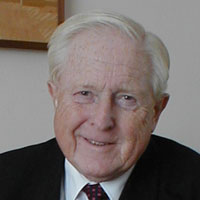
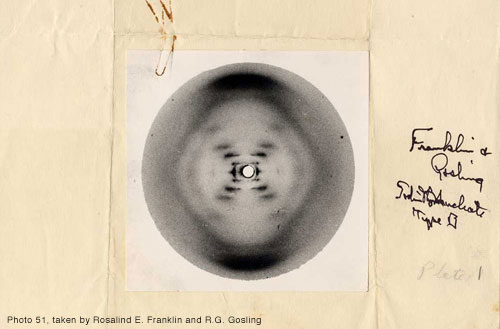
Raymond Gosling pioneered x-ray diffraction research at King’s College London and collaborated closely with Maurice Wilkins in analyzing samples of DNA. Together they produced the first crystalline diffraction photographs at King’s showing an x-pattern of black dots.
Read More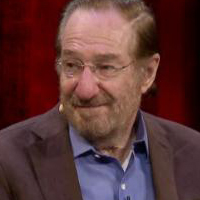
Edward Fredkin’s computer career started in 1956 when the Air Force assigned him to work at MIT’s Lincoln Laboratories. In 1968 he started at MIT as a full professor. From 1971 to 1974 he was the Director of CSAIL and he spent a year at Caltech as a Fairchild Distinguished Scholar, working with Richard Feynman.
Read More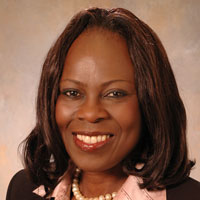
Olufunmilayo Olopade is a Walter L. Palmer Distinguished Service Professor and Associate Dean for Global Health at The University of Chicago Medical Center. Olopade graduated with distinction from the University of Ibadan College of Medicine in Nigeria.
Read More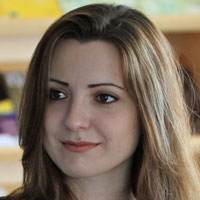
After having obtained a BA and Ph.D. in Mathematics from Harvard, Corina Tarnita applies her knowledge of mathematics to study evolution and evolutionary dynamics.
Read More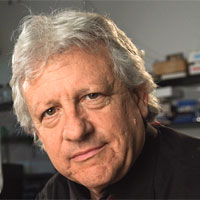
Stuart Firestein is the chair of Columbia University’s department of biological sciences where, along with his colleagues, he studies the vertebrate olfactory system, possibly the best chemical detector on the face of the planet.
Read More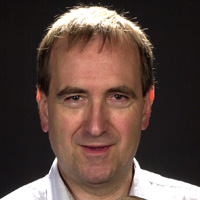
Chris Stringer is a distinguished paleoanthropologist and a founder of the “Out of Africa” theory, the most widely accepted model for how modern humans evolved and spread across the globe.
Read More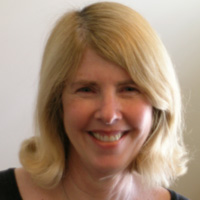
Kay Redfield Jamison has been called a “hero of medicine” for turning her own struggle with manic-depression into a lifelong career researching the illness and its treatment.
Read More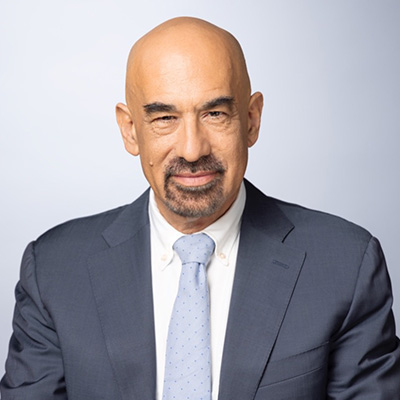
David Spergel studies the big questions in cosmology and astrophysics: How large is the universe, and what is its shape? Is it finite? What are the dark matter and dark …
Read More
Joseph Formaggio explores the properties of neutrinos, one of nature’s most elusive particles, and their deep connections to particle physics and cosmology.
Read More
Janet Conrad’s work focuses on the lightest known particle of matter, the neutrino. The number of neutrinos in the universe far exceeds the number of atoms, yet we know surprisingly little about them. Conrad is now exploring whether neutrinos have other unexpected properties and is working to develop an updated model for particle physics that incorporates these new surprises.
Read More
Oliver Medvedik earned his Ph.D. at Harvard Medical School, in the Biomedical and Biological Sciences program. As part of his doctoral work he has used single-celled budding yeast as a model system to map the genetic pathways that underlie the processes of aging in more complex organisms, such as humans.
Read More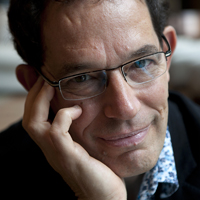
Neil Turok is Director and Niels Bohr Chair at the Perimeter Institute for Theoretical Physics in Ontario, Canada. Previously he was Professor of Physics at Princeton and Chair of Mathematical Physics at Cambridge. He is also Founder and Chair of the African Institute for Mathematical Sciences.
Read More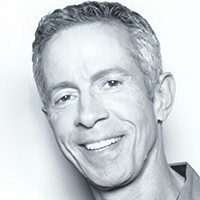
Peter Staley has been a long-term AIDS and gay rights activist, first as a member of ACT UP New York, then as the founding director of TAG, the Treatment Action Group. He served on the board of the American Foundation for AIDS Research (amfAR) for 13 years.
Read More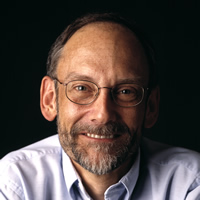
Harold McGee writes about the science of food and cooking. He has been named food writer of the year by Bon Appetit magazine, and to the TIME 100, an annual list of the world’s most influential people. He started out studying physics and astronomy at the California Institute of Technology, and then English literature at Yale University.
Read More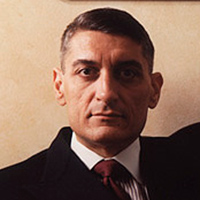
Massimo Porrati is a professor of physics, and a member of the Center for Cosmology and Particle Physics, at New York University. His major research interests are string theory, supersymmetry and supergravity, nonperturbative aspects of strings and quantum field theory, and cosmology.
Read More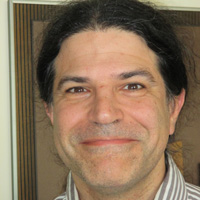
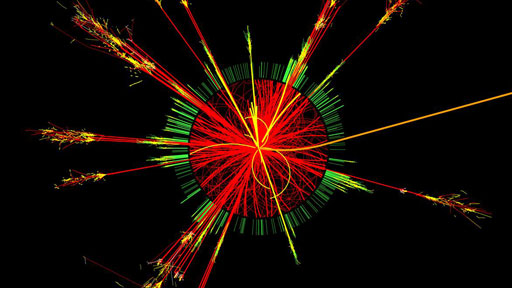
David Kaplan is a theoretical particle physicist who explores supersymmetry, extra dimensions, dark matter, cosmology, and particles such as the Higgs boson. He is developing new techniques to discover physics beyond the standard model using particle colliders.
Read More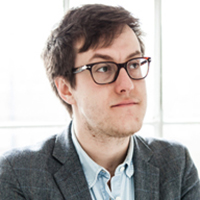
Nick Payne is a playwright. He is the author of If There Is I Haven’t Found It Yet, for which he won the George Devine Award for Most Promising Playwright. He also authored the plays Wanderlust, Sophocles’ Electra, Lay Down Your Cross, Blurred Lines, Incognito, and The Same Deep Water As Me, which was nominated for the Olivier Awards Best New Comedy.
Read More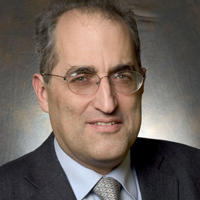
Fields Medalist
Edward Witten is Charles Simonyi Professor in the School of Natural Sciences at the Institute for Advanced Study. His work has helped to bridge the gap between mathematics and physics, …
Read More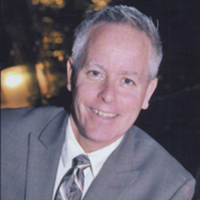
Paul Shaw received his Ph.D. working with Allan Rechtschaffen at the University of Chicago investigating the effects of chronic total sleep deprivation in the rat. He subsequently joined the Neurosciences Institute as a postdoctoral fellow with Giulio Tononi where they began using the fruit fly as a model system to identify molecules that play critical roles in regulating sleep homeostasis.
Read More
Michael Purugganan is the Dorothy Schiff Professor and Dean of Science at NYU. His research focuses on identifying the genes that are involved in the evolutionary adaptation of plants.
Read More
Tom Knight spent most of his career in computer science and electrical engineering at MIT, before playing a major role in creating the field of synthetic biology. In 1996, he seeded interest in the field at DARPA, and built a molecular biology laboratory in the MIT computer science department.
Read More
Sridevi Sarma received her B.S. in Electrical Engineering from Cornell University; and an M.S. and Ph.D. in Electrical Engineering and Computer Science from Massachusetts Institute of Technology (MIT). She is now an assistant professor in the Institute for Computational Medicine, Department of Biomedical Engineering, at Johns Hopkins University.
Read More
Stephen Tsang is the László Bitó Associate Professor in Ophthalmology, Pathology & Cell Biology at Columbia University and an attending ophthalmologist at New York-Presbyterian Hospital. He has been culturing embryonic stem (ES) cells since 1992.
Read More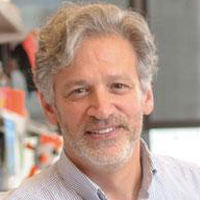
Robert Benezra received his PhD at Columbia University before becoming a postdoctoral fellow at the Fred Hutchinson Cancer Center. There Dr. Benezra identified the Id proteins that are naturally occurring antagonists of other proteins that stimulate development and the cessation of cell growth in a variety of tissue types.
Read More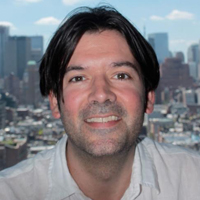
Neal Weiner received his undergraduate degree in Physics and Mathematics from Carleton College and a PhD in Physics from the University of California, Berkeley. After completing his postdoctoral training at the University of Washington, Dr. Weiner joined the faculty of the Department of Physics at NYU in 2004.
Read More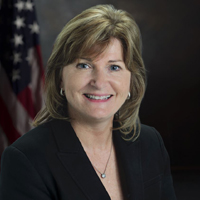
Lesa Roe is the Acting Deputy Administrator and Deputy Associate Administrator at NASA Headquarters in Washington, DC.
Read More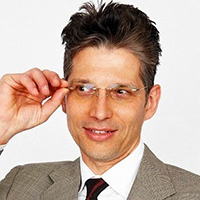
Dr. John R. Smith is an IBM Fellow and Manager of Multimedia and Vision at IBM T. J. Watson Research Center. He leads IBM’s Research & Development on Visual Comprehension including IBM Watson Developer Cloud Visual Recognition, Intelligent Video Analytics, and Video Understanding for Augmented Creativity.
Read More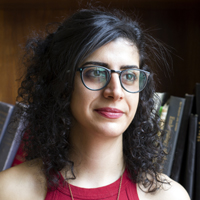
Maryam Zaringhalam is a molecular biologist and an AAAS Science & Technology Policy Fellow. She received her Ph.D. in molecular biology from the Rockefeller University, where she used protozoan parasites as a model to investigate how small changes to our genetic building blocks can affect how we look and function.
Read More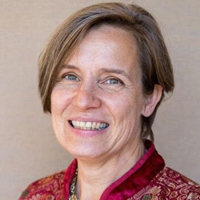
Anita de Waard has a degree in low-temperature physics from Leiden University and worked in Moscow before joining Elsevier as a physics publisher in 1988. Since 1997, she has worked on bridging the gap between science publishing and computational and information technologies, collaborating with groups in Europe and the United States.
Read More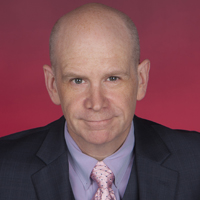
Stephen Macknik is currently an Empire Innovator Scholar and a professor of Ophthalmology, Neurology, and Physiology/Pharmacology at SUNY Downstate Medical Center. Macknik received his PhD at Harvard University.
Read More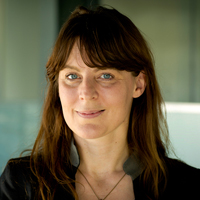
Lisa Kaltenegger is the director of the Carl Sagan Institute at Cornell and professor in Astronomy. She is fascinated by the new worlds orbiting other Suns. Her research focuses on modeling these new worlds especially on how to spot signs of life.
Read More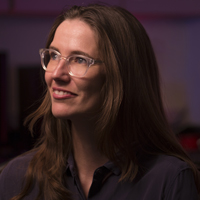
Jocelyn Read is an assistant professor in the Gravitational Wave Physics and Astronomy Center of California State University, Fullerton. She has spent more than a decade studying neutron star astrophysics and gravitational waves.
Read More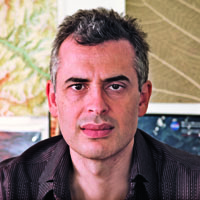
Marcelo Magnasco carried out his undergraduate studies in Physics at the University of La Plata, in Argentina, and his PhD, also in Physics, at the University of Chicago, and currently heads the Laboratory of Integrative Neuroscience at Rockefeller University.
Read More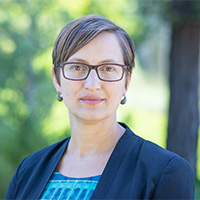
Risa Wechsler is the Director of the Kavli Institute for Particle Astrophysics and Cosmology and an associate professor of Physics at Stanford and the SLAC National Accelerator Laboratory. Her work combines numerical simulations and modeling with data from the largest existing and future galaxy surveys to model and map out the evolution and contents of the Universe from its earliest moments to the present day.
Read More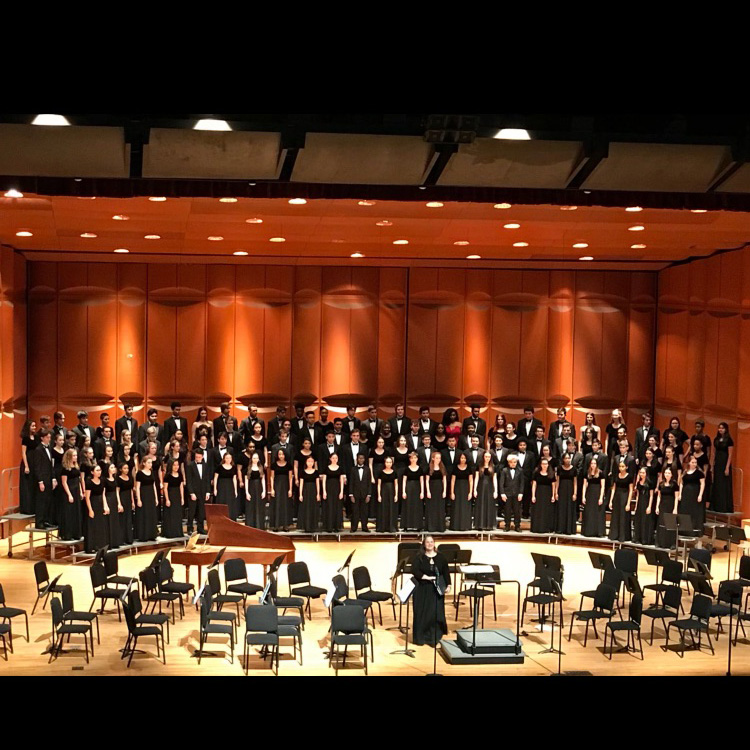
LaGuardia High School Senior Chorus is an advanced level mixed choir for junior and senior music majors at LaGuardia High School of Music & Art and Performing Arts, a public specialized school in New York City.
Read More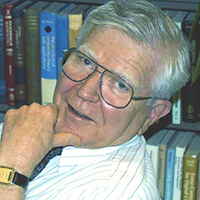
Robert Gallager has been a professor at MIT since his ScD thesis in 1960 where he invented LDPC codes, which have evolved to be a major error-correction technique in the oncoming 5th generation wireless telecommunication standard.
Read More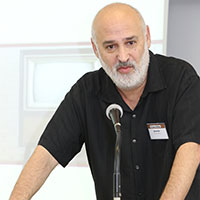
Daniel Dor, a linguist, media researcher and political activist, received his Ph.D. in Linguistics from Stanford University (1996). He is a professor at Tel Aviv University. Dor is the author …
Read More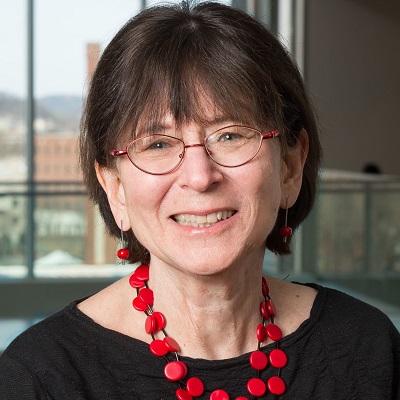
Lenore Blum (PhD, MIT) is Distinguished Career Professor Emerita of Computer Science at Carnegie Mellon University. Lenore’s research, from her early work in model theory and differential algebra has focused …
Read More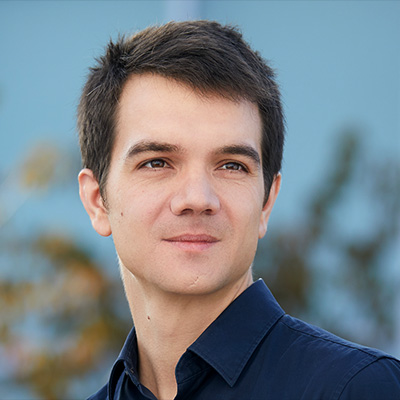
Jean-Rémi King is a CNRS researcher currently detailed to Meta AI in Paris, where he leads the Brain & AI team. His research focuses on uncovering the neural and computational …
Read More