

















Participants
Lawrence Krauss is an internationally known theoretical physicist and best-selling author. His research focuses on the intersection of cosmology and elementary particle physics. Krauss’s work addresses questions about the origin of matter in the universe.
Read More
Giulio Tononi is an award-winning psychiatrist and neuroscientist whose main focus has been the scientific understanding of consciousness. His integrated information theory is a comprehensive theory of what consciousness is, how it can be measured, and how it is realized in the brain.
Read More
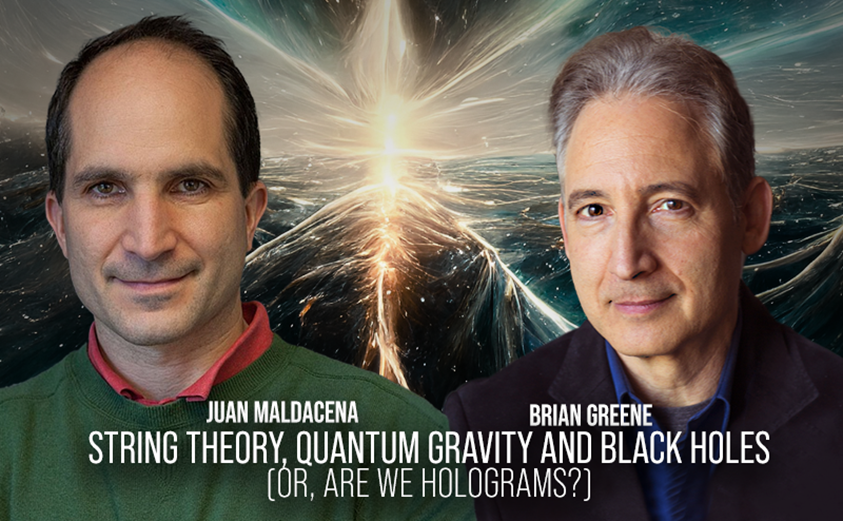
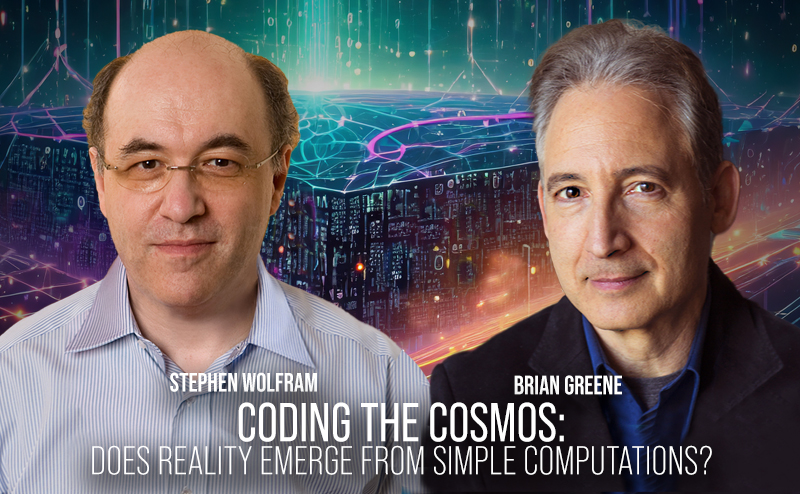
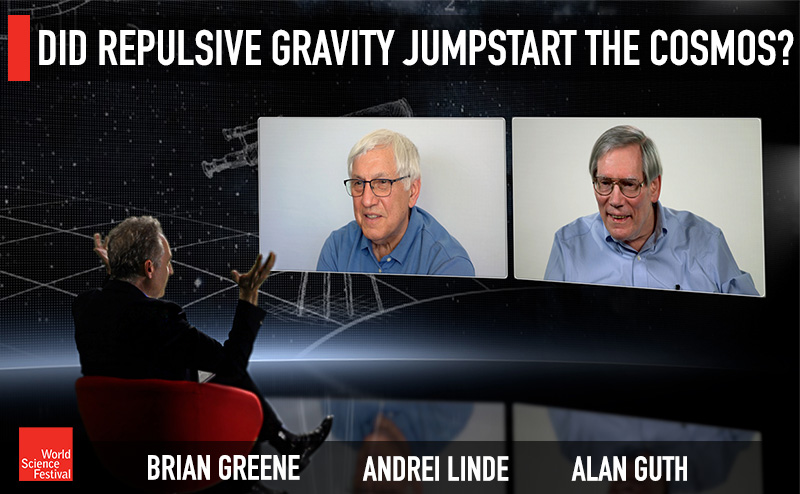
Brian Greene is a professor of physics and mathematics at Columbia University, and is recognized for a number of groundbreaking discoveries in his field of superstring theory. His books, The Elegant Universe, The Fabric of the Cosmos, and The Hidden Reality, have collectively spent 65 weeks on The New York Times bestseller list.
Read More
Michael Russell’s research into the emergence of life and early evolution will help determine whether earth alone supports life in our universe. Russell was awarded the William Smith Medal from the Geological Society of London.
Read More
Kip Thorne is the Feynman Professor of Theoretical Physics, Emeritus, at Caltech. He was the co-founder (with Rai Weiss and Ron Drever) of the LIGO (Laser Interferometer Gravitational Wave Observatory) Project and he chaired the steering committee that led LIGO in its earliest years.
Read More
Called the “Renaissance Man of Evolutionary Biology” by The New York Times, Francisco J. Ayala has made significant and wide-ranging experimental and theoretical contributions to evolution theory.
Read More
Gregory Chaitin is a mathematician and computer scientist who began making lasting contributions to his field while still a student at the Bronx High School of Science. His approach to mathematics views the field as much as an art form as science and inextricably linked with philosophical questions.
Read More
Raphael Bousso is recognized for discovering the general relation between the curved geometry of space-time and its information content, known as the “covariant entropy bound.” This allowed for a precise and general formulation of the holographic principle, which is believed to underlie the unification of quantum theory and Einstein’s theory of gravity.
Read More
Award-winning physicist Shamit Kachru is an expert in string theory and quantum field theory, and their applications in cosmology, condensed matter physics, and elementary particle theory.
Read More
Linda Dalrymple Henderson is the acknowledged expert on the history of modern artists’ engagement with a possible fourth dimension of space, a widespread cultural preoccupation in the early 20th century before the popularization of the temporal fourth dimension of Einstein’s Relativity Theory.
Read More
Michio Kaku is one of the founders of string field theory, a field of research within string theory. He’s also the host of Sci Fi Science, the top-rated new series on the Science Channel, which is based on his New York Times best-selling book Physics of the Impossible.
Read More
Nobel Laureate
Nobel Laureate John Mather’s research in cosmology as part of the Cosmic Background Explorer (COBE) team has been recognized as some of the most important work of the 20th century.
Read More
Robbert Dijkgraaf is director and Leon Levy Professor of the Institute for Advanced Study, one of the world’s leading centers for curiosity-driven research in the sciences and humanities.
Read More
Elaine Pagels changed the historical landscape of the Christian religion by exploding the myth of the early Church as a unified movement. Her findings were published in the bestselling book, The Gnostic Gospels, an analysis of 52 early Christian manuscripts that were unearthed in Egypt.
Read More
Eric Horvitz serves as Microsoft’s Chief Scientific Officer. He is known for his contributions to AI theory and practice, with a focus on principles and applications of AI amidst the …
Read More
Stephen W. Hawking is one of the world’s foremost theoretical physicists. His dramatic breakthroughs into the origin of the universe and the properties of black holes are among the most revolutionary insights into the nature of the cosmos since the work of Albert Einstein.
Read More
Professor Frank Wilczek is considered one of the world’s eminent theoretical physicists. He received the 2004 Nobel Prize in Physics for the discovery of asymptotic freedom in the theory of the strong interaction—key to several major problems in particle physics and beyond.
Read More
Andrei Linde is a professor of physics at Stanford University, one of the authors of the inflationary theory and the theory of inflationary multiverse. He invented the theory of chaotic inflation, which is the most general version of inflationary cosmology. Linde also helped to develop the theory of eternal chaotic inflation, and the mechanism of vacuum stabilization in string theory.
Read More
Alan Guth is a professor of physics at MIT, and world-renowned for his discovery of inflationary cosmology, the dominant cosmological paradigm for over two decades. His current research focuses on developing mathematical tools for quantitatively analyzing inflation’s suggestion that there are an infinite number of universes.
Read More
Sylvester James (Jim) Gates, Jr. is currently the John S. Toll Professor of Physics at the University of Maryland-College Park. In spring of 2009 he was appointed to serve on President Obama’s Council of Advisors on Science and Technology and the Maryland State Board of Education.
Read More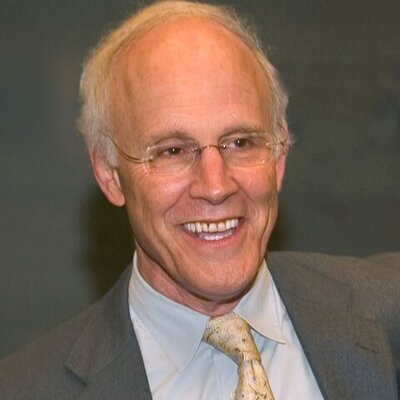
Nobel Laureate
David Gross is the Chancellor’s Chair professor of theoretical physics and the former director of the Kavli Institute for Theoretical Physics at the University of California, Santa Barbara. He received …
Read More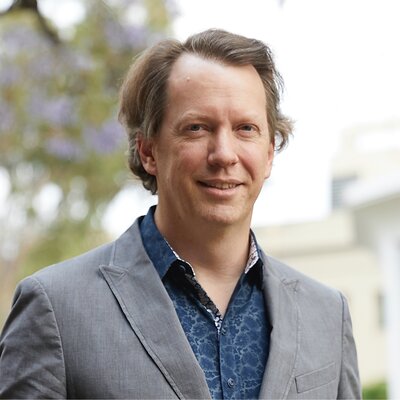
Bestselling Author
Sean Carroll is the Homewood Professor of Natural Philosophy at the Johns Hopkins University, and an External Professor at the Santa Fe Institute. Prior to that he was a research …
Read More
Nicola Clayton is professor Comparative Cognition in the Department of Experimental Psychology at Cambridge University and a Fellow of Clare College. Clayton’s work in integrating biology and psychology led to a re-evaluation of the cognitive capacities of animals, particularly birds, resulting in a theory that intelligence evolved independently in at least two disparate groups, apes and corvids.
Read More
John-Dylan Haynes is a leading expert investigating neural correlates of consciousness and volitional processing, and has developed groundbreaking methods for decoding or “reading out” a person’s mental states from their brain activity.
Read More
Alfred Mele is the William H. and Lucyle T. Werkmeister Professor of Philosophy at Florida State University. He is the author of 10 books, including Free Will and Luck, Effective Intentions, A Dialogue on Free Will and Science, and Free: Why Science Hasn’t Disproved Free Will.
Read More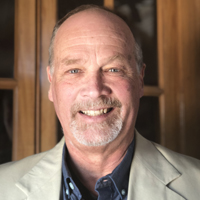
Ken Miller is professor of Biology at Brown University. He serves as life science advisor to the NewsHour on PBS and is coauthor, with Joseph S. Levine, of Biology textbooks used by millions of students. In 2005, he served as lead witness in the trial on evolution and intelligent design in Dover, Pennsylvania.
Read More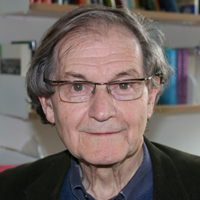
Sir Roger Penrose has made seminal contributions to our understanding of space and time. In describing the initial conditions of the universe, he provided the foundation for studying the origins of the arrow of time.
Read More
Emily Levine has recently upgraded herself to Emily 3.0. Emily 1.0 was a stand-up comedian, appearing in comedy clubs and on Dave Letterman’s Late Night TV show, among others. Emily 2.0 was a television writer/producer, working on shows such as Designing Women, Love and War, and Dangerous Minds. She has created and produced pilots for ABC, NBC, CBS, and HBO.
Read More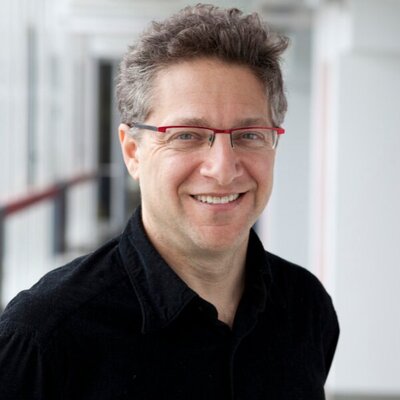
MacArthur Fellow
Peter Galison is the Pellegrino University Professor of the History of Science and of Physics at Harvard University. He is a leading historian of science whose research explores the interaction …
Read More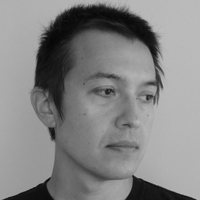
Eugene Thacker is the author of several books and articles that combine philosophy, science, and technology, including Biomedia, The Global Genome, and The Exploit: A Theory of Networks which he co-authored with Alexander Galloway. He has collaborated with art collectives Biotech Hobbyist and the Radical Software Group.
Read More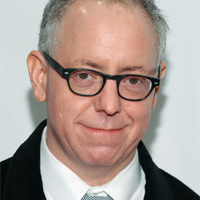
James Schamus is CEO of Focus Features, and an associate professor at Columbia University’s School of the Arts in New York City, where he teaches film history and theory.
Read More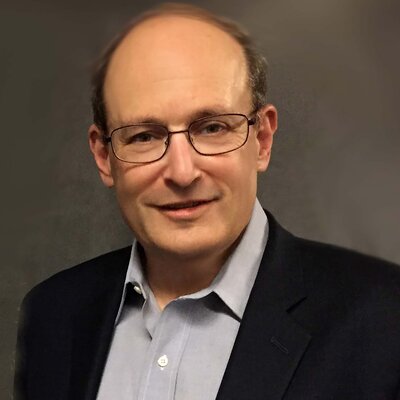
Dirac Medalist
Paul J. Steinhardt is the Albert Einstein Professor in Science and Director of the Princeton Center for Theoretical Science at Princeton University, where he is also on the faculty of …
Read More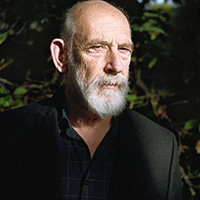
Leonard Susskind is the Felix Bloch Professor of Theoretical Physics at Stanford University, and one of the discoverers of string theory, a candidate for a theory that unifies all laws of physics. An award-winning author, he is a proponent of the idea that our universe is one of an infinite number.
Read More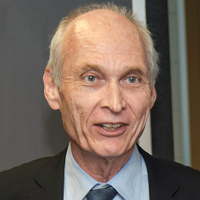
Theoretical astrophysicist Michael S. Turner is a recognized figure in pioneering the interdisciplinary field of particle astrophysics and cosmology, for which he shared the 2010 Dannie Heineman Prize. In collaboration with Edward Kolb, he initiated the Fermilab astrophysics program.
Read More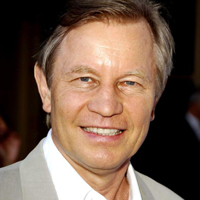
After graduation from Oxford in 1964, Michael York joined the National Theatre company, making his film debut in The Taming of the Shrew. His more than 60 other screen credits include Romeo and Juliet, Cabaret, Jesus of Nazareth, The Three Musketeers, Logan’s Run, Murder on the Orient Express, Conduct Unbecoming, The Omega Code and all three Austin Powers movies.
Read More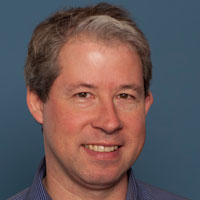
Renowned for his influential contributions to string theory and its application in mathematics, particle physics, cosmology, and black hole physics, Herman Verlinde’s research has been widely recognized through many awards and fellowships.
Read More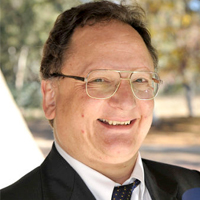
Recognized mathematician and noted expert on the number Pi, Jonathan Borwein is the author of several hundred research papers and over a dozen books spanning the topics of optimization, analysis, computation, and experimental mathematics.
Read More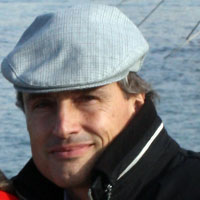
Jürgen Schmidhuber has published over 200 peer-reviewed scientific papers. His lab’s research on artificial neural nets won several handwriting recognition contests and number one rankings in several computer vision competitions and benchmarks.
Read More
Known as the “Math Guy” on National Public Radio and author of 30 books and over 80 published research articles, Keith Devlin is a recognized mathematician. In 2003, he was lauded by the California State Assembly for his “innovative work and longtime service in the field of mathematics and its relation to logic and linguistics.”
Read More
Focused on the functions of the hippocampus in memory and spatial cognition, Lynn Nadel’s work has led to significant contributions in the study of stress and memory, sleep and memory, memory reconsolidation, and mental retardation observed in Down syndrome.
Read More
Rex Jung is a leading scientist in the emerging field of positive neuroscience, the study of what the brain does well. His groundbreaking research led to the first model describing a network of brain regions critically linked in the service of intellectual pursuits, known as the Parieto-Frontal Integration Theory (or “P-FIT”).
Read More
Joseph LeDoux is a professor of neural science at NYU and director of the Emotional Brain Institute involving NYU and the Nathan Kline Institute. LeDoux’s research is focused on the brain mechanisms of emotion and memory. He is the author of The Emotional Brain: The Mysterious Underpinnings of Emotional Life.
Read More
Richard Dawkins is an evolutionary biologist and author, who is known for his popularization of Darwinian ideas as well as for original thinking on evolutionary theory. The Selfish Gene is both the title of his groundbreaking first best seller and his most popular thesis.
Read More
Freeman Dyson, born and raised in England, excelled in all subjects from a very young age, going on to specialize in mathematics and theoretical physics in his studies at the University of Cambridge.
Read More
Steven Weinberg was a professor of physics and astronomy at the University of Texas at Austin. His honors included the Nobel Prize in Physics and National Medal of Science, election to numerous academies, and 16 honorary doctoral degrees.
Read More
George Musser is a contributing editor at Scientific American and Nautilus magazines, a Knight Science Journalism Fellow at MIT for 2014–2015, and the author of Spooky Action at a Distance (2015) and The Complete Idiot’s Guide to String Theory (2008).
Read More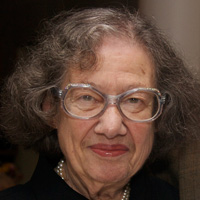
Esther Conwell is widely known for her theoretical studies of the properties of materials. Her early research, with V. F. Weisskopf, on the effect of impurities on the motion of electrons, was an important step for the understanding of conduction in semiconductors, the materials of which transistors are made.
Read More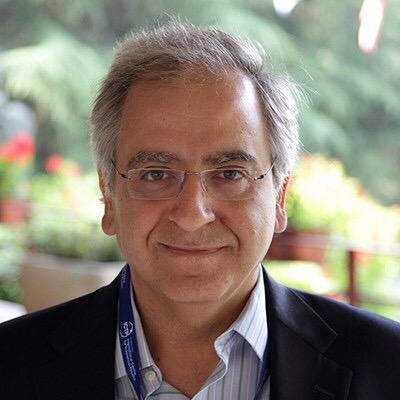
Breakthrough Prize
Cumrun Vafa is the Hollis Professor of Mathematics and Natural Philosophy at Harvard University. He received his BS in Math and Physics from MIT in 1981 and his PhD in …
Read More
Chris Stringer is a distinguished paleoanthropologist and a founder of the “Out of Africa” theory, the most widely accepted model for how modern humans evolved and spread across the globe.
Read More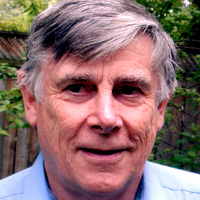
Keith Oatley has spent the last twenty years researching the psychology of reading and writing fiction, as both a scientist and the author of three novels.
Read More
Mark Wigley is a leading architectural theorist and critic and the dean of Columbia University’s Graduate School of Architecture, Planning and Preservation. The accomplished scholar and design teacher has written extensively on the theory and practice of architecture.
Read More
Janet Conrad’s work focuses on the lightest known particle of matter, the neutrino. The number of neutrinos in the universe far exceeds the number of atoms, yet we know surprisingly little about them. Conrad is now exploring whether neutrinos have other unexpected properties and is working to develop an updated model for particle physics that incorporates these new surprises.
Read More
Tim Wu is an author, policy advocate, and professor at Columbia Law School, and director of the Poliak Center for the study of First Amendment Issues at Columbia Journalism School.
Read More
LeVar Burton has been capturing the admiring attention of both audiences and his industry peers for three decades and continues to enjoy longevity truly rare within the industry. His deftness in avoiding stereotype continues to be a hallmark of an incredibly diverse career.
Read More
Thorsten Ritz is a biophysicist interested in the role of quantum mechanics in biological systems, ranging from photosynthetic light harvesting systems to sensory cells. He has championed the idea that a quantum mechanical reaction may lie at the heart of the magnetic compass of birds and other animals.
Read More
Peter Staley has been a long-term AIDS and gay rights activist, first as a member of ACT UP New York, then as the founding director of TAG, the Treatment Action Group. He served on the board of the American Foundation for AIDS Research (amfAR) for 13 years.
Read More
William Hugh Woodin is a set theorist at University of California, Berkeley. He has made many notable contributions to the theory of inner models and determinacy. His recent work on Ω-logic suggests an argument that the continuum hypothesis is false.
Read More
Andreas Albrecht is a leading theoretical cosmologist. He received his Ph.D. from the University of Pennsylvania in 1983 where, with Paul Steinhardt, he wrote one of the original papers on “new” or “slow roll” inflation.
Read More
Holly Robbins is a recent graduate of NYU’s master’s program in media culture and communication. Her research area is human computer interaction with a special focus on qualitative methodologies from anthropology.
Read More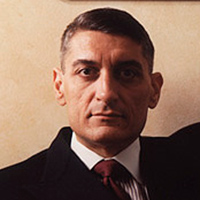
Massimo Porrati is a professor of physics, and a member of the Center for Cosmology and Particle Physics, at New York University. His major research interests are string theory, supersymmetry and supergravity, nonperturbative aspects of strings and quantum field theory, and cosmology.
Read More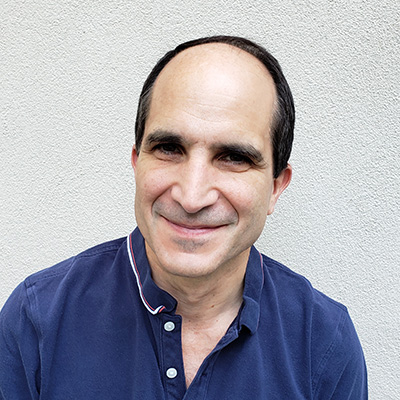
Juan Maldacena is the Carl P. Feinberg Professor in the School of Natural Sciences at the Institute for Advanced Study, Princeton. He has made numerous ground-breaking contributions to theoretical physics, …
Read More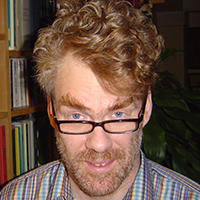
Joel David Hamkins conducts research in mathematical and philosophical logic, particularly set theory, with a focus on the mathematics and philosophy of the infinite.
Read More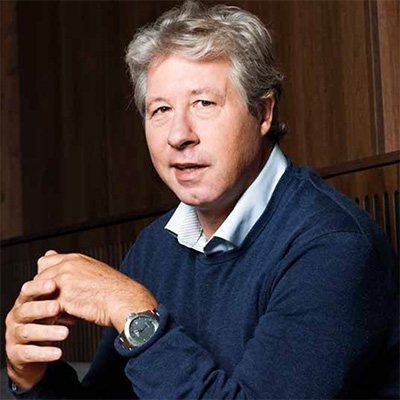
Erik Verlinde is a professor of theoretical physics at the University of Amsterdam. He is known for the Verlinde formula, which has a wide range of applications in physics and mathematics. In 2010, he attracted international attention with a paper in which he argued that gravity is emergent, and results from changes in the entropy associated with microscopic information.
Read More
Edward Frenkel is a professor of mathematics at the University of California, Berkeley. He is a member of the American Academy of Arts and Sciences, a Fellow of the American Mathematical Society, and the winner of the Hermann Weyl Prize in mathematical physics.
Read More
Julie Hecht is a canine researcher and science writer. She manages Alexandra Horowitz’s Dog Cognition Lab at Barnard College and has investigated dog olfaction, interspecies play, and theory of mind.
Read More
Evelynn Hammonds is the Barbara Gutmann Rosenkrantz Professor of the History of Science and a professor of African and African American Studies at Harvard University.
Read More
Sheldon Goldstein is a professor of mathematics, physics, and philosophy at Rutgers University. He studies the very foundations of quantum theory, probability theory, and statistical mechanics.
Read More
Ruediger Schack is a Professor at the Department of Mathematics at Royal Holloway, University of London. His research interests are quantum information theory, quantum cryptography, and quantum Bayesianism. He obtained his Ph.D. in Theoretical Physics at the University of Munich in 1991.
Read More
Peter Neufeld, a nationally recognized civil-rights lawyer, has spent over thirty-five years trying cases on behalf of victims of police misconduct and wrongful convictions. These trials have led to numerous substantial verdicts and settlements and caused systemic criminal-justice reforms.
Read More
Ekow N. Yankah is a Professor of Law at Benjamin N. Cardozo School of Law. He holds degrees from the University of Michigan, Columbia University School of Law, and a post-graduate degree from Oxford University, where he was awarded a Lord Crewe Scholarship.
Read More
Fields Medalist
Edward Witten is Charles Simonyi Professor in the School of Natural Sciences at the Institute for Advanced Study. His work has helped to bridge the gap between mathematics and physics, …
Read More
Breakthrough Prize
Andrew Strominger is the Gwill E. York Professor of Physics at Harvard University and a founding member of the Black Hole Initiative. He is a renowned theoretical physicist who has …
Read More
After receiving a Ph.D. in biochemistry and molecular biology from Harvard, Paul Bingham spent two years at the National Institutes of Health in Research Triangle Park. He later joined the faculty of the Department of Biochemistry and Cell Biology at Stony Brook University.
Read More
As a theoretical physicist at the University of Pennsylvania, Vijay Balasubramanian pursues research in two different fields: string theory and theoretical neuroscience. He is an expert in statistical inference and “Occam’s Razor”—the trade-off between simple and accurate mathematical models.
Read More
Gabriela González is a professor in the Department of Physics and Astronomy at Louisiana State University (LSU), where there is a large group of people working on the detection of gravitational waves, both in theory and experiment.
Read More
Samir Mathur is a physicist who has spent over two decades working on the black hole information paradox. He has proposed that this paradox is resolved because the structure of black holes is radically altered in string theory: Instead of having all their mass at their center, black holes are “fuzzballs” with no regular horizon or singularity.
Read More
Pedro G. Ferreira is Professor of Astrophysics at the University of Oxford. Originally from Portugal, he has studied and worked in London, Berkeley and at CERN in Geneva. His area of expertise is cosmology, focusing on the physics of the early universe and with a special interest in Einstein’s general theory of relativity.
Read More
Rachel A Rosen is an assistant professor of theoretical physics at Columbia University. Her research focuses on gravity, quantum field theory and the intersection of the two. She is best known for her contributions to massive gravity, a theory in which the graviton — the particle that transmits the gravitational force — has a mass.
Read More
David Wallace is a philosopher of physics. In 2016, he arrived at the Philosophy School of the University of Southern California, after twenty-two years at the University of Oxford as a student, a researcher, and faculty member. Wallace’s original training was in theoretical physics.
Read More
Lav Varshney is an assistant professor in the Department of Electrical and Computer Engineering and the Department of Computer Science (by courtesy), and a research affiliate in the Beckman Institute and in the Neuroscience Program, all at the University of Illinois at Urbana-Champaign.
Read More
Mark Van Raamsdonk is a professor of physics at the University of British Columbia, where he also received his bachelor’s degree in mathematics and physics. He completed a Ph.D. in physics at Princeton University followed by postdoctoral research at Stanford University.
Read More
Veronika Hubeny is a theoretical physicist, currently a Professor in the Department of Physics at University of California, Davis. She is one of the founding members of the newly-formed Center for Quantum Mathematics and Physics (QMAP).
Read More
Nima Arkani-Hamed is a theorist with wide interests in fundamental physics, from quantum field theory and string theory to collider physics and cosmology. He was educated at Toronto, Berkeley and Stanford, was a professor of physics at Berkeley and Harvard before joining the Institute for Advanced Study in 2008.
Read More
Mayim Bialik is best known for her award-winning role on the hit CBS comedy, The Big Bang Theory as ‘Amy Farrah Fowler’ and her role as ‘Blossom Russo’ on the hit 90’s sitcom Blossom. After starring as the lead in her own TV show, she left acting to attend UCLA, where she earned a Ph.D. in Neuroscience.
Read More
Julia Kempe is a mathematician, physicist, and computer scientist. Her research has focused on the interdisciplinary theory of quantum computers and quantum information. She has contributed to the theory of quantum codes and the understanding of quantum entanglement and quantum algorithms.
Read More
Sara Walker is an astrobiologist and theoretical physicist, researching the origin of life and how to discover life on other worlds. She is developing new theory to understand life, based on the fundamental role information plays in living matter. Her goal is to develop quantitative criteria for the origin of life and for identifying life on other worlds.
Read More
David Kipping is a Professor of Astronomy at Columbia University where he leads the Cool Worlds Lab – a research team primarily focussed on discovering new planets and moons. Kipping’s …
Read More
Lara Anderson is an Assistant Professor of Physics and Affiliate Professor of Mathematics, and currently a Hamlett Fellow in Integrated Science at Virginia Tech. She is currently visiting faculty at the Simons Center for Geometry and Physics.
Read More
Michael Dine is a professor of physics at University of California Santa Cruz. He is noted for work on cosmology where he has proposed one of the leading candidates for the dark matter and several ideas for how the asymmetry might arise between matter and antimatter for work in particle physics.
Read More
Dr. Joe Henrich is currently a Harvard professor and Chair of the Department of Human Evolutionary Biology. Before moving to Harvard, he was a professor of both economics and psychology at the University of British Columbia, where he held the Canada Research Chair in Culture, Cognition and Coevolution.
Read More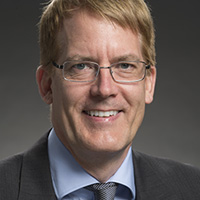
Joseph Lykken leads the Fermilab Quantum Division and was formerly Fermilab’s Deputy Director for Research. A distinguished scientist at the laboratory, Lykken was a former member of the Theory Division …
Read More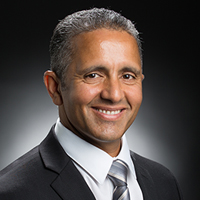
Dr. Nour E. Raouafi is a solar physicist. He is the project scientist of NASA’s Parker Solar Probe mission. He obtained his PhD from the University of Paris XI. His research spreads over a wide range of solar and heliospheric areas with an emphasis on the dynamic solar corona via the analysis of spectral and imaging observations, theory, and modeling.
Read More
Lily Xu is a PhD student studying computer science at the University of Southern California. She is part of the USC Center for AI in Society (CAIS), which aims to leverage artificial intelligence to address issues in conservation, public health, and public security.
Read More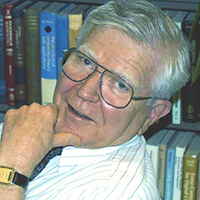
Robert Gallager has been a professor at MIT since his ScD thesis in 1960 where he invented LDPC codes, which have evolved to be a major error-correction technique in the oncoming 5th generation wireless telecommunication standard.
Read More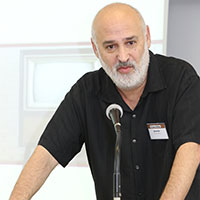
Daniel Dor, a linguist, media researcher and political activist, received his Ph.D. in Linguistics from Stanford University (1996). He is a professor at Tel Aviv University. Dor is the author …
Read More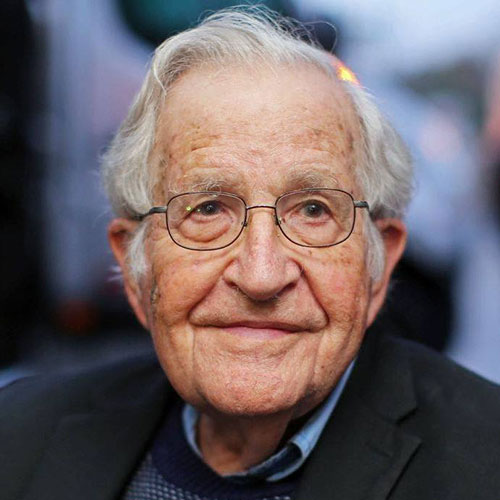
Noam Chomsky is a seminal figure in the field of linguistics, and ranks among the most cited widely scholars in modern history. In 1959, he revolutionized the study of modern …
Read More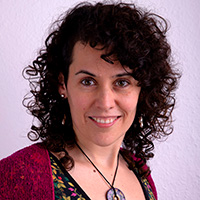
Ana Alonso-Serrano is a postdoctoral researcher at the Max Planck Institute for Gravitational Physics. With a PhD in Physics from the Complutense University of Madrid, her works are focused on …
Read More
Conny Aerts is Professor of Astronomy and Vice-Dean of Communication & Outreach in the Faculty of Science at KU Leuven. She is also a part-time professor of Asteroseismology at the …
Read More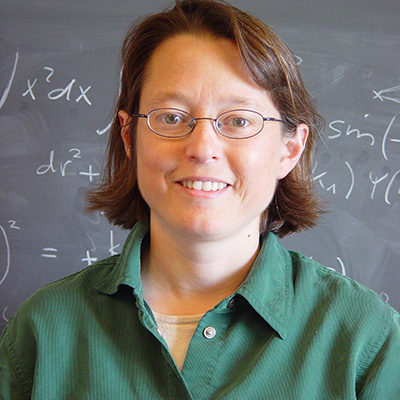
MacArthur Fellow
Eva Silverstein is a professor of physics at Stanford whose research focuses on cosmology and related areas of gravitation and quantum field theory. A number of her contributions connect the …
Read More
Lise Meitner Award
Anna Ijjas is a theoretical and computational physicist, working in gravitation and cosmology, whose research is aimed at the most fundamental questions about the universe: what is the mechanism that …
Read More
James Peebles is the Albert Einstein Professor of Science (Emeritus) at Princeton University and is regarded as one of the greatest theoretical cosmologists of the last 50 years. His work …
Read More
Stephen Wolfram is the creator of Mathematica, Wolfram|Alpha and the Wolfram Language; the originator of the Wolfram Physics Project; and the founder and CEO of Wolfram Research. Over the course …
Read More
Daniel Jafferis is a Professor of Physics at Harvard whose research involves string theory, supersymmetric quantum field theory, and quantum gravity. Jafferis was one of the discoverers of the low …
Read More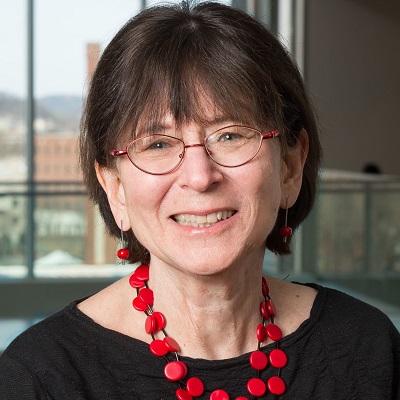
Lenore Blum (PhD, MIT) is Distinguished Career Professor Emerita of Computer Science at Carnegie Mellon University. Lenore’s research, from her early work in model theory and differential algebra has focused …
Read More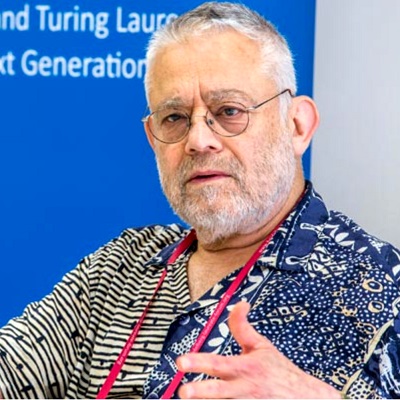
Manuel Blum (PhD, MIT) is Professor Emeritus of Computer Science at Carnegie Mellon and at UC Berkeley. Manuel has been motivated to understand the mind since he was in second …
Read More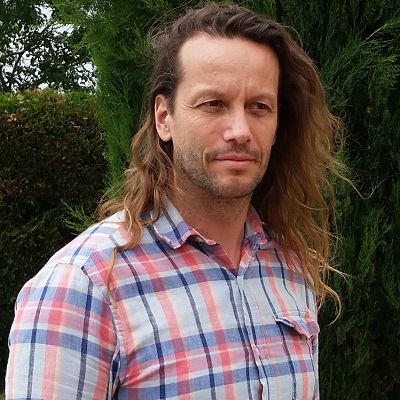
Rufin VanRullen is a cognitive neuroscientist and AI scientist based in Toulouse (France). He is a CNRS Research Director and holds a Research Chair at the Artificial and Natural Intelligence …
Read More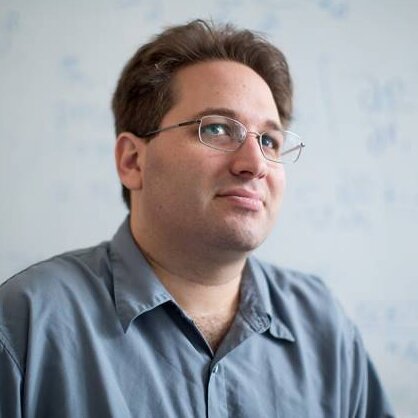
Scott Aaronson is the Schlumberger Centennial Chair of Computer Science at the University of Texas at Austin and the founding director of UT’s Quantum Information Center. He has made significant …
Read More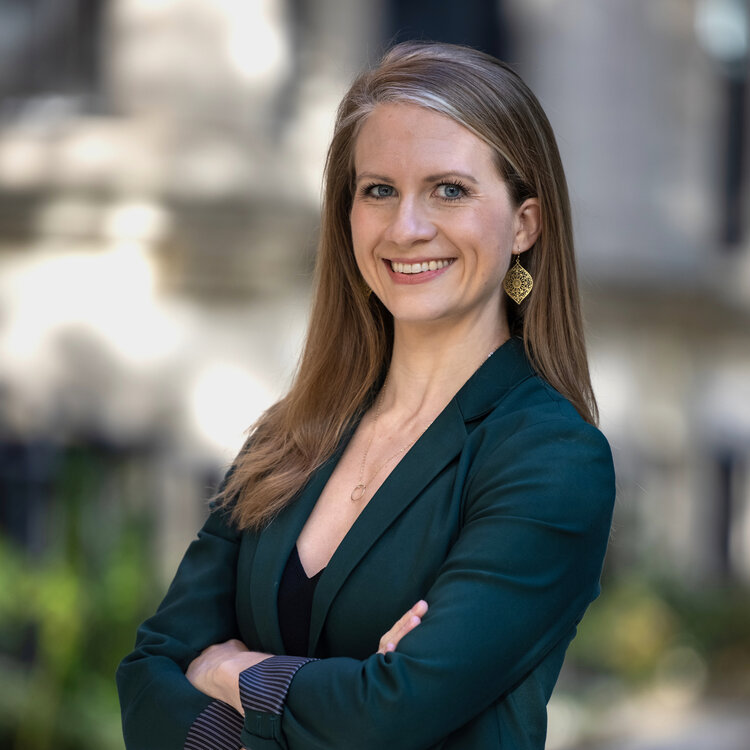
Kate Stockly is a qualitative researcher specializing in the scientific study of religion and gender and sexualities studies. She is a co-author of High On God: How Megachurches Won the Heart …
Read More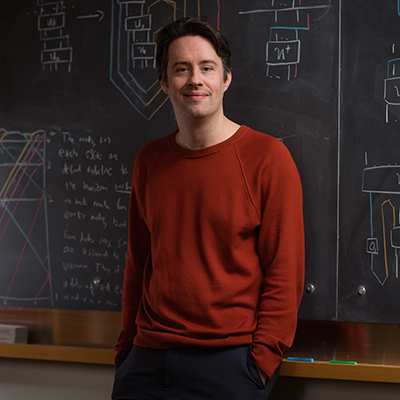
Daniel Harlow is a theoretical physicist and professor at MIT, recognized for his work in quantum gravity, black hole physics, and quantum information theory. He is known for linking quantum …
Read More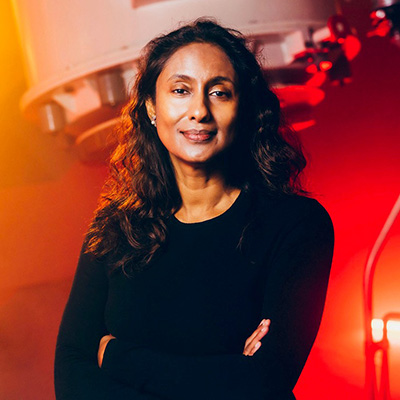
Hiranya Peiris is the 1909 Professor of Astrophysics at the University of Cambridge, the first woman to hold this prestigious chair in its 115-year history. She is a leading cosmologist …
Read More