






Participants
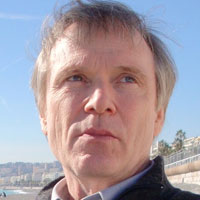
Patrick Cavanagh helped change vision research by creating the Vision Sciences Lab at Harvard and the Centre of Attention & Vision in Paris. He is currently researching the problems of attention as a frequent component of mental illnesses, learning difficulties at school, and workplace accidents.
Read More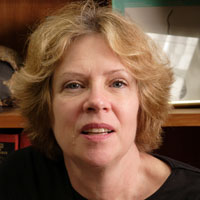
Margaret S. Livingstone is best known for her work on visual processing, which has led to a deeper understanding of how we see color, motion, and depth, and how these processes are involved in generating percepts of objects as distinct from their background.
Read More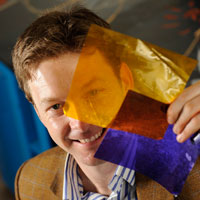
Bevil Conway, originally from Zimbabwe, is an artist and neuroscientist who researches the neural basis for visual behavior, with a focus on color vision, and investigates the relationship between visual processing and visual art.
Read More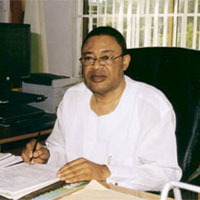
Monty Jones is co-winner of the prestigious 2004 World Food Prize, awarded for his discovery of the genetic process to create the New Rice for Africa (NERICA) which gives higher yields, shorter growth cycles and more protein content than its Asian and African parents.
Read More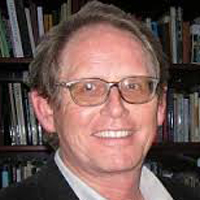
Christopher Tyler has spent his research career exploring how the eyes and brain work together to produce meaningful vision.
Read More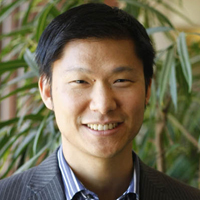
Frank Tong is a cognitive neuroscientist and an associate professor of psychology at Vanderbilt University. He uses functional brain imaging and neural decoding methods to predict what people are seeing or thinking from their patterns of brain activity.
Read More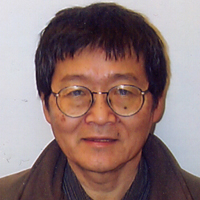
Ken Nakayama received his B.A. in Psychology from the Haverford College in 1962 and his PhD from the University of California at Los Angeles in 1967. For almost twenty years, he was at the Smith Kettlewell Eye Research Institute in San Francisco.
Read More
Eben Bayer uses biology to solve important environmental challenges by growing safe and healthy new materials as well as envisioning creative ways to use natural technology at industrial scales and in consumer applications.
Read More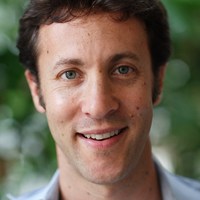
David Eagleman is a neuroscientist, best-selling author, and Guggenheim Fellow who holds joint appointments in the Departments of Neuroscience and Psychiatry at Baylor College of Medicine in Houston, Texas.
Read More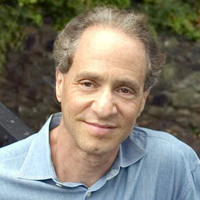
Ray Kurzweil is an inventor, entrepreneur, and futurist. In several books for a general audience, he has laid out his vision of a merger of man and machine that he contends will shape the future of humankind.
Read More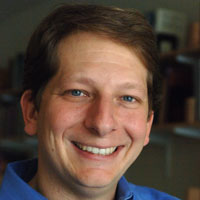
Josh Tenenbaum is a professor of Computational Cognitive Science in the Department of Brain and Cognitive Sciences at MIT, and a member of the Computer Science and Artificial Intelligence Laboratory (CSAIL). He studies learning, reasoning, and perception in humans and machines.
Read More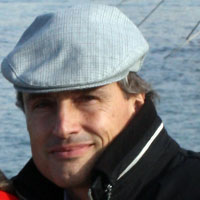
Jürgen Schmidhuber has published over 200 peer-reviewed scientific papers. His lab’s research on artificial neural nets won several handwriting recognition contests and number one rankings in several computer vision competitions and benchmarks.
Read More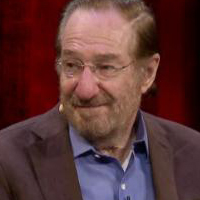
Edward Fredkin’s computer career started in 1956 when the Air Force assigned him to work at MIT’s Lincoln Laboratories. In 1968 he started at MIT as a full professor. From 1971 to 1974 he was the Director of CSAIL and he spent a year at Caltech as a Fairchild Distinguished Scholar, working with Richard Feynman.
Read More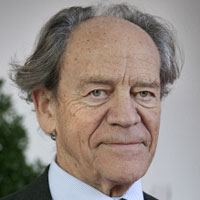
Torsten Wiesel is the Vincent and Brooke Astor Professor Emeritus and President Emeritus at Rockefeller University in New York City.
Read More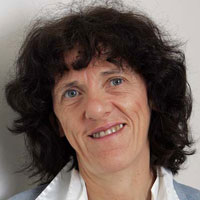
Gillian Small was appointed vice chancellor for research of The City University of New York in 2008 after serving with distinction as dean for research since 2003.
Read More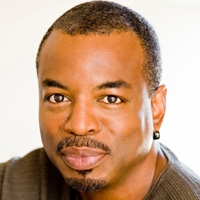
LeVar Burton has been capturing the admiring attention of both audiences and his industry peers for three decades and continues to enjoy longevity truly rare within the industry. His deftness in avoiding stereotype continues to be a hallmark of an incredibly diverse career.
Read More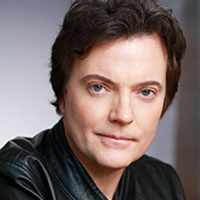
David Kuhn, a musician, singer, songwriter, performer was one of the original musicians chosen for both the development and Broadway productions of Pete Townshend’s Tony Award-winning rock opera The Who’s Tommy.
Read More
Peter Staley has been a long-term AIDS and gay rights activist, first as a member of ACT UP New York, then as the founding director of TAG, the Treatment Action Group. He served on the board of the American Foundation for AIDS Research (amfAR) for 13 years.
Read More
David Freedberg, the Pierre Matisse Professor of the history of art at Columbia University, is best known for his work related to psychological responses to art—particularly for his studies of iconoclasm and censorship. He is now devoting a substantial portion of his attention to collaborations with neuroscientists working in the fields of vision, movement, and emotion.
Read More
Dr. Peter L. Salk graduated Phi Beta Kappa from Harvard University in 1965 and Alpha Omega Alpha from Johns Hopkins University School of Medicine in 1969.
Read More
Jay Neitz is a vision researcher and professor of ophthalmology at the University of Washington in Seattle. At the Neitz Lab, he explores color vision in primates to better understand the visual system and develop gene therapies for human vision problems.
Read More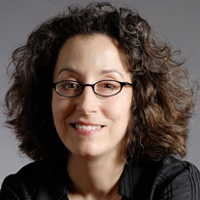
Martha J. Farah grew up in New York City, was educated at MIT and Harvard, and taught at Carnegie-Mellon University before joining the University of Pennsylvania. Her research in cognitive neuroscience has ranged widely, from vision at the back of the brain to executive function at the front.
Read More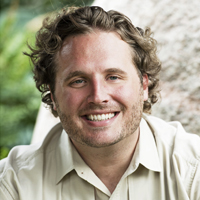
Caleb Harper is the Principal Investigator and Director of the Open Agriculture (Open Ag) Initiative at the MIT Media Lab. He leads a diverse group of engineers, architects, and scientists in the exploration and development of future food systems.
Read More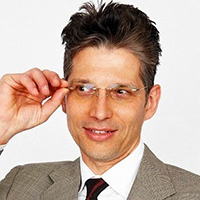
Dr. John R. Smith is an IBM Fellow and Manager of Multimedia and Vision at IBM T. J. Watson Research Center. He leads IBM’s Research & Development on Visual Comprehension including IBM Watson Developer Cloud Visual Recognition, Intelligent Video Analytics, and Video Understanding for Augmented Creativity.
Read More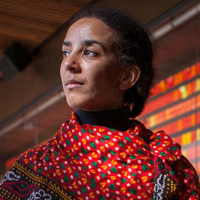
Timnit Gebru works in the Fairness Accountability Transparency and Ethics (FATE) group at Microsoft Research, New York. She is currently studying the ethical considerations underlying any data mining project, and methods of auditing and mitigating bias in sociotechnical systems.
Read More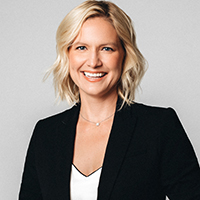
Emily Balcetis is an Associate Professor of Psychology at New York University. She studies how our motivations, emotions, and goals can shape, and even can change our visual perception. Her …
Read More