



Participants
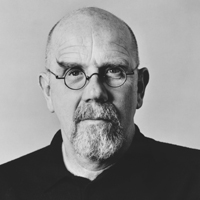
Chuck Close is a visual artist noted for his highly inventive techniques used to paint the human face, and is best known for his large-scale, photo-based portrait paintings. He has also participated in nearly 800 group exhibitions. In 1988, Close was paralyzed following a rare spinal artery collapse; he continues to paint using a brush-holding device strapped to his wrist and forearm.
Read More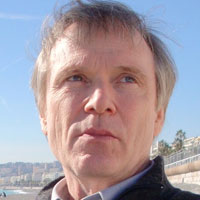
Patrick Cavanagh helped change vision research by creating the Vision Sciences Lab at Harvard and the Centre of Attention & Vision in Paris. He is currently researching the problems of attention as a frequent component of mental illnesses, learning difficulties at school, and workplace accidents.
Read More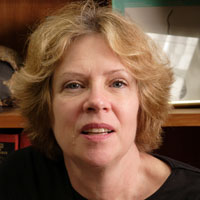
Margaret S. Livingstone is best known for her work on visual processing, which has led to a deeper understanding of how we see color, motion, and depth, and how these processes are involved in generating percepts of objects as distinct from their background.
Read More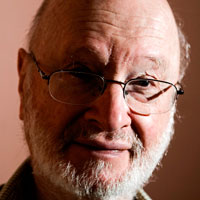
Cartoonist, playwright, screenwriter and children’s book author & illustrator, Jules Feiffer has had a remarkable creative career turning contemporary urban anxiety into witty and revealing commentary for over fifty years.
Read More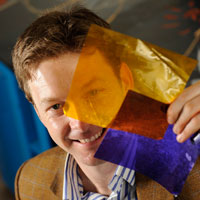
Bevil Conway, originally from Zimbabwe, is an artist and neuroscientist who researches the neural basis for visual behavior, with a focus on color vision, and investigates the relationship between visual processing and visual art.
Read More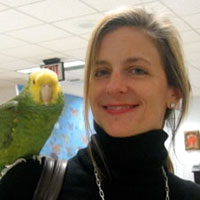
Amy Chase Gulden is a visual artist interested in art-making processes that are collaborative, not fully under her control, and bring her into direct contact with the living world. She has been collaborating with molecular biologist Kristin Baldwin, using the microorganism, E. coli bacteria, to generate living, growing paintings that can be replicated indefinitely or immortalized by printing onto paper.
Read More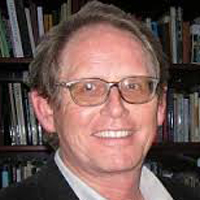
Christopher Tyler has spent his research career exploring how the eyes and brain work together to produce meaningful vision.
Read More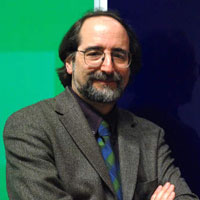
Lawrence Weschler was for over 20 years a staff writer at The New Yorker, where his work shuttled between political tragedies and cultural comedies. He is a two-time winner of the George Polk Award, for Cultural Reporting in 1988 and Magazine Reporting in 1992, and was also a recipient of the Lannan Literary Award.
Read More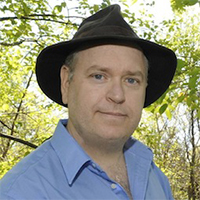
By examining historical maps and archeological records in combination with geographic computer modeling and scientific sleuthing, Eric Sanderson has reimagined the old growth forests, wetlands and meadows that Henry Hudson saw when he first arrived on the shores of Manhattan in 1609.
Read More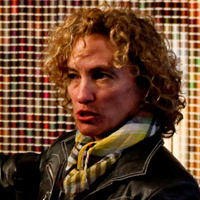
Interested in the links between art, science, and technology through the ages, New York artist Devorah Sperber’s work addresses the way the brain processes visual information versus the way we think we see.
Read More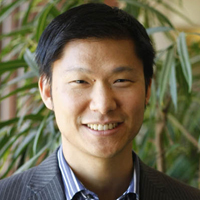
Frank Tong is a cognitive neuroscientist and an associate professor of psychology at Vanderbilt University. He uses functional brain imaging and neural decoding methods to predict what people are seeing or thinking from their patterns of brain activity.
Read More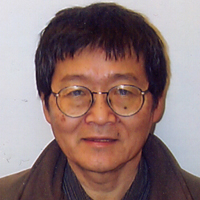
Ken Nakayama received his B.A. in Psychology from the Haverford College in 1962 and his PhD from the University of California at Los Angeles in 1967. For almost twenty years, he was at the Smith Kettlewell Eye Research Institute in San Francisco.
Read More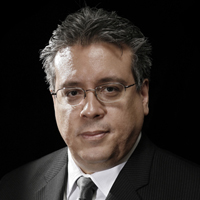
Eric DeCamps is the personification of a magician. Every one of his performances is filled with compelling stories and visual artistry, and at every turn, he performs the seemingly impossible. DeCamps has been a serious student of the art of magic for over 30 years.
Read More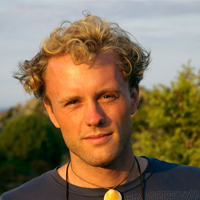
Combining elements of computer science, anthropology, visual art and storytelling, Jonathan Harris designs systems to explore and explain the human world. He has made projects about human emotion, human desire, modern mythology, science, news, anonymity, and language.
Read More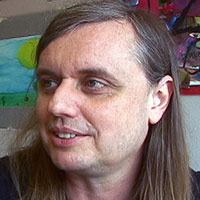
Steven Kurtz is a co-founder of the multi award-winning art and theater collective, Critical Art Ensemble, an organization that performs and exhibits art about information, communications, and biotechnologies. He is also a Professor of Visual Studies at SUNY at Buffalo.
Read More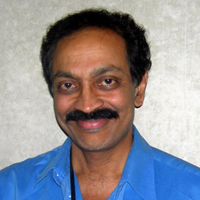
Vilayanur Ramachandran investigates the nature of self and human consciousness. His work spans the causes and effects of synesthesia and phantom limb pain to questions about visual perception and the brain. He is Director of the Center for Brain and Cognition at the University of California, San Diego.
Read More
Body Snatcher is an audiovisual installation by artists Alex Dowling and Sinéad Meaney that captures and manipulates sounds that visitors create using their bodies.
Read More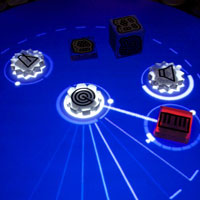
This is a collaborative, multi-user audio-visual experience. Sensors in a table and objects combine to create a sonic experience that is different every time a piece is moved.
Read More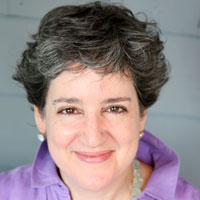
Julie Burstein is a Peabody Award-winning radio producer, best-selling author, and public speaker who has spent her working life in conversation with highly creative people. She is the co-author of Spark: How Creativity Works.
Read More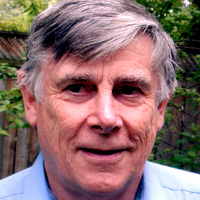
Keith Oatley has spent the last twenty years researching the psychology of reading and writing fiction, as both a scientist and the author of three novels.
Read More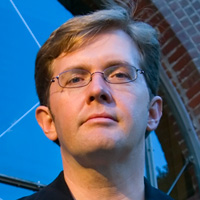
Alex Wright is the Director of User Experience at The New York Times and the author of Glut: Mastering Information Through the Ages. He is also a member of the graduate faculty at the School of Visual Arts’ MFA program in Interaction Design.
Read More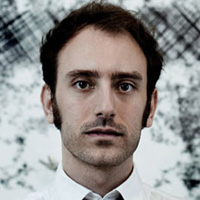
Tristan Perich’s work is inspired by the aesthetic simplicity of math, physics and code. WIRE magazine describes his compositions as “an austere meeting of electronic and organic.”
Read More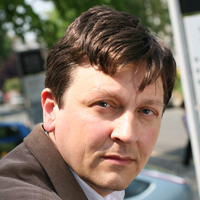
Dominic Ffytche is a psychiatrist at the Institute of Psychiatry, King’s College London. He researches visual perceptual disorders from a clinical and neuroscientific perspective and has published more than 70 scientific papers, book chapters and lay articles in the field. He recently reviewed Oliver Sacks’ Hallucinations for the journal Nature.
Read More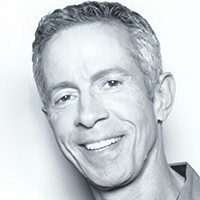
Peter Staley has been a long-term AIDS and gay rights activist, first as a member of ACT UP New York, then as the founding director of TAG, the Treatment Action Group. He served on the board of the American Foundation for AIDS Research (amfAR) for 13 years.
Read More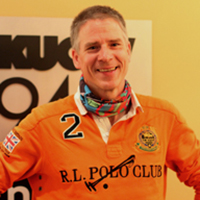
Born in the American Midwest, Christof Koch grew up in Holland, Germany, Canada, and Morocco. He studied Physics and Philosophy and was awarded his Ph.D. in Biophysics. In 1987, Koch joined the California Institute of Technology as a Professor in Biology and Engineering.
Read More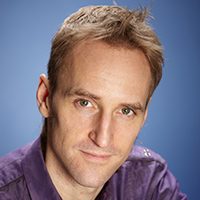
Edward Vessel is an internationally recognized expert on neuroaesthetics. His research combines brain imaging with behavioral and computational approaches to study how individuals are moved by, and get pleasure from, visual experiences.
Read More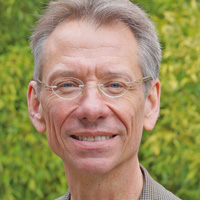
Jay Neitz is a vision researcher and professor of ophthalmology at the University of Washington in Seattle. At the Neitz Lab, he explores color vision in primates to better understand the visual system and develop gene therapies for human vision problems.
Read More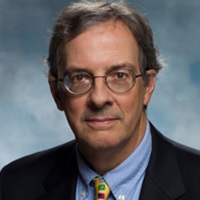
Frederick E. Lepore is Professor of Neurology and Ophthalmology at Rutgers University/Robert Wood Johnson Medical School. He was formerly Chief of the Neurology Service at Robert Wood Johnson University Hospital and Acting Chairman of the medical school’s Department of Neurology.
Read More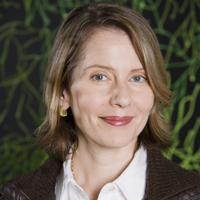
Paola Antonelli’s work investigates design’s influence on everyday experience, often including overlooked objects and practices, and combining design, architecture, art, science, and technology. She is a Senior Curator at The Museum of Modern Art in the Department of Architecture & Design, as well as MoMA’s founding Director of Research & Development.
Read More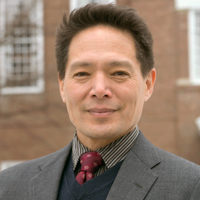
Peter Ulric Tse is interested in understanding, first, how matter can become conscious, and second, how conscious and unconscious mental events can be causal in a universe where so many believe a solely physical account of causation should be sufficient.
Read More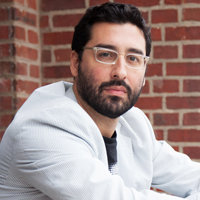
Lars Jan is a director, writer, visual artist, and founder of Early Morning Opera, a genre-bending performance and art lab whose works explore emerging technologies, live audiences, and unclassifiable experience. His works have been presented by The Whitney Museum, Sundance Film Festival, and BAM Next Wave Festival.
Read More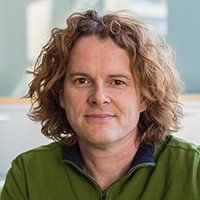
Jan L. Plass, Ph.D., is the Paulette Goddard Chair of Digital Media and Learning Sciences, Professor in the Steinhardt School of Culture, Education, and Human Development at New York University, and he co-directs the Games for Learning Institute.
Read More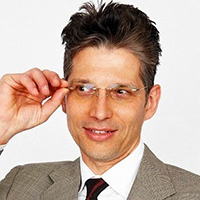
Dr. John R. Smith is an IBM Fellow and Manager of Multimedia and Vision at IBM T. J. Watson Research Center. He leads IBM’s Research & Development on Visual Comprehension including IBM Watson Developer Cloud Visual Recognition, Intelligent Video Analytics, and Video Understanding for Augmented Creativity.
Read More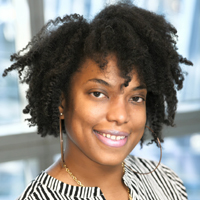
Mellanie Garner is a regulatory scientist in the Regulatory Operations/Raw Ingredients group in Research and Development at Avon Products, Inc. In her time at Avon she was responsible for global regulations on new raw ingredients for consumer products, including color; skincare; and hair care products.
Read More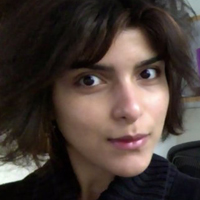
Mariam Aly is a professor of psychology in Columbia University, where she spends her days thinking about, researching, and teaching cognitive neuroscience: the study of how the brain supports the way we think.
Read More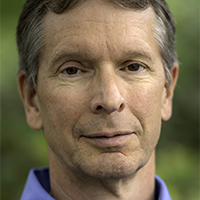
Donald Hoffman received his PhD from MIT and is a professor of cognitive science at the University of California Irvine. He is an author of over 120 scientific papers and three books, including Visual Intelligence: How We Create What We See.
Read More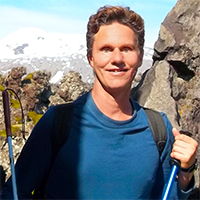
Daniel Kish has been an innovator in neuroscience since he learned to walk. After losing both eyes to retinal cancer by the age of 13 months, he spontaneously began to echolocate by clicking his tongue on the roof of his mouth and listening to the echoes from the environment around him to navigate.
Read More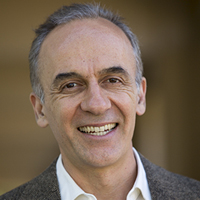
E.J. Chichilnisky is the John R. Adler Professor of Neurosurgery, and Professor of Ophthalmology, at Stanford University, where he has worked since 2013 after 15 years at the Salk Institute for Biological Studies.
Read More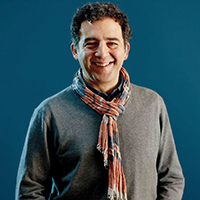
Rodrigo Quian Quiroga is a Neuroscientist and former Director of the Centre for Systems Neuroscience at the University of Leicester, UK. He is currently an ICREA Professor at the Hospital …
Read More
Emily Balcetis is an Associate Professor of Psychology at New York University. She studies how our motivations, emotions, and goals can shape, and even can change our visual perception. Her …
Read More