Search Icon





By 2050, one of every four people on Earth will go hungry unless food production more than doubles. Science-based agriculture has proposed unconventional new tools—earthworms, bacteria, and even genes from sunny daffodils—to meet this towering challenge. But will such innovative ideas be enough?

We once shared the planet with Neanderthals and other human species. Some of our relatives may have had tools, language and culture. Why did we thrive while they perished?

Brian Greene and physicist Samir Mathur explore one of the deepest puzzles in modern physics, the true nature of black holes and the fate of information in the universe. Their …

Join us for #YourDailyEquation with Brian Greene. Every Mon – Fri at 3pm EDT, Brian Greene will offer brief and breezy discussions of pivotal equations. Even if your math is a …

Nobel Laureate Andrea Ghez joins Brian Greene to explore her decade’s long pursuit of the supermassive black hole at the center of the Milky Way Galaxy. This program is part …
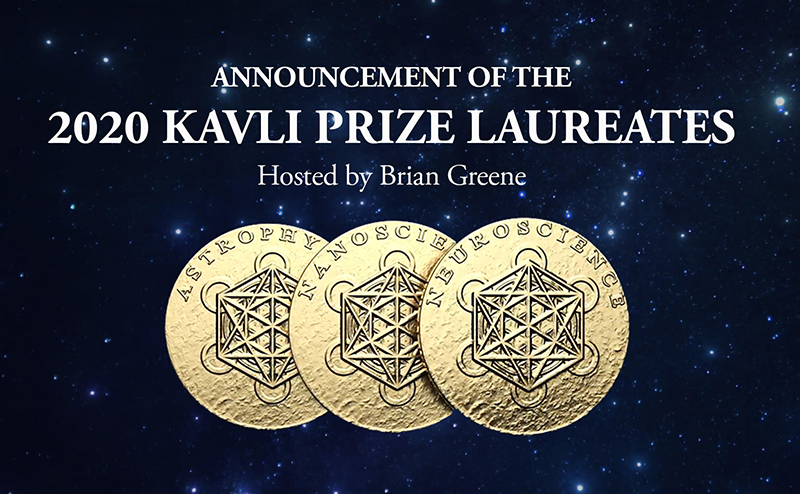
Meet the newly named 2020 Kavli Prize Laureates in astrophysics, nanoscience and neuroscience. Honored for breakthroughs that transform our understanding of the big, the small and the complex, the Laureates …