Search Icon




What if your brain at 77 were as plastic as it was at 7? What if you could learn Mandarin with the ease of a toddler or play Rachmaninoff without …
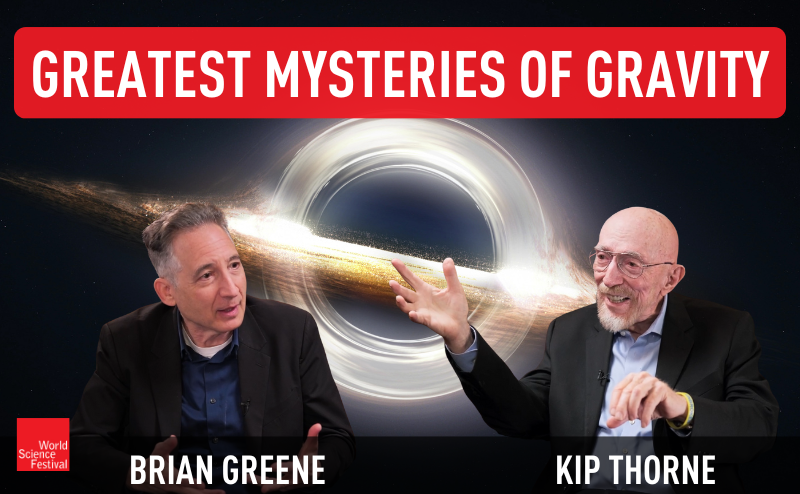
Nobel laureate Kip Thorne joins Brian Greene to trace a story that runs from the trenches of World War I to the rise of gravitational-wave astronomy—a journey that eventually carried …
Your eyes and ears don’t tell you the truth. That’s not what they’re for. The senses evolved to enable us to survive and succeed in the world, not to represent …

In his research, U.K. Astronomer Royal Martin Rees has tackled topics as varied as the Big Bang, quasars, and more far-out ideas like the search for dark matter and the …

Nowadays, the tools for tracing your family tree have advanced far beyond looking back at names in the family Bible or compiling a scrapbook of paper records. Using your genetic information to find long-lost relatives is easier and cheaper than ever before—and scientists are looking to push the technology even further by analyzing our skin and facial features.
How do we develop a sense of who we truly are? Do we perceive ourselves as science defines us? While some scientists think our identities are a product of our …