Search Icon





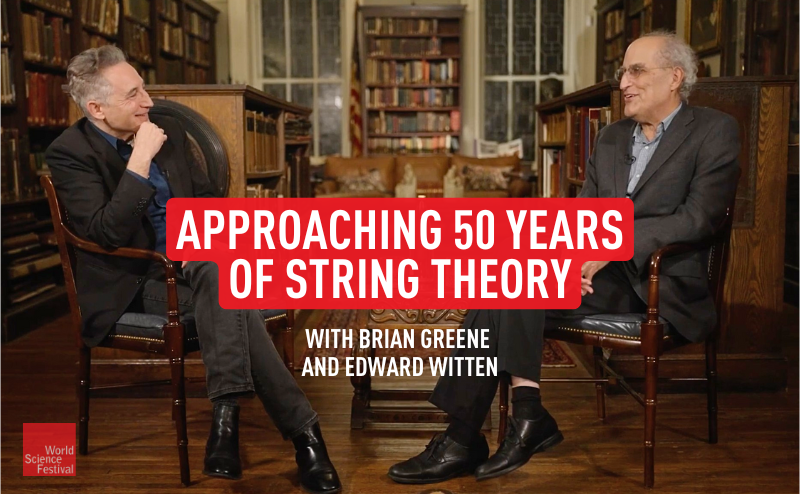
#YourDailyEquation with Brian Greene offers brief and breezy discussions of the most pivotal equations of the ages. Even if your math is a bit rusty, these accessible and exciting stories …
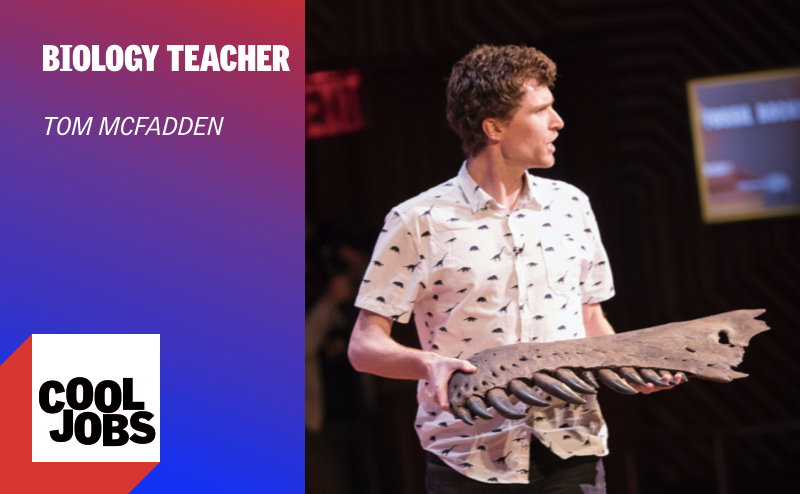
Students in the biology class of @ScienceWithTom write and perform rapping, rhyming biology songs that leave them inspired to learn more. Science teachers prepare tomorrow’s pioneering scientists. Episode filmed live …
The prestigious biennial Kavli Prizes recognize scientists for major advances in three research areas: astrophysics, nanoscience and neuroscience—the big, the small and the complex. The 2014 winners, sharing a $1 million award in each field, will be announced live via satellite from the Norwegian Academy of Science and Letters in Oslo.
In his research, U.K. Astronomer Royal Martin Rees has tackled topics as varied as the Big Bang, quasars, and more far-out ideas like the search for dark matter and the …
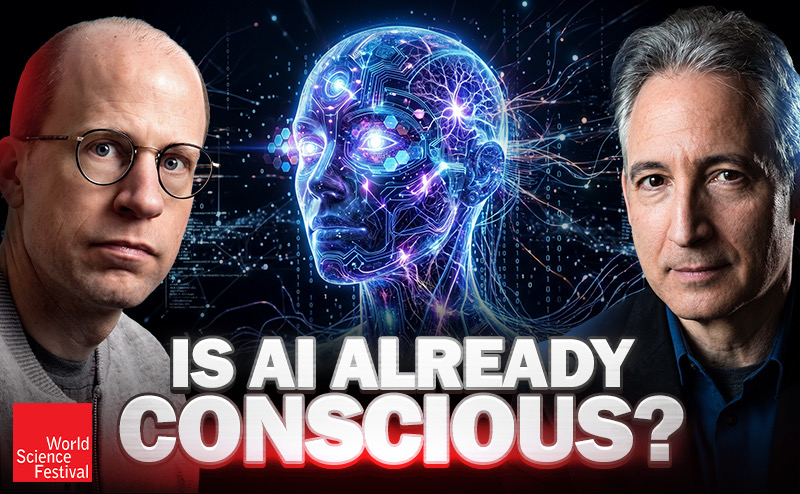
Is the human brain an elaborate organic computer? Since the time of the earliest electronic computers, some have imagined that with sufficiently robust memory, processing speed, and programming, a functioning human brain can be replicated in silicon.
What are scientists looking for when searching for alien life? A lot, it turns out: the search for extraterrestrials requires the help from astronomers, planetary scientists, chemists, computer scientists, and geneticists, just to name a few. But are we barking up the wrong carbon-based tree?