



Join the World Science Festival Mailing List
Science’s Most Elusive Women: Cecilia Payne-Gaposchkin & the Women of Harvard Observatory
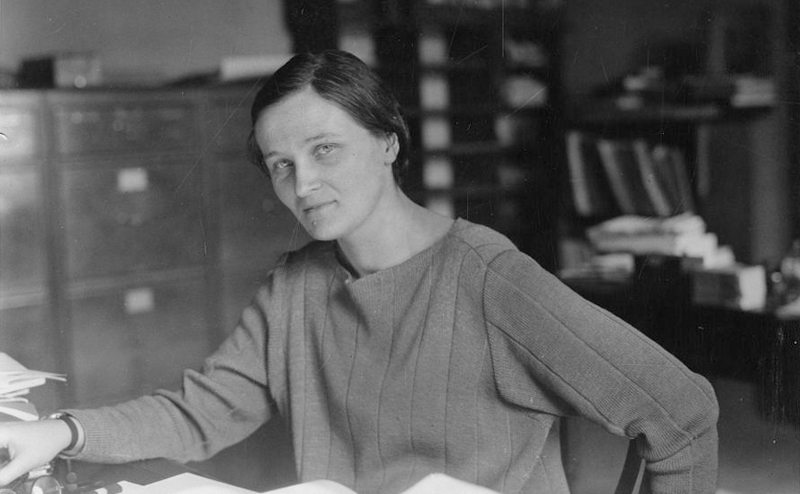
“Pickering’s Computers” The final installment of this series on science’s elusive women will focus on English-American astronomer Cecilia Payne-Gaposchkin and the women of Harvard Observatory. Payne-Gaposchkin was the first scientist to assert, against conventional wisdom at the time, that stars are primarily made of hydrogen and helium. Presented in her 1925 thesis, this conclusion was so radical that she was talked out of presenting it by the senior astronomers with whom she studied. Years later, the community, of course, came around. Her work at Radcliffe was the first doctoral dissertation in astronomy from Harvard, and it marked a turning point in the establishment of astronomy as a field that is independent from mathematics. She climbed the nomenclature ladder from “assistant” to “astronomer,” becoming Harvard’s first female professor, and later, being named the university’s first female department chair. But she did not climb the ladder alone. Her path was cleared by a number of remarkable women who preceded her. Working at the Harvard Observatory under the direction of Edward Pickering, they were known as “Pickering’s Harem”, or, more tastefully, “The Harvard Computers.” These women, paid 25 cents an hour, proved to be quite the processing machines. As an assistant, Henrietta Leavitt …
Read More