WALL-E's World
Designs for an Invisible Footprint

Beneath WALL-E’s whimsical surface lies a grown up, cautionary tale about humanity’s relationship with the environment. Carl Zimmer hosts leading scientists Mitchell Joachim, Christopher McKay and Ben Schwegler as they explore ingenious strategies for creating a sustainable future — from 'carborexic' cities made entirely from recycled trash to how the pursuit of "green" space exploration may one day help to revolutionize waste management here on Earth.
A screening of WALL-E will take place at the Museum of Arts and Design at 4pm on June 11.
Admission to the screening will be on a first-come first-served basis.
Carl Zimmer
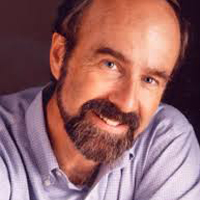
Mitchell Joachim is on the faculty at Columbia University and Parsons School of Design. He is a partner in Terrefuge, a New York-based organization for philanthropic architecture and ecological design. His design of a compact, stackable “city car,” developed with the MIT Smart Cities Group, won the 2007 Time Magazine “Best Invention of the Year.”
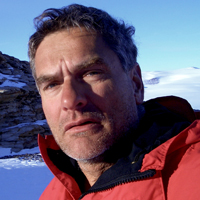
Christopher McKay is one of the world’s leading experts on the atmosphere of Mars and the origin and evolution of life there. Dr. McKay, a planetary scientist and astrobiologist at NASA’s Ames Research Center, has been conducting research in Antarctica for the last 30 years, studying its Mars-like environs and the extremophiles that inhabit them.
Ben Schwegler is Walt Disney Imagineering R&D’s chief scientist, and is particularly interested in the development of sustainable engineering techniques. He was instrumental in the creation of the most energy efficient theme park ever built as well as a new generation of environmentally friendly fireworks.
Award-winning science writer Carl Zimmer explores the frontiers of biology in his writing. His work appears regularly in The New York Times and many magazines, and he is the author of seven books, including, most recently, The Tangled Bank: An Introduction to Evolution.