

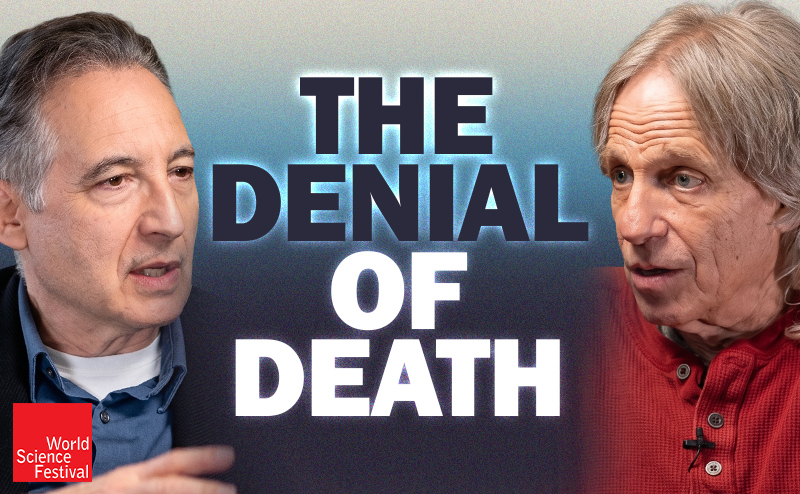
The fear of death quietly shapes almost everything we do. At least that was the thesis Ernest Becker put forward in his Pulitzer Prize-winning book, The Denial of Death. But how can we tell if it’s true? That’s the question social psychologist Sheldon Solomon and his collaborators have pursued for more than four decades — the subject of this conversation with Brian Greene.
The findings are striking. In experiment after experiment, subjects subtly reminded of their mortality cling more tightly to the belief systems and social structures that shield them from the terror of death. Solomon explains how self-esteem works as an anxiety buffer, why death reminders intensify tribalism and conflict, and what ancient burials, the pyramids, and today’s billion-dollar longevity ventures have in common. Drawing on Kierkegaard and Heidegger, the conversation turns finally to how confronting mortality can open onto gratitude, humility, and a deeper way of being alive.
This program is part of the Rethinking Reality series, supported by the John Templeton Foundation.