Search Icon





As a discipline, science aspires to be an evidence-based, non-partisan tool for revealing truth. But science is carried out by scientists, human beings like the rest of us, subject to …
Renowned Caltech physicist John Preskill joins Brian Greene for an in-depth discussion of quantum mechanics, focusing on where we are and where we’re headed with quantum computing. This program is …
Join us for #YourDailyEquation with Brian Greene. Every Mon – Fri at 3pm EDT, Brian Greene will offer brief and breezy discussions of pivotal equations. Even if your math is a …
Thirty-five years ago string theory took physics by storm, promising the coveted unified theory of nature’s forces that Einstein valiantly sought but never found. In the intervening decades, string theory …
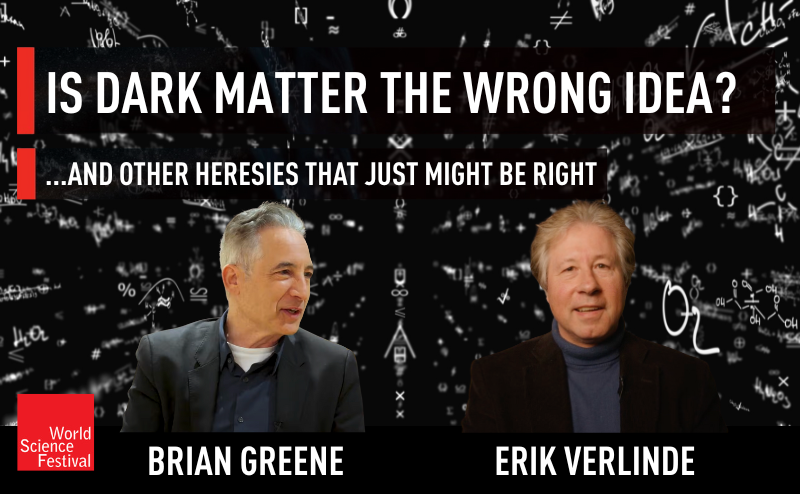
Without dark matter and dark energy, the equations of physics don’t match what we observe in the cosmos. But what if it’s not the universe that needs extra ingredients—but the …
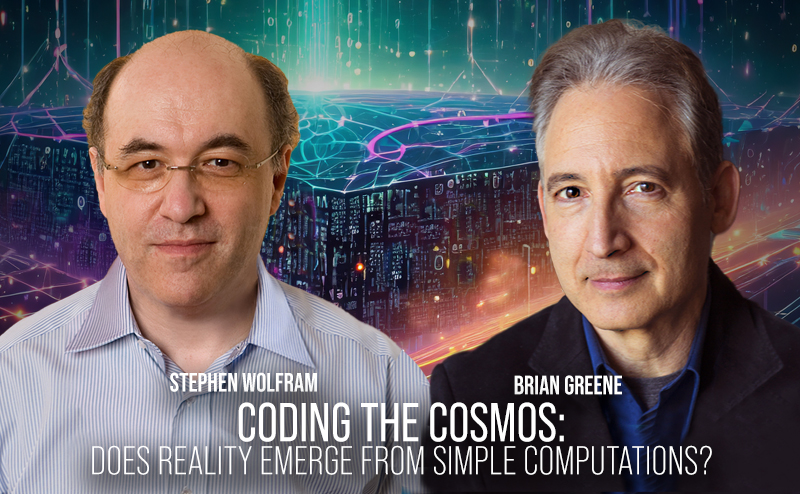
Stephen Wolfram joins Brian Greene to explore whether the ultimate theory of the universe might emerge from a computationally simple framework. This program is part of the Big Ideas series, …