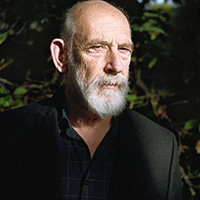


What does it actually take to understand the universe at its deepest level, and what happens when the rules that govern it seem to contradict each other?
Theoretical physicist Leonard Susskind joins Brian Greene for a conversation on black holes, the nature of reality, and what it means to spend a lifetime chasing the hardest questions in physics. Together they trace the ideas that have defined Susskind’s career, from a Bronx childhood and early years as a plumber, to his decades-long battle with Stephen Hawking over whether information can ever truly be lost inside a black hole, and the idea that the universe itself might work like a hologram.
Susskind and Greene also push into the messier, more human side of science that rarely makes it into textbooks. They discuss questions about why the biggest breakthroughs tend to start where two things that both seem true turn out to be impossible to reconcile, why being wrong never scared Susskind, and what it actually feels like to hold a conviction your entire field thinks is crazy. They take on the harder questions surrounding string theory like what it has and hasn’t delivered, why experiments have gotten so difficult they now resemble building cathedrals, and whether a theory that hasn’t made a confirmed prediction is still worth pursuing. It’s a conversation with one of the most original thinkers in modern physics, and a reminder that the ideas that sound the craziest sometimes end up changing everything.
This program is part of the Rethinking Reality series, supported by the John Templeton Foundation.