Search Icon




Getting old is an unavoidable truth of life. And yet, for most of modern history this mortal coil has baffled scientists. Over the past decade, however, researchers have made great strides in understanding the cellular, molecular, and genetic tableau of aging—which has brought the next question into sharp focus: Can aging be stopped?
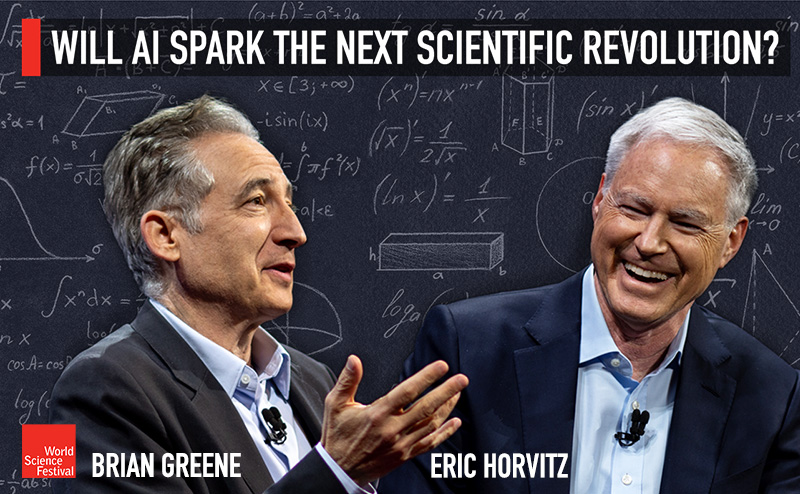
Brian Greene and Microsoft’s Chief Scientific Officer Eric Horvitz explore how AI may shape the future of fundamental scientific research. This program is part of the Big Ideas series, supported …
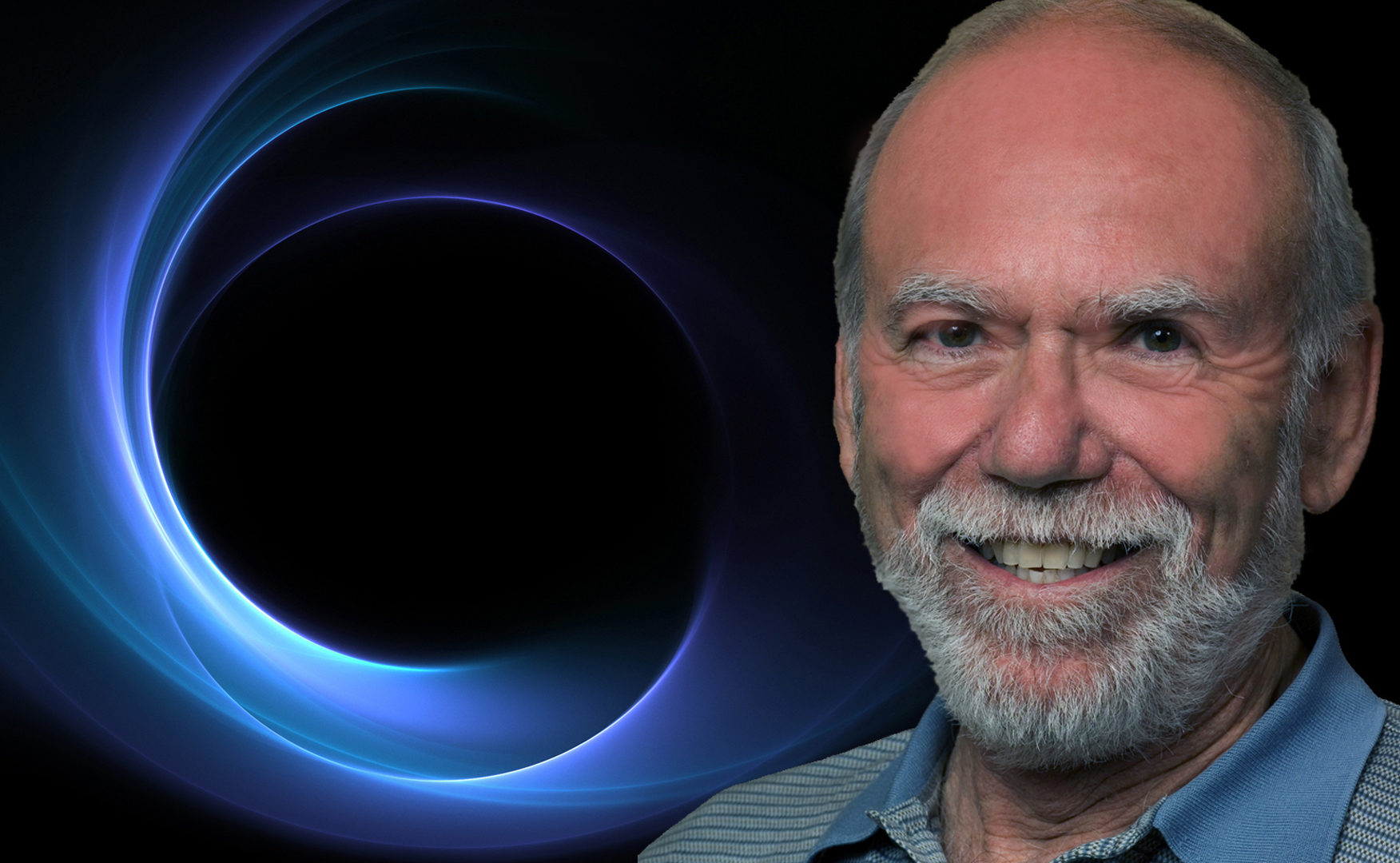
Acknowledging the scientists who blazed intellectual trails before him, Isaac Newton wrote, “If I have seen a little further it was by standing on the shoulders of giants.” In this special annual series, we invite our audience to stand on the shoulders of a modern-day giant. This year, we are honored to present an address by a titan of physics, Barry Barish.

From a bee’s hexagonal honeycomb to the elliptical paths of planets, symmetry has long been recognized as a vital quality of nature. Today’s theorists are pursuing an even more exotic symmetry that, mathematically speaking, could be nature’s final fundamental symmetry: supersymmetry.

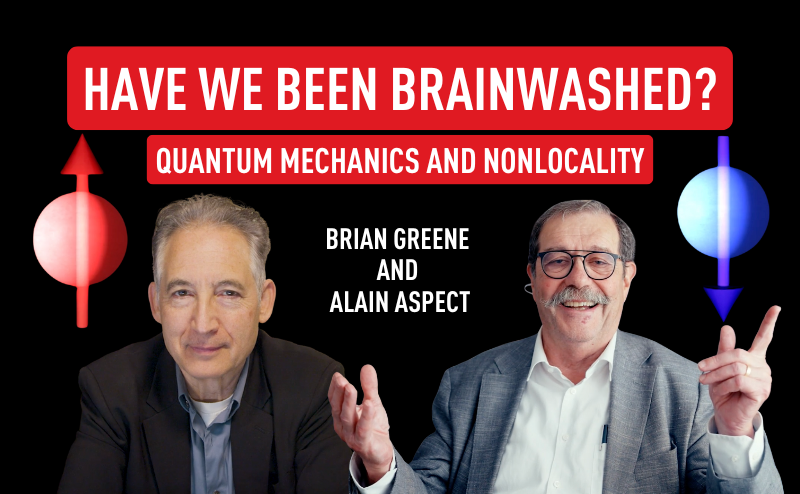
When no one is looking, a particle has near limitless potential: it can be nearly anywhere. But measure it, and the particle snaps to one position. How do subatomic objects shed their quantum weirdness?
“We can rebuild him. We have the technology,” began the opening sequence of the hugely popular 70’s TV show, “The Six Million Dollar Man.” Forty-five years later, how close are …