Search Icon




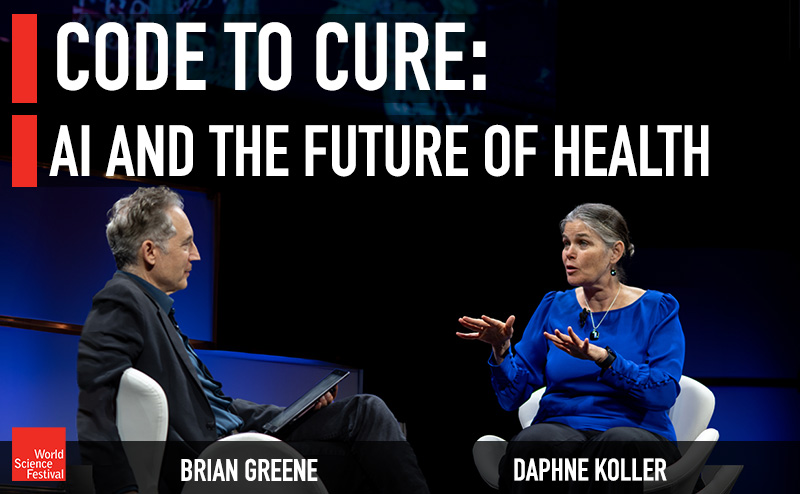
Renowned computer scientist and Coursera co-founder Daphne Koller joins Brian Greene to discuss her new venture in using machine learning for drug discovery and development. This program is part of …
Can the spooky world of quantum physics explain bird navigation, photosynthesis and even our delicate sense of smell? Clues are mounting that the rules governing the subatomic realm may play an unexpectedly pivotal role in the visible world.

Evolutionary paleogeneticist Beth Shapiro travels to the cold reaches of the world to find DNA samples of long extinct animals, such as mastodons and saber-toothed tigers. She hopes to learn …

A compelling narrative is the true heart of science writing, whether it comes in the form of a science fiction classic like Frankenstein or a physicist’s blog posts. But what are the specific ways that writers illuminate and humanize science?
With ever more refined techniques for measuring complex brain activity, scientists are challenging the understanding of thought, memory and emotion–what we have traditionally called “the self.”
The mysteries of dark matter and dark energy may be evidence that we don’t fully understand the force of gravity. But when it comes to a force that has been studied mathematically and probed observationally for hundreds of years, what do we still need to learn?