22,399 views | 01:00:35




What might happen to mathematics, and to mathematicians, when artificial intelligence can solve in hours or days what humans have struggled with for decades or longer.
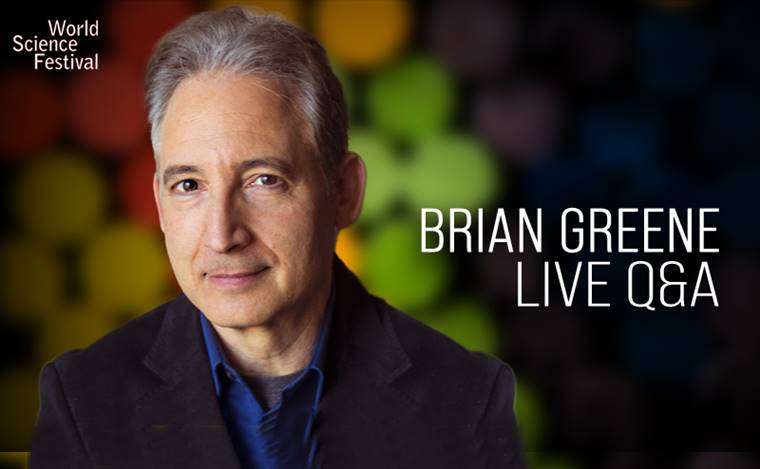
Brian Greene reflects on OpenAI’s release of more than 700 papers, claiming progress on roughly 370 unsolved mathematical problems, and asks the question: Going forward, what will be the role of the human mathematician? Will AI’s approach contain genuine insights or merely answers without understanding? Will human creativity and the flash of original insight still set us apart, and what would it mean if they don’t? Greene concludes that the role of the mathematician may ultimately shift from solver to curator, critic, and conductor of an intelligence that now moves faster and perhaps deeper than we do. What does it mean to be a human thinker in an age when the machines may well surpass us?
– So, AI solved a math problem with a million dollar bounty that had stumped humans for decades, a feat that many of us anticipate is just the tip of an iceberg, but I don’t think many foresaw just how quickly the water would recede, revealing the depth of that iceberg, because OpenAI has now released more than 700 papers, announcing progress on something like 370 or more unsolved problems. And if the papers hold up, and no doubt it will take some time to determine that, but if they do, that’s like a lifetime of human work. I mean, more than a lifetime, really, and in what? A few hours, or days, or whatever of computer time. So what do we make of this? Well, again, it will take time to evaluate all the proposed results, but here are a few thoughts on a question that is echoing through math departments worldwide. Going forward, what will be the role of the human mathematician? Let me begin with a little story. Years ago, when I was just a kid, I was on a challenging outward bound survival course. My parents probably wanted to toughen me up. And the course leader would periodically read us passages from “The Odyssey.” And his point was that reaching Ithaca, reaching home safely, that was Odysseus’s goal, but the richness of his story, his own growth, it came from challenges of the journey itself. And that’s an attitude that our leader obviously wanted to instill in us as we faced our own challenges during the course. And yeah, it was a helpful perspective back then, and since, and perhaps now too, because similarly, getting the answer in mathematics may be the goal, but the journey, how we get there, and the ideas we develop along the way, that is an absolutely vital part of the story. The methods and the ideas developed in the journey, they are what enrich mathematical knowledge and keep the field vibrant. So one might say, optimistically, that AI may provide solutions, but they may lack the insights that the usual human struggle would have provided, and which maybe we humans can still provide. And we’ve had a taste of that before back in 1976, the so-called four color theorem, that any map can be colored with just four colors so no two neighbors are colored the same. That was proved in part by having a computer grind through well over 1,000 cases, and the result was right. But some mathematicians, they felt short changed. We got the answer, but not the deep understanding. So similarly, maybe AI will provide a rich trove of answers, but we humans may still be needed to develop the deep understanding. And I like the sentiment, but will it hold up? Maybe, right, but from my own initial look at the papers, and some early conversations I’ve had with colleagues, there is a real possibility here that AI’s chains of reasoning will contain its own rich journey of insight, providing the kinds of ideas and methods we would expect from human progress. As mathematicians dig in, we will see, but taking refuge in the exceptionalism of the human journey, that may provide less cover than we might hope. Okay, if that is the case, then what? Well, some will surely argue that there’s not a lot to worry about, because all AI is doing is drawing on effectively every math paper any human has ever written, commingling the voluminous known, but far flung ideas, and leveraging what we’ve already accomplished to make progress on unsolved problems. And yeah, sure, no doubt that is part of it. But when a human brings together disparate ideas to provide new insights, we often call that creativity. Some will go on further to say that the best human mathematicians do more. They come up with sparklingly original, never before thought of ideas, the flash of human brilliance. I mean, think of Cantor’s diagonal argument, revealing different kinds of infinity, or the turns of logic in Girdle’s incompleteness theorems, or even Poincare stepping onto a bus in a little French town, chatting about something else entirely, and just like that, a key to a problem related to automorphic functions just appears in his mind. So perhaps that kind of creativity, that kind of flash of insight is something special that only we humans can do. And if it does turn out that human brilliance stands apart, fantastic, wonderful. Our role will be clear. And this is surely possible, but my guess is it’s wishful thinking. So the big question, if AI can reach the level at or beyond the rare humans with truly genius capacities, where would that leave us? Would that be the end of mathematics? I don’t think so, but the field would shift likely profoundly. I mean, in the near term, some, of course, will continue pursuing mathematics the way they always have, and their work may sit far enough outside the arena AI is exploring that, at least for a while, it may be business as usual. And perhaps there will be swaths of mathematics that AI is not particularly adept at handling, so conventional work in such areas may continue for a long while. Other researchers, they will become extraordinarily skilled at wielding these new tools. And where such a partnership, between exceptional human mathematicians and AI can take us, that’s really exciting. I imagine such collaboration may become a dominant mathematical mode perhaps for a long time, but wait long enough. If AI’s results stand up to close scrutiny, and the astoundingly fast progress continues with pace, I mean, if AI can invent truly original ideas, if it can take the glimmer of an idea humans suggest, determine if it’s promising, and if it is, develop it into a full fledged framework and deduce its consequences, well, mathematics, as currently practiced, may become an anachronism, kind of like living off the grid, building your own shelter, growing your own food. A throwback a few choose, but most do not. But I don’t see that as the end of mathematics, and here’s why. There are infinitely many theorems that can be proved, but most of them, we humans just wouldn’t find them interesting. Only we know best what we care about. So our role may shift to curator, critic, conductor, continually redirecting AIs toward questions that we find exciting and evaluating their progress for novel approaches that open new areas of inquiry, theoretical or applied. I mean, Poincare realized a version of this a century ago, when he said something like, creativity consists precisely in not making useless combinations. The real human gift is discernment, knowing which of the endless possibilities matter. I mean, sure, over time AI can learn our taste, the kinds of results we’d likely care about, but in the end, those choices are and always will be ours to make. It is only we humans who can bring to bear our humanity. And so the beautiful library of mathematical insight, a few thousand years in the making, will likely expand rapidly and vastly. But to keep it from becoming as comprehensive and as useless as Borges’ Library of Babel, I mean, you know the one I mean, the library containing every possible book with 410 pages, with a few gems lost among an astounding number of books of no interest whatsoever. To avoid that, it will be human mathematicians, trained mathematicians, talented mathematicians who will read the volumes, be enriched by them, and track and even inspire the ones that we care about most. Mathematical knowledge will flourish. And since we built the AIs, and they were trained on our knowledge, we as a species can surely take credit for the results they deliver. But in mathematics, and in many other fields too, we may need to accept that our role will change, perhaps profoundly so. It is a strange new world.
What might happen to mathematics, and to mathematicians, when artificial intelligence can solve in hours or days what humans have struggled with for decades or longer.
Brian Greene reflects on OpenAI’s release of more than 700 papers, claiming progress on roughly 370 unsolved mathematical problems, and asks the question: Going forward, what will be the role of the human mathematician? Will AI’s approach contain genuine insights or merely answers without understanding? Will human creativity and the flash of original insight still set us apart, and what would it mean if they don’t? Greene concludes that the role of the mathematician may ultimately shift from solver to curator, critic, and conductor of an intelligence that now moves faster and perhaps deeper than we do. What does it mean to be a human thinker in an age when the machines may well surpass us?

Brian Greene is a professor of physics and mathematics at Columbia University, and is recognized for a number of groundbreaking discoveries in his field of superstring theory. His books, The Elegant Universe, The Fabric of the Cosmos, and The Hidden Reality, have collectively spent 65 weeks on The New York Times bestseller list.
Read More– So, AI solved a math problem with a million dollar bounty that had stumped humans for decades, a feat that many of us anticipate is just the tip of an iceberg, but I don’t think many foresaw just how quickly the water would recede, revealing the depth of that iceberg, because OpenAI has now released more than 700 papers, announcing progress on something like 370 or more unsolved problems. And if the papers hold up, and no doubt it will take some time to determine that, but if they do, that’s like a lifetime of human work. I mean, more than a lifetime, really, and in what? A few hours, or days, or whatever of computer time. So what do we make of this? Well, again, it will take time to evaluate all the proposed results, but here are a few thoughts on a question that is echoing through math departments worldwide. Going forward, what will be the role of the human mathematician? Let me begin with a little story. Years ago, when I was just a kid, I was on a challenging outward bound survival course. My parents probably wanted to toughen me up. And the course leader would periodically read us passages from “The Odyssey.” And his point was that reaching Ithaca, reaching home safely, that was Odysseus’s goal, but the richness of his story, his own growth, it came from challenges of the journey itself. And that’s an attitude that our leader obviously wanted to instill in us as we faced our own challenges during the course. And yeah, it was a helpful perspective back then, and since, and perhaps now too, because similarly, getting the answer in mathematics may be the goal, but the journey, how we get there, and the ideas we develop along the way, that is an absolutely vital part of the story. The methods and the ideas developed in the journey, they are what enrich mathematical knowledge and keep the field vibrant. So one might say, optimistically, that AI may provide solutions, but they may lack the insights that the usual human struggle would have provided, and which maybe we humans can still provide. And we’ve had a taste of that before back in 1976, the so-called four color theorem, that any map can be colored with just four colors so no two neighbors are colored the same. That was proved in part by having a computer grind through well over 1,000 cases, and the result was right. But some mathematicians, they felt short changed. We got the answer, but not the deep understanding. So similarly, maybe AI will provide a rich trove of answers, but we humans may still be needed to develop the deep understanding. And I like the sentiment, but will it hold up? Maybe, right, but from my own initial look at the papers, and some early conversations I’ve had with colleagues, there is a real possibility here that AI’s chains of reasoning will contain its own rich journey of insight, providing the kinds of ideas and methods we would expect from human progress. As mathematicians dig in, we will see, but taking refuge in the exceptionalism of the human journey, that may provide less cover than we might hope. Okay, if that is the case, then what? Well, some will surely argue that there’s not a lot to worry about, because all AI is doing is drawing on effectively every math paper any human has ever written, commingling the voluminous known, but far flung ideas, and leveraging what we’ve already accomplished to make progress on unsolved problems. And yeah, sure, no doubt that is part of it. But when a human brings together disparate ideas to provide new insights, we often call that creativity. Some will go on further to say that the best human mathematicians do more. They come up with sparklingly original, never before thought of ideas, the flash of human brilliance. I mean, think of Cantor’s diagonal argument, revealing different kinds of infinity, or the turns of logic in Girdle’s incompleteness theorems, or even Poincare stepping onto a bus in a little French town, chatting about something else entirely, and just like that, a key to a problem related to automorphic functions just appears in his mind. So perhaps that kind of creativity, that kind of flash of insight is something special that only we humans can do. And if it does turn out that human brilliance stands apart, fantastic, wonderful. Our role will be clear. And this is surely possible, but my guess is it’s wishful thinking. So the big question, if AI can reach the level at or beyond the rare humans with truly genius capacities, where would that leave us? Would that be the end of mathematics? I don’t think so, but the field would shift likely profoundly. I mean, in the near term, some, of course, will continue pursuing mathematics the way they always have, and their work may sit far enough outside the arena AI is exploring that, at least for a while, it may be business as usual. And perhaps there will be swaths of mathematics that AI is not particularly adept at handling, so conventional work in such areas may continue for a long while. Other researchers, they will become extraordinarily skilled at wielding these new tools. And where such a partnership, between exceptional human mathematicians and AI can take us, that’s really exciting. I imagine such collaboration may become a dominant mathematical mode perhaps for a long time, but wait long enough. If AI’s results stand up to close scrutiny, and the astoundingly fast progress continues with pace, I mean, if AI can invent truly original ideas, if it can take the glimmer of an idea humans suggest, determine if it’s promising, and if it is, develop it into a full fledged framework and deduce its consequences, well, mathematics, as currently practiced, may become an anachronism, kind of like living off the grid, building your own shelter, growing your own food. A throwback a few choose, but most do not. But I don’t see that as the end of mathematics, and here’s why. There are infinitely many theorems that can be proved, but most of them, we humans just wouldn’t find them interesting. Only we know best what we care about. So our role may shift to curator, critic, conductor, continually redirecting AIs toward questions that we find exciting and evaluating their progress for novel approaches that open new areas of inquiry, theoretical or applied. I mean, Poincare realized a version of this a century ago, when he said something like, creativity consists precisely in not making useless combinations. The real human gift is discernment, knowing which of the endless possibilities matter. I mean, sure, over time AI can learn our taste, the kinds of results we’d likely care about, but in the end, those choices are and always will be ours to make. It is only we humans who can bring to bear our humanity. And so the beautiful library of mathematical insight, a few thousand years in the making, will likely expand rapidly and vastly. But to keep it from becoming as comprehensive and as useless as Borges’ Library of Babel, I mean, you know the one I mean, the library containing every possible book with 410 pages, with a few gems lost among an astounding number of books of no interest whatsoever. To avoid that, it will be human mathematicians, trained mathematicians, talented mathematicians who will read the volumes, be enriched by them, and track and even inspire the ones that we care about most. Mathematical knowledge will flourish. And since we built the AIs, and they were trained on our knowledge, we as a species can surely take credit for the results they deliver. But in mathematics, and in many other fields too, we may need to accept that our role will change, perhaps profoundly so. It is a strange new world.