56,720 views | 01:29:30










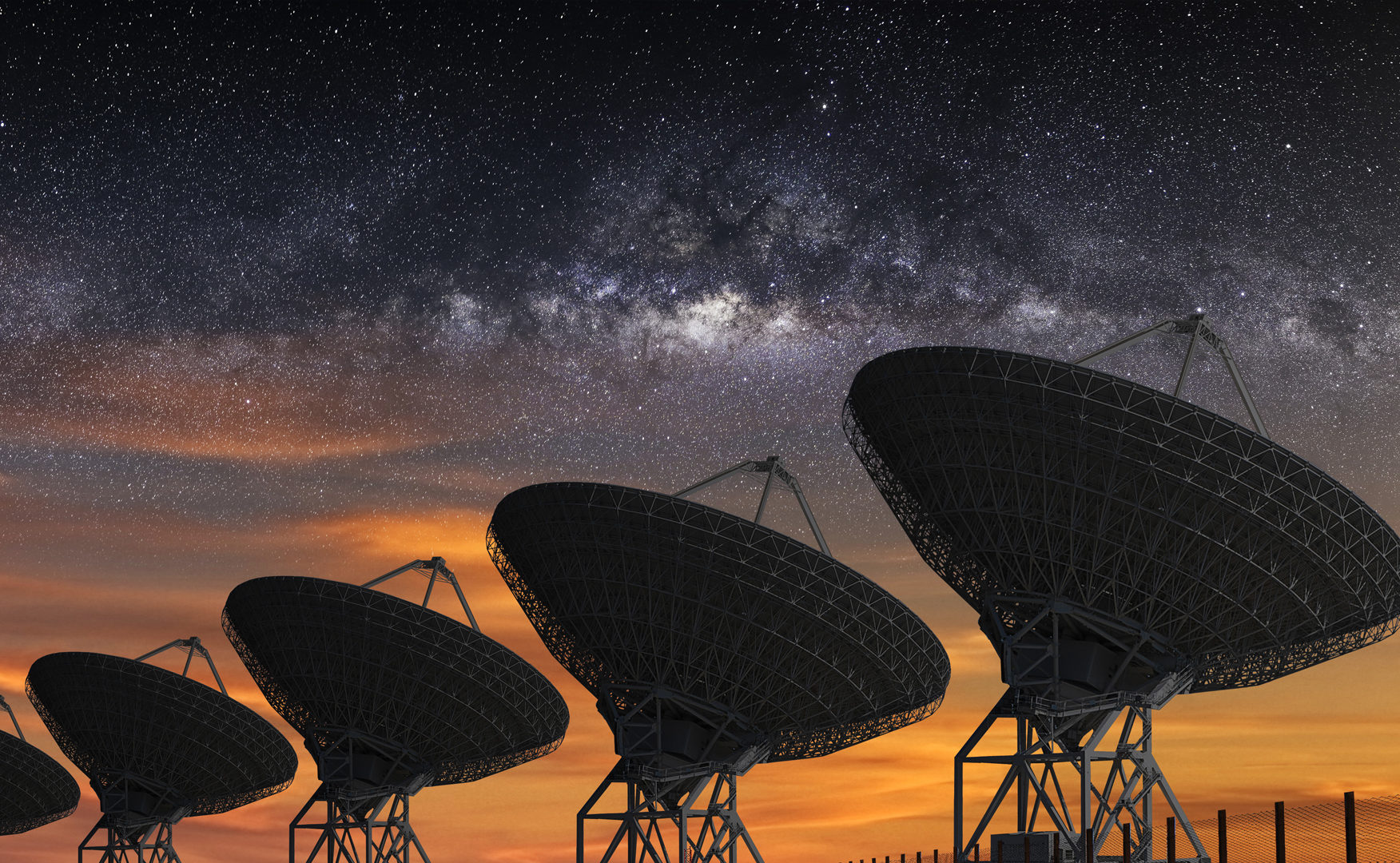


The 2026 Nobel Prize in Physics has been announced. Brian Greene explains the science behind it, and why detecting neutrinos from deep space opens a genuinely new way of observing the universe.
Neutrinos were proposed in the 1930s to account for energy that seemed to vanish during particle interactions and were confirmed experimentally two decades later. They almost never interact with matter, making them hard to detect, but also uniquely valuable since they arrive from their source essentially undisturbed. Brian walks through how the IceCube detector works, why it is buried deep in Antarctic ice, and what it means that a detector that size records only about one of these high-energy neutrinos per day.
This program is part of the Rethinking Reality series, supported by the John Templeton Foundation.
00:00:00:00 – 00:00:29:05
Unknown
Everyone. This year’s Nobel Prize in Physics has been announced, and it goes to Francis Hausen. And this is for work to do with neutrinos and the exciting possibility of a new kind of astronomy, where researchers do not use light to see the cosmos, but rather they use neutrinos. All right. A little background. As many of you know, neutrinos are ghostly particles that hardly ever interact with matter where you’re sitting right now.
00:00:29:05 – 00:01:09:06
Unknown
In fact, billions of neutrinos from the sun are passing through every square centimeter of your body every single second. Now, neutrinos were hypothesized by a physicist back in the 1930s, Wolfgang Pauli. And the reason is when experimental physicists were looking at their data, sometimes they were finding less energy at the end of a process than before. And since energy should be conserved, Pauli simply imagined that there was a ghostly particle carrying away the missing energy that the detectors simply were insensitive to.
00:01:09:09 – 00:01:42:18
Unknown
And in the 1950s, beautiful experiments confirmed that this idea was right. Neutrinos are real. Now, this year’s Nobel Prize work was focused on trying to find special kinds of neutrinos, extremely high energy neutrinos of astrophysical origin. So why these neutrinos? Well, neutrinos
so rarely interact with matter that they give us a pristine image of whatever astrophysical source created them.
00:01:42:22 – 00:02:13:22
Unknown
Now, that’s not true. Even with light or other particles which can be scattered on their journey toward Earth. But neutrinos, they pretty much follow a straight line from whatever the source is to our planet, giving us an unadulterated ability to trace them back and gain very clean
information about whatever highly energetic astrophysical process produce them. Francis Hausen came up with an idea for detecting these neutrinos.
00:02:13:22 – 00:02:55:13
Unknown
He imagined putting an array of detectors deep within the Antarctic ice a couple of kilometers underground, filling an entire cubic kilometers of ice. That’s what’s called the ice cube detector. Now, how does it work? Well, the array doesn’t detect the neutrinos themselves, but rather it detects the aftermath of neutrinos interacting with the water molecules in the ice. You see, when these high energy neutrinos occasionally interact with the water molecules, sometimes they produce another charged particle in the process, such as a muon.
00:02:55:13 – 00:03:21:06
Unknown
That’s just kind of a heavy version of an electron. And and as the muon continues to race through the ice, it jiggles electrons in the water molecules, and that produces light itself. But here’s the key. Because the muon can actually travel faster than light within the ice itself. It creates a kind of sonic boom, a aluminum version of a sonic boom called Trank of radiation.
00:03:21:06 – 00:03:50:06
Unknown
And it’s blue light, a kind of blue glow. And it’s that glow which the detectors are able to see. And the approach, it works. But these high energy neutrinos the ice cube detector looks for, they are so rare and so rarely interact that the detector records something like one of them per day. But even so, with enough patience, you can get some great results.
00:03:50:08 – 00:04:24:09
Unknown
The researchers have traced neutrinos back to a blazer that’s a galaxy with a giant black hole firing energetic jets billions of light years away. It has spotted neutrinos from a nearby active galaxy and and closer to home, it’s made the first picture of our own Milky Way galaxy using neutrinos. So all of this serves as a kind of proof of concept that neutrinos are a powerful tool for a new kind of astronomy telescopes that detect neutrinos instead of light.
00:04:24:11 – 00:04:48:20
Unknown
And so there are now plans to build more of these neutrino observatories, some in ice, some deep underwater. All of them are going to use basically the same physics. And with a consortium of these neutrino observatories around the Earth, we will be able to continually scan the sky like the providing new insights into the nature of what’s out there.
00:04:49:01 – 00:05:04:09
Unknown
So congratulations to this year’s Nobel laureate in physics, Francis Hausen, and of course, the hundreds and hundreds of collaborators with whom he has worked to make this magnificent science possible. Congratulations to you all.
The 2026 Nobel Prize in Physics has been announced. Brian Greene explains the science behind it, and why detecting neutrinos from deep space opens a genuinely new way of observing the universe.
Neutrinos were proposed in the 1930s to account for energy that seemed to vanish during particle interactions and were confirmed experimentally two decades later. They almost never interact with matter, making them hard to detect, but also uniquely valuable since they arrive from their source essentially undisturbed. Brian walks through how the IceCube detector works, why it is buried deep in Antarctic ice, and what it means that a detector that size records only about one of these high-energy neutrinos per day.
This program is part of the Rethinking Reality series, supported by the John Templeton Foundation.

Brian Greene is a professor of physics and mathematics at Columbia University, and is recognized for a number of groundbreaking discoveries in his field of superstring theory. His books, The Elegant Universe, The Fabric of the Cosmos, and The Hidden Reality, have collectively spent 65 weeks on The New York Times bestseller list.
Read More00:00:00:00 – 00:00:29:05
Unknown
Everyone. This year’s Nobel Prize in Physics has been announced, and it goes to Francis Hausen. And this is for work to do with neutrinos and the exciting possibility of a new kind of astronomy, where researchers do not use light to see the cosmos, but rather they use neutrinos. All right. A little background. As many of you know, neutrinos are ghostly particles that hardly ever interact with matter where you’re sitting right now.
00:00:29:05 – 00:01:09:06
Unknown
In fact, billions of neutrinos from the sun are passing through every square centimeter of your body every single second. Now, neutrinos were hypothesized by a physicist back in the 1930s, Wolfgang Pauli. And the reason is when experimental physicists were looking at their data, sometimes they were finding less energy at the end of a process than before. And since energy should be conserved, Pauli simply imagined that there was a ghostly particle carrying away the missing energy that the detectors simply were insensitive to.
00:01:09:09 – 00:01:42:18
Unknown
And in the 1950s, beautiful experiments confirmed that this idea was right. Neutrinos are real. Now, this year’s Nobel Prize work was focused on trying to find special kinds of neutrinos, extremely high energy neutrinos of astrophysical origin. So why these neutrinos? Well, neutrinos
so rarely interact with matter that they give us a pristine image of whatever astrophysical source created them.
00:01:42:22 – 00:02:13:22
Unknown
Now, that’s not true. Even with light or other particles which can be scattered on their journey toward Earth. But neutrinos, they pretty much follow a straight line from whatever the source is to our planet, giving us an unadulterated ability to trace them back and gain very clean
information about whatever highly energetic astrophysical process produce them. Francis Hausen came up with an idea for detecting these neutrinos.
00:02:13:22 – 00:02:55:13
Unknown
He imagined putting an array of detectors deep within the Antarctic ice a couple of kilometers underground, filling an entire cubic kilometers of ice. That’s what’s called the ice cube detector. Now, how does it work? Well, the array doesn’t detect the neutrinos themselves, but rather it detects the aftermath of neutrinos interacting with the water molecules in the ice. You see, when these high energy neutrinos occasionally interact with the water molecules, sometimes they produce another charged particle in the process, such as a muon.
00:02:55:13 – 00:03:21:06
Unknown
That’s just kind of a heavy version of an electron. And and as the muon continues to race through the ice, it jiggles electrons in the water molecules, and that produces light itself. But here’s the key. Because the muon can actually travel faster than light within the ice itself. It creates a kind of sonic boom, a aluminum version of a sonic boom called Trank of radiation.
00:03:21:06 – 00:03:50:06
Unknown
And it’s blue light, a kind of blue glow. And it’s that glow which the detectors are able to see. And the approach, it works. But these high energy neutrinos the ice cube detector looks for, they are so rare and so rarely interact that the detector records something like one of them per day. But even so, with enough patience, you can get some great results.
00:03:50:08 – 00:04:24:09
Unknown
The researchers have traced neutrinos back to a blazer that’s a galaxy with a giant black hole firing energetic jets billions of light years away. It has spotted neutrinos from a nearby active galaxy and and closer to home, it’s made the first picture of our own Milky Way galaxy using neutrinos. So all of this serves as a kind of proof of concept that neutrinos are a powerful tool for a new kind of astronomy telescopes that detect neutrinos instead of light.
00:04:24:11 – 00:04:48:20
Unknown
And so there are now plans to build more of these neutrino observatories, some in ice, some deep underwater. All of them are going to use basically the same physics. And with a consortium of these neutrino observatories around the Earth, we will be able to continually scan the sky like the providing new insights into the nature of what’s out there.
00:04:49:01 – 00:05:04:09
Unknown
So congratulations to this year’s Nobel laureate in physics, Francis Hausen, and of course, the hundreds and hundreds of collaborators with whom he has worked to make this magnificent science possible. Congratulations to you all.