Search Icon




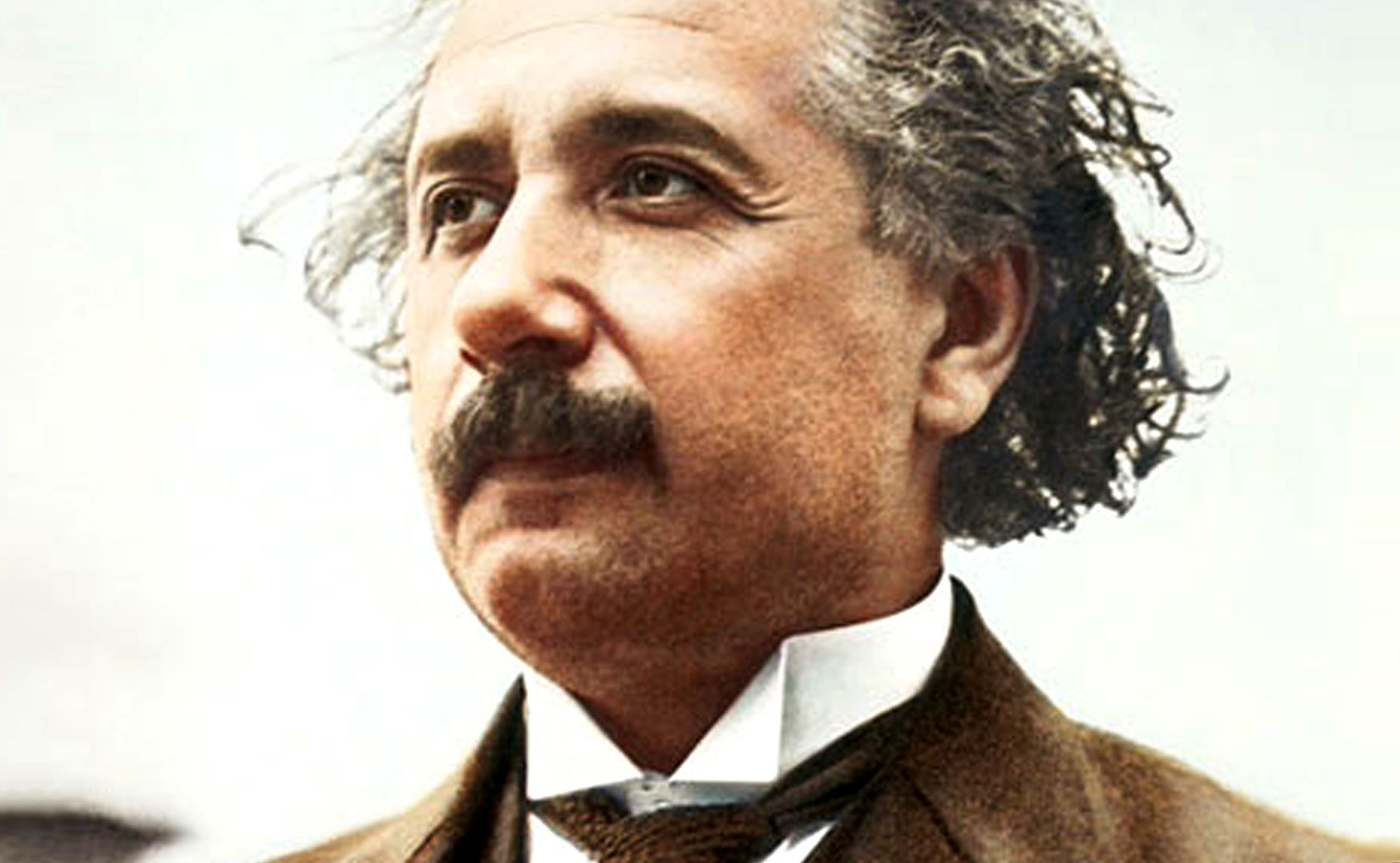
Albert Einstein spent his last thirty years unsuccessfully searching for a ‘unified theory’ — a single master principle to describe everything in the universe, from tiny subatomic particles to immense clusters of galaxies. In the decades since, generations of researchers have continued working toward Einstein’s dream.

The nature of time is an age-old conundrum for physicists, philosophers, biologists and theologians. The Newtonian picture of time—a kind of cosmic clock that ticks off time in a manner that applies identically to everyone and everything—tightly aligns with our experience. But with special and general relativity, Einstein showed the fallacy inherent in experience.
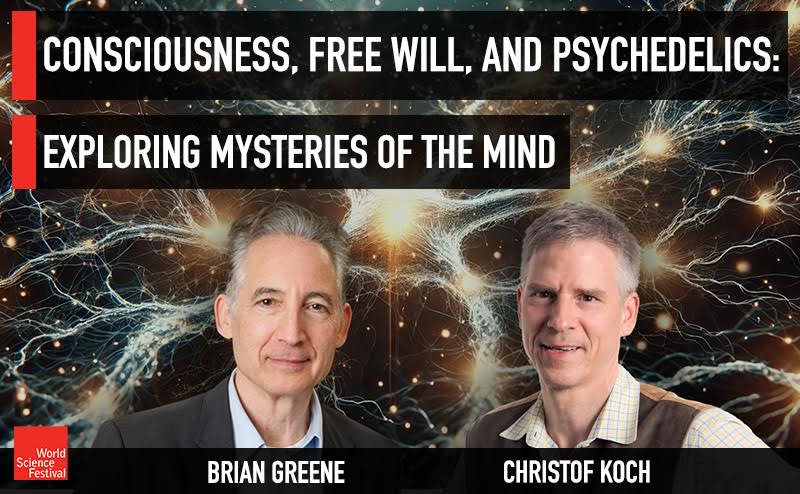
World renowned neurophysiologist and computational neuroscientist Christof Koch joins Brian Greene to discuss how decades of experimental and theoretical investigation have shaped his understanding of consciousness and the brain — …
Some researchers propose that advancing AI to the next level will require an internal architecture that more closely mirrors the human mind. Rufin VanRullen joins Brian Greene to discuss early …

Why is there something rather than nothing? And what does ‘nothing’ really mean? More than a philosophical musing, understanding nothing may be the key to unlocking deep mysteries of the universe, from dark energy to why particles have mass.

Pills the size of molecules to seek and destroy tumors. Miniscule robots performing surgery inside patients with a precision never before achieved. Nanobots, a billionth of a meter across, fixing mutations in DNA, or repairing neurons in your brain. Such are the possibilities as medicine enters the nano-era.