Search Icon




The mechanism of collapsing stars falls short of explaining the existence of supermassive black holes—giants that weigh millions or even billions of times the mass of the Sun. Astrophysicist Priya …

What happens when a black hole a billion times more massive than our sun powers a star-like object? It’s a quasar of a question. These massive and extremely remote celestial …
As computers become progressively faster and more powerful, they’ve gained the impressive capacity to simulate increasingly realistic environments. Which raises a question familiar to aficionados of The Matrix—might life and the world as we know it be a simulation on a super advanced computer?
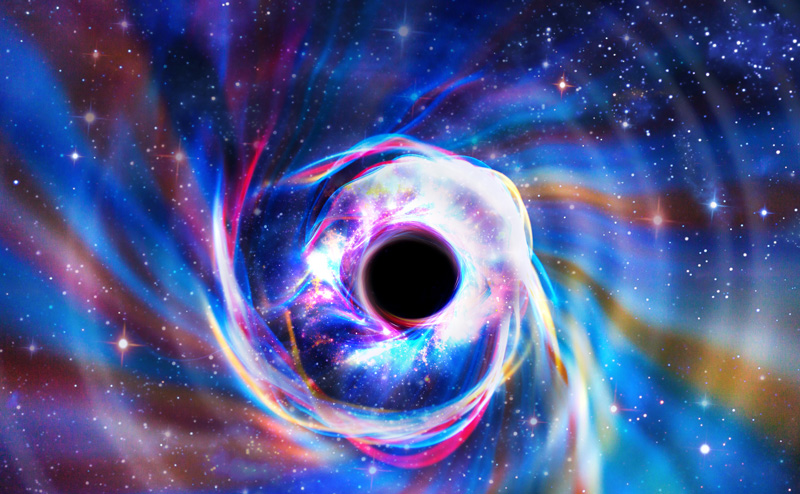
Black holes may hold the key to understanding the most fundamental truths of the universe, but how do you see something that’s, well, black? Astronomers think they have the answer. …

The prestigious biennial Kavli Prizes recognize scientists for major advances in three research areas: astrophysics, nanoscience and neuroscience—the big, the small and the complex. The 2014 winners, sharing a $1 million award in each field, will be announced live via satellite from the Norwegian Academy of Science and Letters in Oslo.
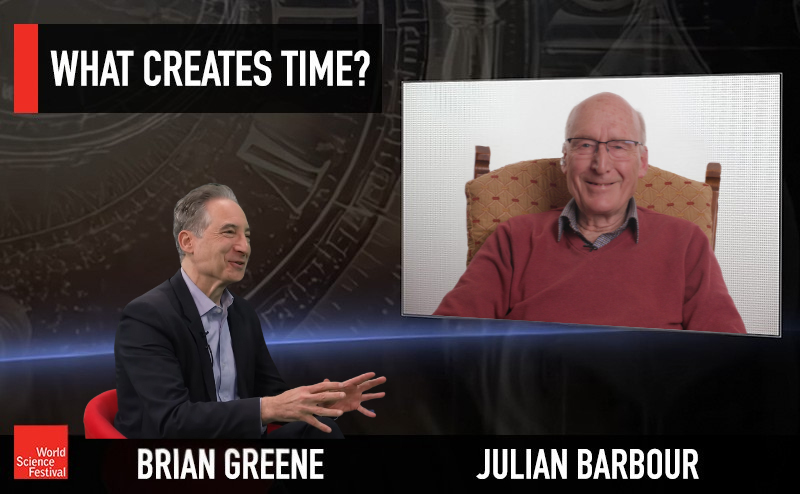
Scientist and author Julian Barbour joins Brian Greene to explain his heterodox views on the nature of time, entropy, and cosmic origins. This program is part of the Big Ideas …