Search Icon




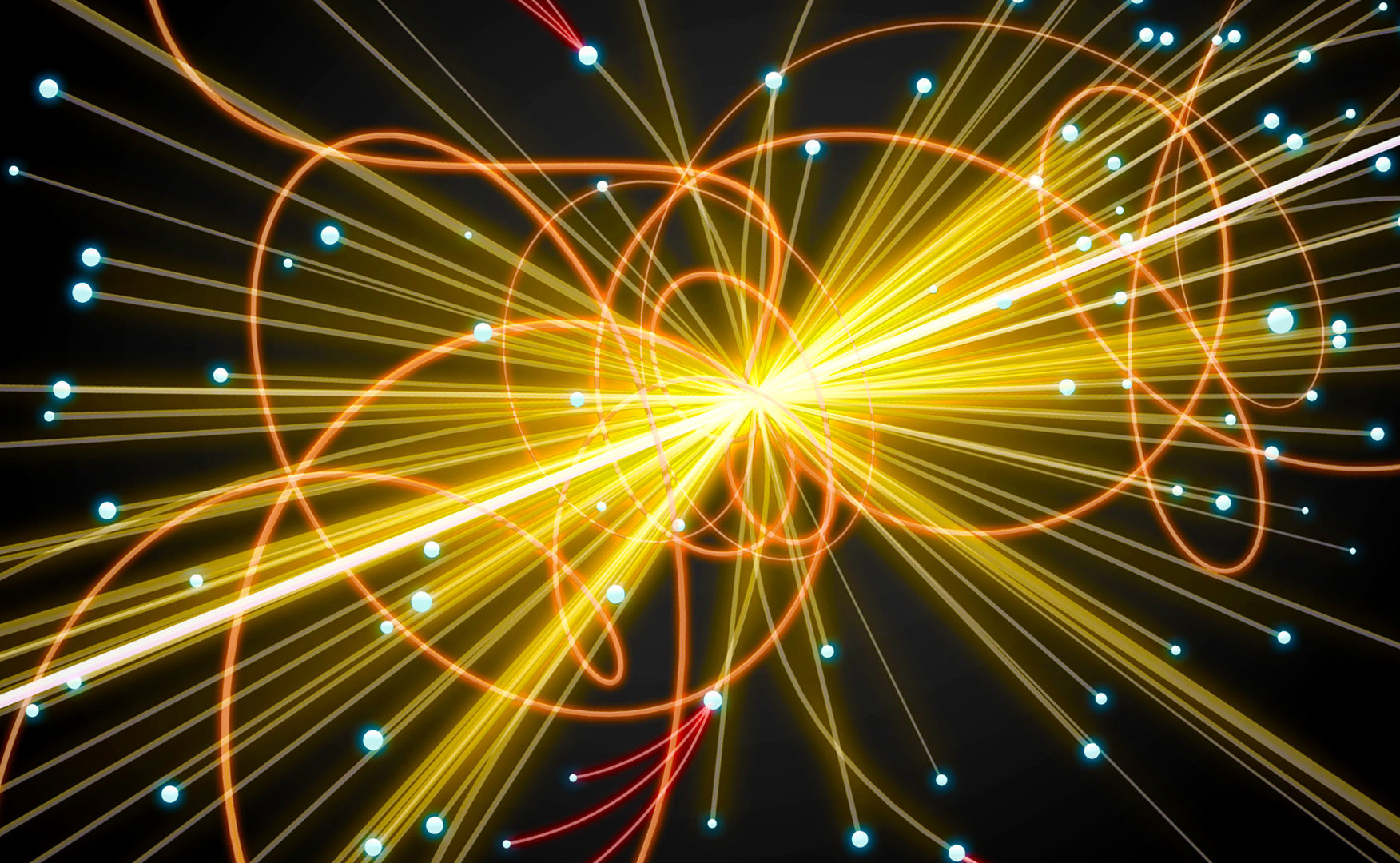
Come venture deep inside the world’s biggest physics machine, the Large Hadron Collider. This extraordinary feat of human engineering took 16 years and $10 billion to build, and just weeks ago began colliding particles at energies unseen since a fraction of a second after the big bang.
In this World Science U Live Session, Nobel laureate, former Director of the National Institutes of Health and former President of Memorial Sloan Kettering, Harold Varmus, M.D., and Brian Greene …
Brian Greene sits down with theoretical physicist Rafael Bousso to explore some of the deepest puzzles in modern physics. Their conversation centers on the black hole information paradox, one of …
Award-winning writers take the stage to share their quirky, engrossing, and sometimes shocking insights about human anatomy and social psychology. Mary Roach, widely regarded as one of the country’s greatest …

As computers become progressively faster and more powerful, they’ve gained the impressive capacity to simulate increasingly realistic environments. Which raises a question familiar to aficionados of The Matrix—might life and the world as we know it be a simulation on a super advanced computer?

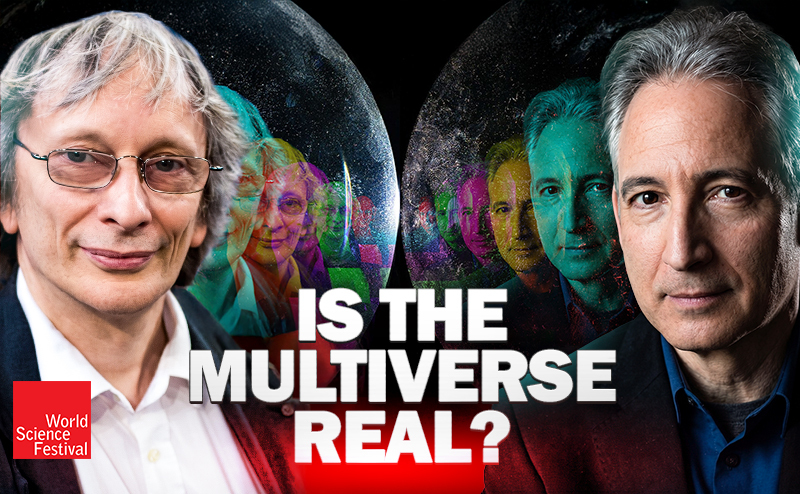
The multiverse hypothesis, suggesting that our universe is but one of perhaps infinitely many, speaks to the very nature of reality. Join physicist Brian Greene, cosmologists Alan Guth and Andrei Linde, and philosopher Nick Bostrom as they discuss and debate this controversial implication of forefront research.