Search Icon




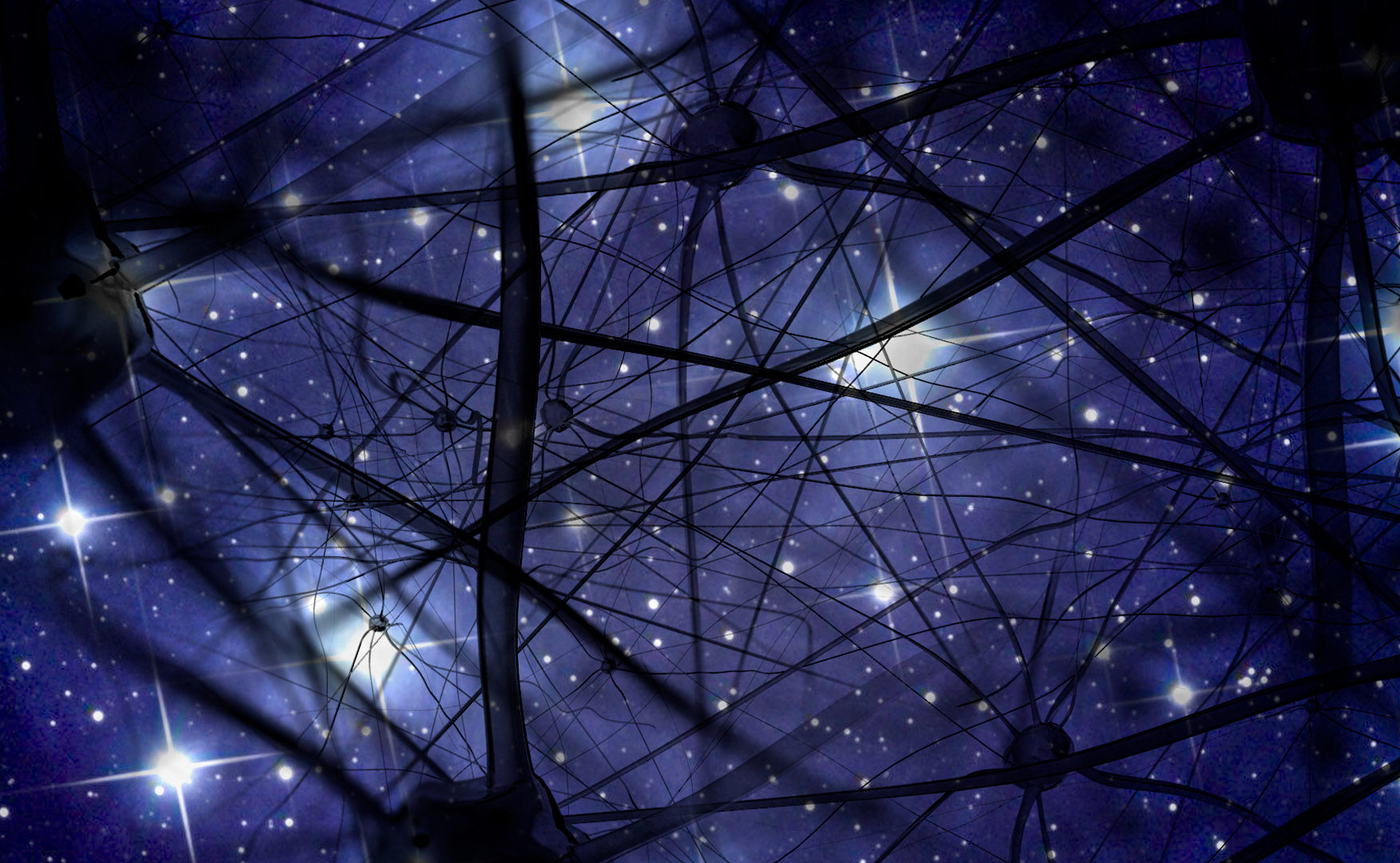
For all we understand about the universe, 96% of what’s out there still has scientists in the dark. Astronomical observations have established that familiar matter—atoms—accounts for only 4% of the weight of the cosmos. The rest—dark matter and dark energy—is invisible to our telescopes.

Watching ants and playing with robots is biologist Simon Garnier’s Cool Job as he studies how people and animals swarm in large groups. Garnier discovers these animals work together to …
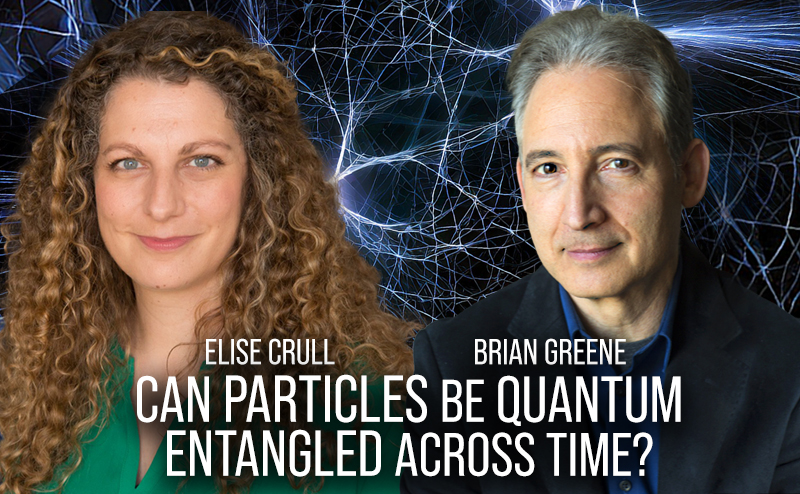
Einstein’s “spooky action” describes quantum particles entangled across space, but can such spookiness entangle particles across time? A conversation spanning the origins of quantum mechanics through its leading-edge implications for …
For millennia, psychedelic substances have been used as sacraments, medicines, and tools to shift consciousness and expand the mind. Why have these compounds captivated humans for so long and how …
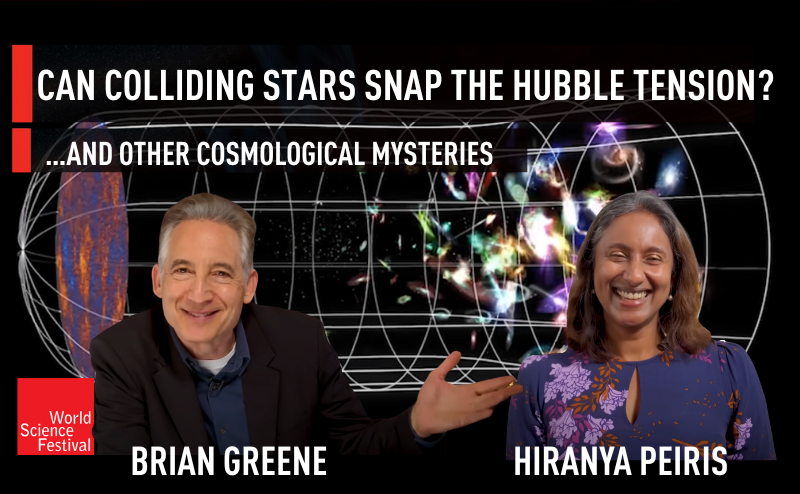
Cosmologist Hiranya Peiris joins Brian Greene to discuss pressing cosmological mysteries spanning dark matter, dark energy, the expansion rate of space, and the possibility of a multiverse.
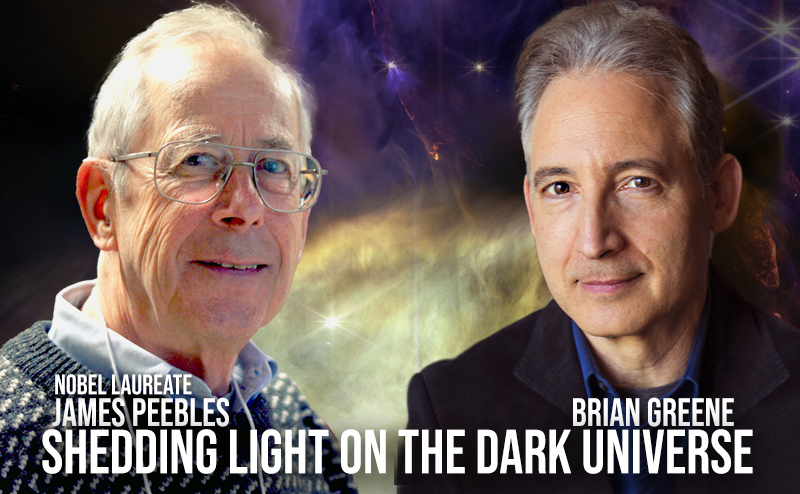
James Peebles, one of the world’s greatest cosmologists, has profoundly influenced our understanding of dark matter, dark energy, and the big bang, contributions that earned him the 2019 Nobel Prize …