Watching Wilson and Watson
and the Future of Life on Earth

Hailed by Newsweek as "the most exciting individual in American theater", Actress and playwright Anna Deavere Smith melds journalism and performance to create insightful one-woman vignettes depicting two of the most influential scientists of our day – Nobel Laureate and co-discoverer of DNA, James Watson, and "father of biodiversity and sociobiology" E.O. Wilson. Following the performance, Charlie Rose hosts Nobel Laureate Harold Varmus and head of NOAA Jane Lubchenco in an exploration of the impact Watson and Wilson have had on modern life and how their work will profoundly shape the future.
Anna Deavere Smith
Anna Deavere Smith has been hailed by Newsweek as “the most exciting individual in American theater.” She began interviewing people across the country 20 years ago. Without props, sets, or costumes, she translates those encounters into profound performances, each drawing verbatim from the original recorded interview. The New York Times commented that “Anna Deavere Smith is the ultimate impressionist — she does people’s souls.”
Charlie Rose
Dr. Jane Lubchenco, a marine ecologist and environmental scientist, is the ninth Administrator of the National Oceanic and Atmospheric Administration (NOAA). Her scientific expertise includes oceans, climate change, and interactions between the environment and human well-being.
Emmy award winning journalist Charlie Rose has been praised as "one of America's premiere interviewers." He is the host of Charlie Rose, the nightly PBS program that engages America's preeminent thinkers, writers, politicians, athletes, entertainers, business leaders, scientists and other newsmakers.
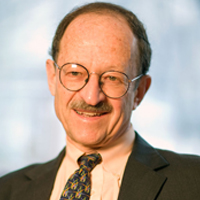
Harold Varmus received the 1989 Nobel Prize in Physiology or Medicine jointly with Dr. J. Michael Bishop, his former colleague at the University of California, San Francisco, for their discovery of cellular genes that are progenitors of retroviral oncogenes. This discovery led to the isolation of many cellular genes that normally control growth and development and are frequently mutated in human cancer.