The Limits of Understanding


Friday, June 4, 2010, 8:00 PM - 9:30 PM

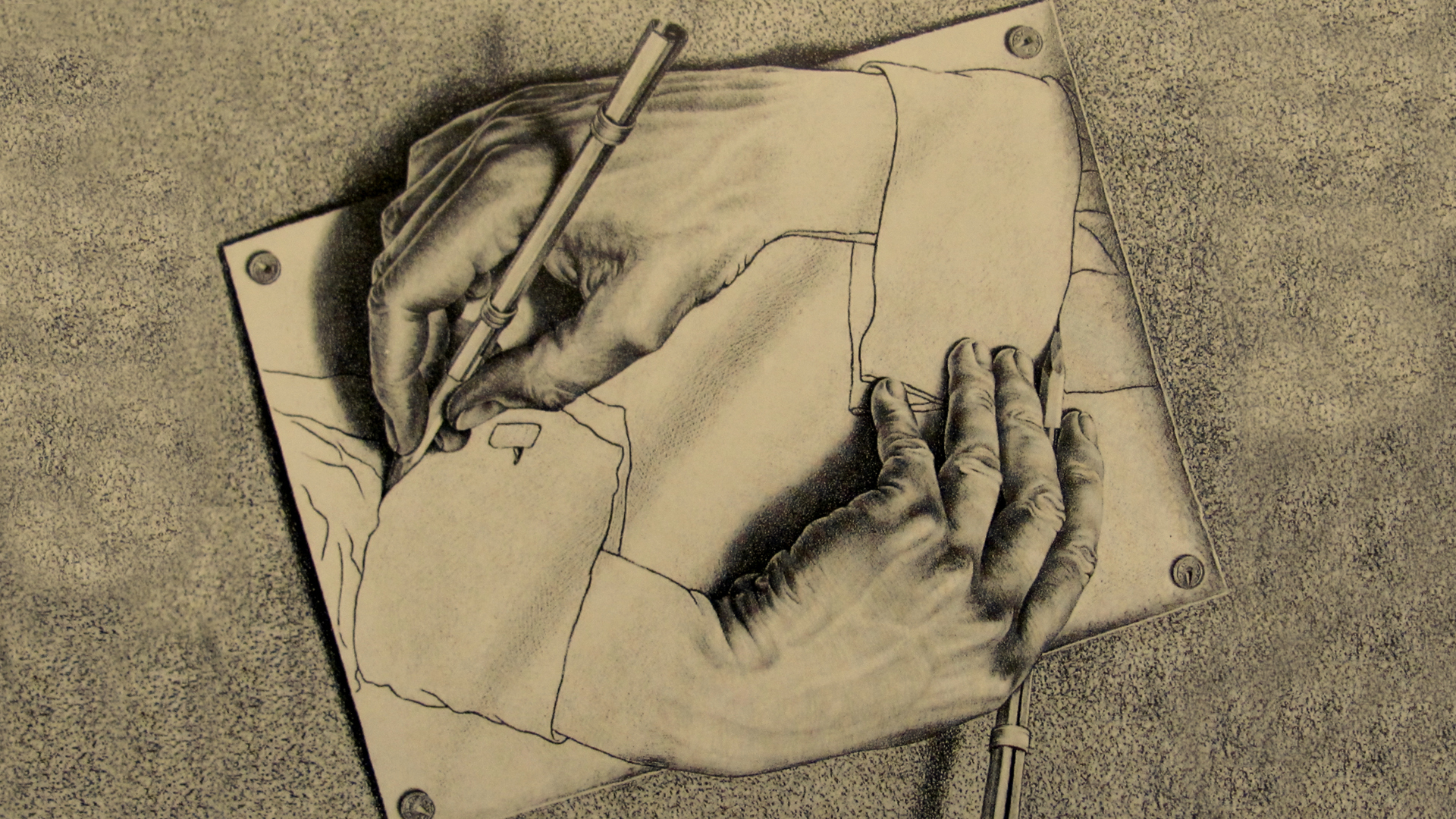
This statement is false. Think about it, and it makes your head hurt. If it’s true, it’s false. If it’s false, it’s true. In 1931, Austrian logician Kurt Gödel shocked the worlds of mathematics and philosophy by establishing that such statements are far more than a quirky turn of language: he showed that there are mathematical truths which simply can't be proven. In the decades since, thinkers have taken the brilliant Gödel's result in a variety of directions--linking it to limits of human comprehension and the quest to recreate human thinking on a computer. This program explores Gödel's discovery and examines the wider implications of his revolutionary finding. Participants include mathematician Gregory Chaitin, author Rebecca Goldstein, astrophysicist Mario Livio and artificial intelligence expert Marvin Minsky.

Video: Watch Live >>

John Templeton Foundation
as part of the Big Ideas Series

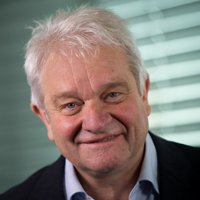
Moderator: Sir Paul Nurse

Participants: 

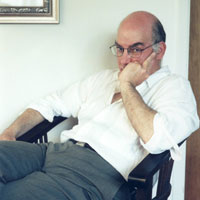
Gregory Chaitin

Gregory ChaitinGregory Chaitin is a mathematician and computer scientist who began making lasting contributions to his field while still a student at the Bronx High School of Science. His approach to mathematics views the field as much as an art form as science and inextricably linked with philosophical questions. He is the chief architect of algorithmic information theory, which measures the complexity of data sets and allows for means of computing that complexity through software programs. He is also discoverer of the remarkable Omega number, the exquisitely long and incalculable representation of randomness and unknowability, which shows that God “plays dice” and that some mathematical truths are accidental.read more

Rebecca Newberger Goldstein

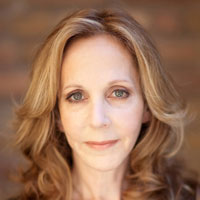
Rebecca Newberger GoldsteinRebecca Newberger Goldstein’s Orthodox Jewish background and advanced studies in philosophy came together in an original writing style for which she has been widely recognized. As a philosopher, her areas of specialty are philosophy of science, mathematical logic, and seventeenth-century rationalism.read more

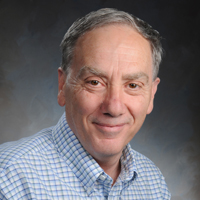
Mario Livio

Mario LivioMario Livio is an internationally known astrophysicist, a best-selling author and a popular lecturer. His popular book The Golden Ratio: The Story of Phi, the World’s Most Astonishing Number won the Peano Prize for 2003, and the International Pythagoras Prize for 2004, as the best popular book on mathematics, while his Is God A Mathematician? was selected by the Washington Post as one of the best books of 2009.read more

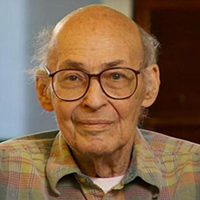
Marvin Minsky

Marvin MinskyMarvin Minsky is one of the pioneers of artificial intelligence and had made numerous contributions to the fields of AI, cognitive science, mathematics and robotics. His current work focuses on trying to imbue machines with a capacity for common sense. Minsky is a professor at MIT, where he co-founded the artificial intelligence lab.read more

Sir Paul Nurse

Paul NursePaul Nurse is a Nobel Laureate and the President of Rockefeller University, where he continues to do research in cell biology. He is the former Chief Executive of Cancer Research, UK. In 1999 he was knighted in Great Britain for his contributions to cancer research.read more