Search Icon




In 1935, Albert Einstein and two colleagues published a landmark paper revealing that quantum mechanics allows widely separated objects to influence one another, even though nothing travels between them. Einstein called it spooky and rejected the idea, arguing instead that it exposed a major deficiency in the quantum theory.
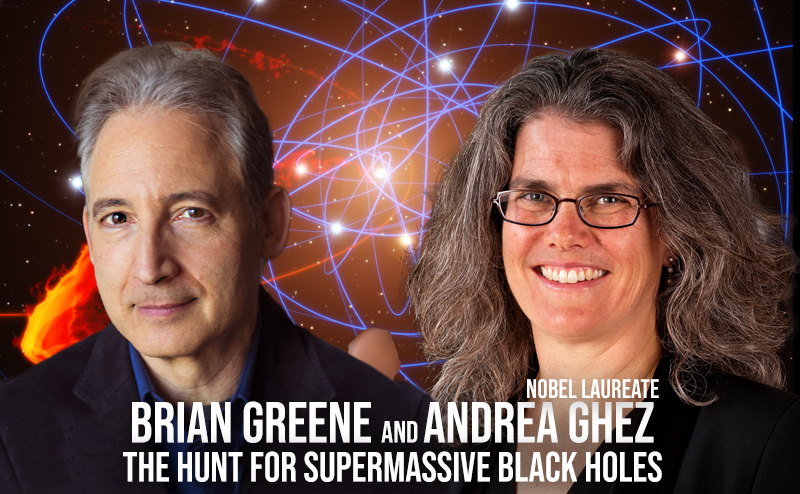
2020 Nobel Laureate in Physics Andrea Ghez talks with Brian Greene about the details of the long journey to discovering a supermassive black hole in the center of our galaxy …
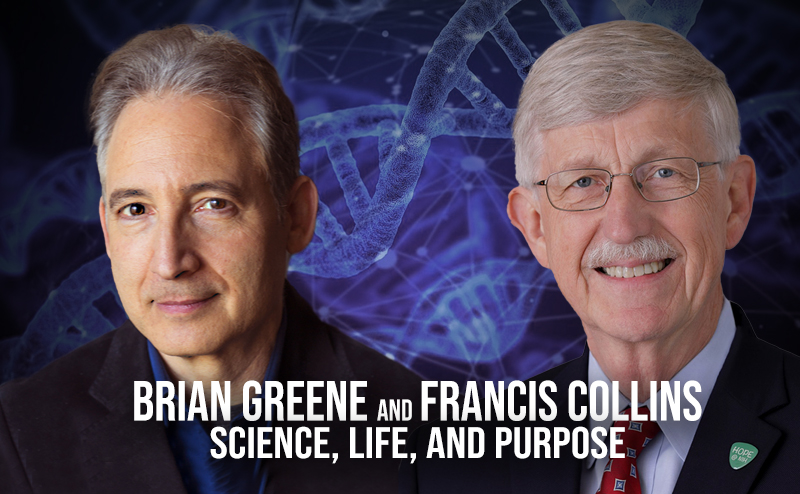
Francis Collins – leader of the Human Genome Project, Director of the National Institutes of Health across three presidential administrations, and President Biden’s newly appointed Science Advisor – joins Brian …

Ever wondered how many neurons are in the human brain? Meet Suzana Herculano-Houzel, a professor at Vanderbilt University whose pioneering “brain soup” technique made it possible to accurately count the …

“Because it’s there” was George Mallory’s famous explanation for why he risked (and lost) his life trying to become the first person to summit Everest. We don’t all want to …
Ninety years after the historic double-slit experiment, the quantum revolution shows no sign of slowing. Join a vibrant conversation with renowned leaders in theoretical physics, quantum computation, and philosophical foundations, …