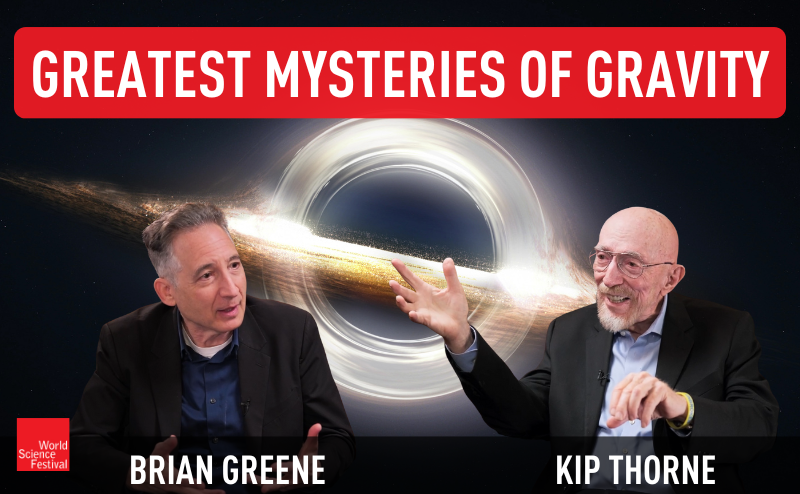
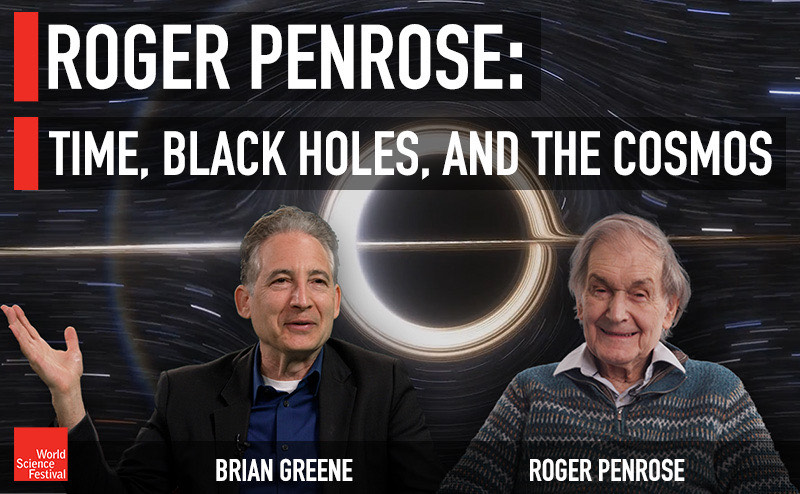
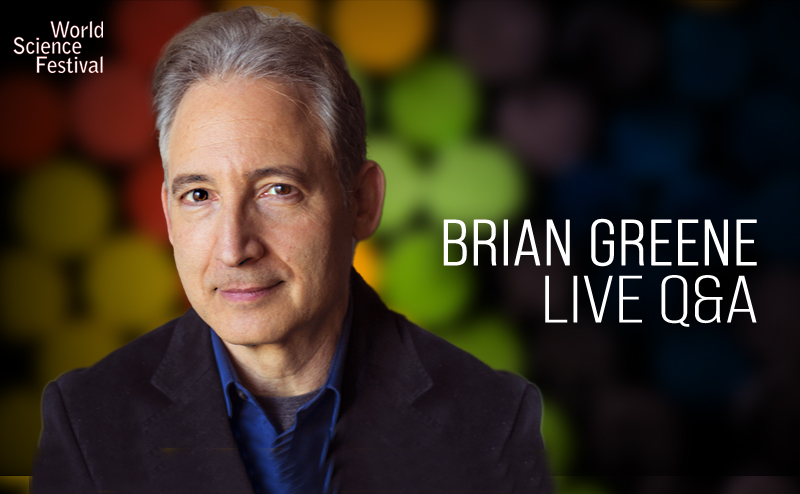
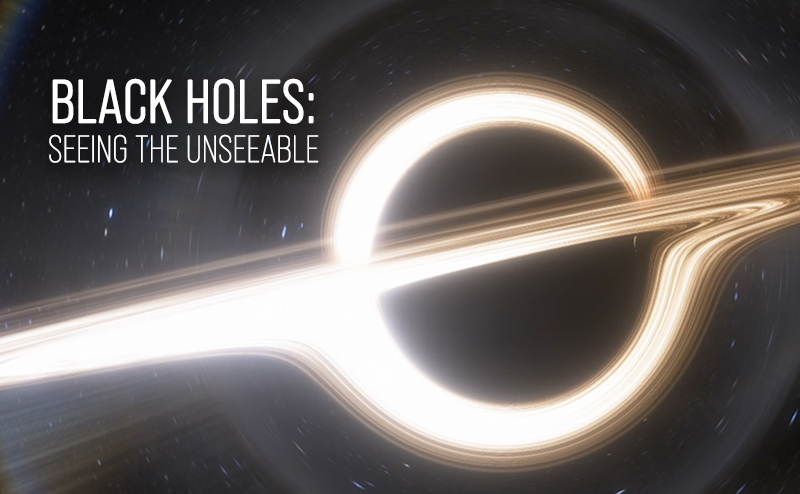
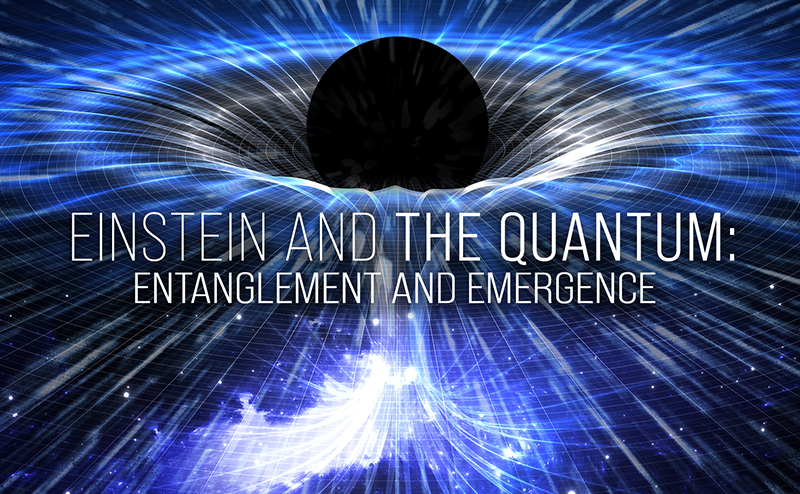
Nobel laureate Kip Thorne joins Brian Greene to trace a story that runs from the trenches of World War I to the rise of gravitational-wave astronomy—a journey that eventually carried black holes to Hollywood in Interstellar through Thorne’s work with Christopher Nolan. He revisits the improbable path from Einstein’s equations to the moment LIGO—an experiment he helped imagine and that contributed to his Nobel Prize—captured the sound of two black holes colliding more than a billion light-years away. Along the way, he explores puzzles that stymied generations: the nature of horizons and singularities, the mathematical insights of Schwarzschild and Penrose, and the profound divide between what an outside observer sees and what a falling observer experiences. The conversation also turns to the human side of deep physics—Einstein’s doubts, Wheeler’s battles, Oppenheimer’s arguments, the Soviet school’s skepticism—revealing the messy, exhilarating way the field actually moves forward.
This program is part of the Big Ideas series, supported by the John Templeton Foundation.
This program can be watched here, and on our YouTube channel, starting at 4PM on Friday, December 5.
Learn MoreNone