5,126 views | 01:27:06






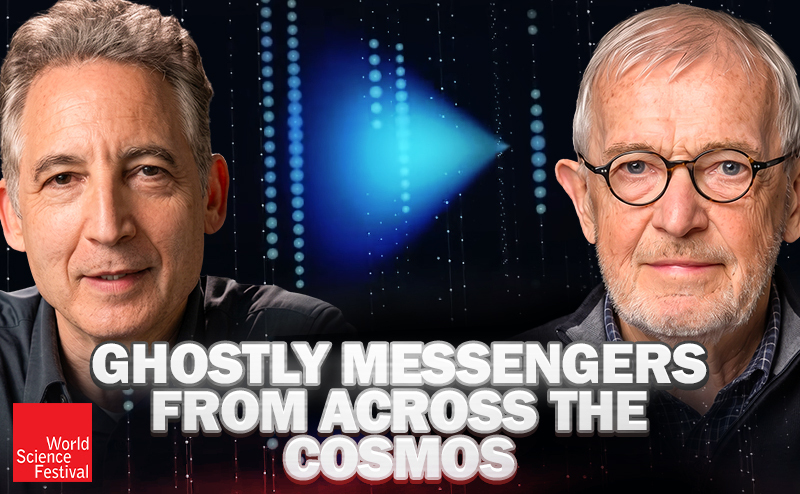
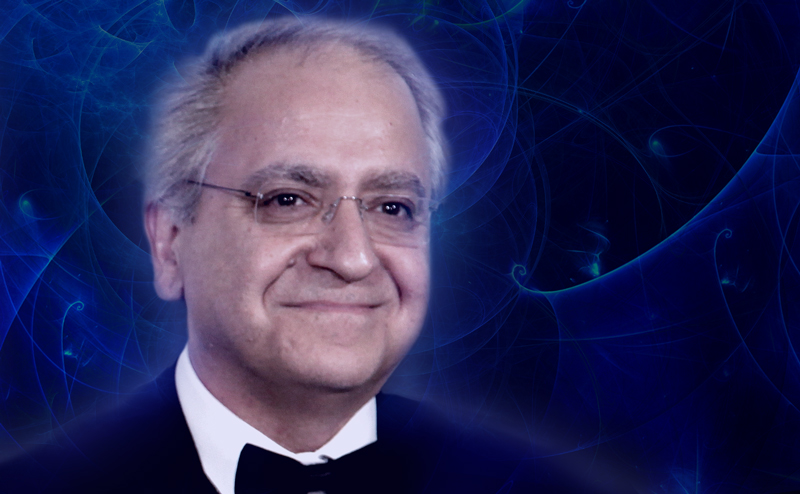
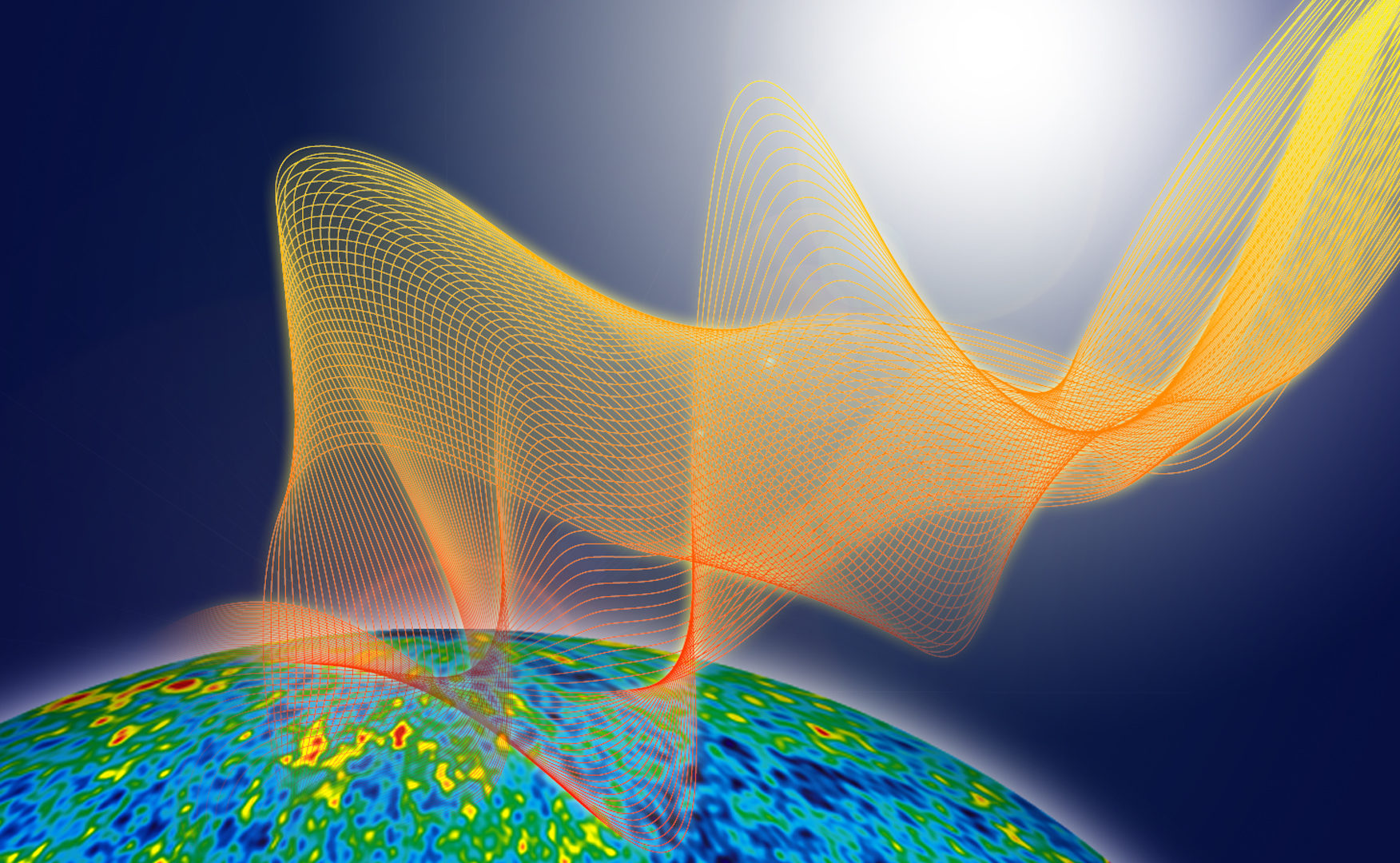
Building a telescope more than a kilometer under the ice in Antarctica was a gamble. But Francis Halzen had the audacity to try. Decades later, his visionary work has opened a new era of neutrino astronomy, and won the Belgian-born physicist the 2026 Nobel Prize in Physics. Brian Greene sits down with Halzen to examine the effort to build the IceCube detector at the South Pole and use it to track high energy neutrinos from deep space. Covering the history of the neutrino from its theoretical origins to its confirmation, to the science underlying the IceCube detector, to the challenges of constructing it, the conversation explores a new way for scientists to examine the cosmos. Greene and Halzen discuss the search for dark matter, mapping the galactic plane with neutrinos enabled by machine learning, potential insights into quantum gravity, as well as Halzen’s advice to young scientists: Follow your obsession, because understanding is the real reward. A compelling conversation on discovery, persistence, and the powerful pull of science at the frontier. This program is part of the Rethinking Reality series, supported by the John Templeton Foundation. Learn More
– Doing science, the thing you enjoy most in the end is understand things you never thought you would understand. It’s not making discoveries. I mean, I was lucky enough to make some, but discoveries are actually scary. All you do is be afraid of being wrong. It’s not the elation. It’s not like in the Hollywood movies.
– Hey, everyone. Today our topic is neutrinos, those little ghostly particles that waft through the cosmos. As many of you no doubt know, the Nobel Prize was just announced a few days ago, and it was for work in the arena of neutrinos, and I’m pleased that the guest that we are speaking with today is the man himself, Francis Halzen, who was announced as the recipient of the Nobel Prize. Let me read you his formal introduction, and we’ll get into a conversation. “Francis Halzen is a Belgian-born particle astrophysicist “who has been a professor “at the University of Wisconsin-Madison since 1977.” Long time. “He’s been the driving force behind IceCube.” And, as we’ll hear, that’s a neutrino detector built into a cubic kilometer of Antarctic ice. That’s at the South Pole, as you all know. “He was recently named the sole winner “of this year’s Nobel Prize in Physics “for his central role in building IceCube “and for its discovery of high-energy neutrinos “coming from astrophysical sources.” So welcome, Francis. First, of course, let me congratulate you on this well-deserved and enormous honor, the Nobel Prize in Physics.
– Thank you. It’s a pleasure to be here and to talk to you.
– Thank you so much for taking the time. I’m sure it must be a very busy period after this kind of an announcement, which is absolutely wonderful. I though we’d begin with just, you know, I was noting that this, I’ve lost count, but this could be the fourth or fifth Nobel Prize that has been awarded in the area of neutrino physics. Is that right?
– Well, there must be many. It goes back to the Columbia Nobel Prize for the discovery of the second neutrino, and I don’t know the history, but the three recent prizes was for the supernova 1987A and then for neutrino oscillations.
– Yeah. Yeah.
– These were all in the last 15 years or so.
– Yep. And so when did you get the neutrino bug? I mean, when were you bitten by an interest in neutrinos?
– Yes, I spent the first half of my career as a particle theorist,
– Yeah.
– and I actually mostly worked on QCD, on strong interactions. And the transition to neutrinos came when I got interested in an idea that a Russian physicist had, in fact, Armenian physicist Askaryan in 1963, and he had the idea of detecting neutrinos in ice, not by the light they make when they crash into a nucleus but by detecting the radio pulse. And we didn’t know whether these experiments were possible. You had to calculate the power in the signal. And so this was a theoretical, it’s like a big Jackson problem. In fact, it’s like a very difficult Jackson problem.
– For our audience, a famous big red book on electrodynamics that all of us were forced as graduate students to go through, right?
– Yeah.
– But yes.
– So with a very talented postdoc who is now at the University of Santiago de Compostela, Enrique Zas, and Todor Stanev, a professor at Delaware, we actually managed to solve that problem. But suddenly, you know, here was ice. In fact, the Russians, not knowing whether they had a signal or not or could ever get a signal, were already doing these experiments at their station in Antarctica. So, I mean, you see the idea to AMANDA and IceCube was not far away, and when we realized how difficult these experiments were in ocean water, then we started a project that was at the University of Wisconsin to try this in ice.
– Yeah. Yeah. And so I’d love to step through all of that in a little bit of detail, but before we do, just to give people the overall, you now, the 30,000 view of what it is that you won the Nobel Prize for, I mean, I like to frame it, and obviously I’ll let you take it, but you’ve basically single-handedly, but with many collaborators, and I think that’s important too, are developing a new kind of astronomy where we’re examining astrophysical sources, not in the usual way with light, but with this other approach using neutrinos. Is that how you summarize?
– Yes, that’s it.
– Yeah.
– And it’s another way to look at the sky. And astronomers have been extremely successful by changing the wavelength of light to look at the sky from radio to gamma rays, and so we are trying to take a look at the sky where actually it cannot be seen in light at even smaller wavelength, higher energy than gamma rays, and so there you can actually only do it with neutrinos. And that was our goal. And all you had to do is build a very large neutrino detector. And theorists guessed, including myself, after two decades of work, we guessed that a kilometer cube was enough, and it was indeed the case,
– Exactly.
– barely enough.
– Right. So if we just go back then to neutrinos themselves. They have an interesting history long before the work in trying to apply them to this kind of neutrino astronomy. You know, in particle physics, you know, as the story goes, and it’s a true story, I guess people were doing particle physics experiments and finding less energy at the end than at the beginning, trying to figure out where’d the energy go, and they hypothesized this particle, the neutrino, as perhaps a ghostly particle, very hard to detect that was carrying away the missing energy that they… So, you know, is that an accurate appraisal of the history here?
– Absolutely. Every nuclear reaction you look at violates energy-momentum conservation, and when this was first observed, in Rutherford’s lab in Cambridge in the 1930s, people like Bohr were actually willing to give up energy-momentum conservation.
– Were they really? I didn’t actually know that.
– Yes. Yes. Yes, yes, yes. And it’s shocking, right, because this follows from the fact that physics is the same yesterday and-
– Today, time-translation invariance.
– and the same in New York and in Madison. And so they were absolutely willing to give this up, but they did experiments and actually measured that the violation was carried by a particle, but they couldn’t see it, they couldn’t detect it, but they could determine the missing momentum, and it was just like it was carried by a particle.
– Wow. You know,
– And so… Yeah. for Bohr though, I just jump in. I’m wondering, and you knew the players better than I, of course, but Bohr obviously was very willing to give up
– Yeah.
– on ideas from the past, right? His whole way of thinking about quantum mechanics was, “Give up all your prejudices. “Give up all the things “that you thought were true about the world.” I’m exaggerating a little bit here. And so, yeah, I guess it would make sense that if, there was missing energy, say just give up energy-momentum conservation. Just another step, right?
– Yeah. Wow.
– But, as you know, this follows from very fundamental symmetry principles, and it’s another step to give up, you know, to accept uncertainty relations in quantum mechanics than to give up energy-momentum conservation.
– Yeah, amazing. Amazing. So, on this one, Bohr was wrong. There is energy-momentum conservation as far as we know, and this little particle, the neutrino, is the culprit that made it seem like energy-momentum was not conserved. Famously, these particles, and, of course it’s the reason why they were so hard to detect, they don’t interact with matter strongly at all. I mean, we physicists love to talk to someone in the general public and say, you know, “Through your thumbnail, “billions of neutrinos are passing, you know, every second,” things of that sort, and you aren’t feeling anything at all, and so if they are so hard to detect, how did people confirm this idea early on? Of course, your work is applying these ideas, but how did they confirm that it was real?
– Yeah, we didn’t discover neutrinos. We knew they existed, which is helpful. But it’s only when nuclear power stations, reactors, manmade reactors were developed that you could put a detector close to a reactor, and they still didn’t. And it’s the same with IceCube. You know, most of them go through your detector, but you have enough of them, you can catch a few, and that’s what happened in 1956 when Cowan and Reines put a detector pretty much like ours, I mean, it’s liquid and light sensors, and you put it close to a reactor, and eventually you catch a few neutrinos.
– And that was one of the, probably the first Nobel Prize, I guess. I think Cowan had passed away by the time the award was given, so I think Reines got it alone.
– Yeah, I thought like 1996 or so.
– Yeah, five or six, something like that. Yeah, exactly.
– Yeah.
– And so just to drill down a little bit further, so the neutrino was posited to exist because it was positive to carry away the missing momentum and energy. It was then confirmed to exist. But then we learned that there was more than one variety of these neutrinos, right? And so how does that come into the story?
– So that was… People observed… Of course, the neutrino we know from nuclear reactions is the electron neutrino, but then they saw the pi decaying into a muon and a neutrino.
– Pi, another particle: a pi meson.
– Yeah, the pi meson, you know, one of the first elementary particles of many discovered. And so when they saw the pion decay into a muon and nothing, then the nothing was obviously a neutrino. The concept existed. The question was, is it the same neutrino? And that was confirmed by an experiment DONUT accelerator, the first neutrino experiment of many done with accelerators at Brookhaven.
– Confirmed that it wasn’t the same kind.
– That it wasn’t. And they confirmed that there were two flavors of neutrino.
– Yeah, and then you carry on, and we actually ultimately found that there are three of these flavors.
– Then, much later in the 70s, the tau neutrino was discovered. So they nicely completed the Mendeleev table of the Standard Model, and the model predicted they had no mass.
– Right. And so where do we stand now on this key question of mass of neutrinos.
– Well, they have mass. So we know there’s something wrong with the Standard Model, and its symmetry doesn’t apply somehow that gives the neutrino no mass. But in this conversation, they have no mass. We look at particles.
– You mean for all practical purposes, they don’t have any mass?
– Yes, exactly. Exactly. So they’re just like photons, except, as you said, they go through walls, and light doesn’t go through walls.
– Right, right.
– Yeah.
– And so, we know they exist. In certain circumstances, we can detect these ghostly particles, these neutrinos. And then you decided that the possibility existed to use them in the way that we’re describing for a new kind of astronomy. Why the South Pole? Why Antarctica? Why ice? What draws your attention to build a detector like that?
– So, as you will notice as we go along, we had several pieces of luck in this, and the first one was that the national… I mean, we had the idea to use ice as a detector. And so where do you find ice? In Antarctica. But you cannot build these detectors with dogs and sleds, right? But the National Science Foundation had a significant infrastructure at the geographic South Pole that they supported by plane links, and it was so-
– And it was there for other research.
– It was there for other reasons. Yeah, absolutely. And, you know, they did do a lot of science there but no astrophysics, so no neutrino physics. That’s different now. So that was luck. And so they supported this experiment. And so we had a place to try this out because we worked a decade on developing how to do this because what we basically built is a particle detector like you build at Fermilab or CERN, but it had to be kilometer large in size. And so it’s a detector where you do detect particles through the light they emit when they stream through the ice. And it had to be clear. Like, the detectors at CERN-
– The ice had to be clear.
– It had to be clear. We didn’t know anything about the deep ice.
– So wasn’t that a huge gamble?
– Huge. Yes. And we knew this. I mean, in fact, there were three gambles, four. The first gamble was that the ice had to be clear. The second gamble was that you had to develop the drilling to melt, we don’t make holes in the ice, to melt your equipment in the ice. That method had to be developed. You cannot go buy a hot-water drill somewhere. And the third one was we were at modest step compared to people wanted to do this four-kilometer deep in the ocean. We would have to do this at a mile deep, and can you reject the background of neutrinos produced in the atmosphere? So these were the three gambles, and we overcame them. And the big step was when we discovered that the ice, this light that we detect, propagates over 100 meters and more.
– Right. Right.
– And that was our big breakthrough, but nobody anticipated that. It was pure luck.
– Yeah, we have some shots. I think it’s nice for the audience to see what it looks like down there, at the base station there, but as we’re looking at that, you know, I guess that’s a aerial shot of the infrastructure.
– The infrastructure to… So, at the center, you see the center right a bit, you see the computer center. The detector, you don’t see. It’s where you are looking but a mile deep in the ice.
– [Brian] Right.
– And the blue building that stands out in the middle is the computing center. So the signals come out of the ice on cables and are processed by computers that are positioned in this two-story building. And all the rest you see is the drilling equipment. It’s like a circus train which you move around, and in different places, 125 meters apart, you melt the ice over two and a half kilometers. And ice is an insulator. So while the water stays liquid, you deploy your light sensor.
– I see. I think we have a shot of the drilling happening. And so the idea is… So how do you drill so deep into ice?
– Yeah, that gives you a picture, right? So you may think when you look at this, that this is a hole. It isn’t. There is water. But, as I said, the water stays liquid. The holes are made so that the hole is big enough to feed the light sensors through, and so you have about half a day before the water refreezes, and, during that time, you lower the light sensors in the ice, and you see the cable in the picture.
– [Brian] Sure.
– It powers the light sensors because they have electronics in them, and it brings the signals, the light signals, back up to the surface over the same cable.
– Right. And so how many light sensors per cable are there?
– So there are 60 per cable, and so they instrument a depth between one and a half kilometers and two and a half kilometers. The ice at the South Pole is about three kilometers thick.
– I see. And, again, a very basic question. So the idea is you want something like ice because you hope that neutrinos from outer space or atmospheric ones will too, every so often will smash into the nucleus of a water molecule.
– Yes. Yes.
– And so take us through the particle physics there. The neutrino, every so often, has an interaction with the nucleus of the water molecule. What happens then, and how did the detectors work?
– You know, it’s connected to nuclear physics, right? So , and it makes a small nuclear reaction, and out of this reaction come charged particles, and these charged particles emit blue light. You have seen, probably seen reactors covered with water. The water is always blue.
– Yeah.
– That’s the light we detect but not from reactor, but from the nuclear interaction made by the neutrino. And so we have 5,000 sensors spread through a kilometer cube, and so they have nanosecond timing, and so we reconstruct the light pulse made by this neutrino. And so, from this, our computers can, in theory, standard model theory, can reproduce the flavor of the neutrino, the direction of the neutrino, and what its energy is.
– Yeah.
– And because you not only detect neutrinos, but can reconstruct where it came from, you have a telescope.
– Right. Right.
– And then you can collect neutrinos and then slowly make a map of the universe.
– Right. You know, we have an animation. I think you probably created it, your team probably created it, which I think is a nice summary of what you just described. It may be hard for you or maybe you can narrate it in real time, but, you know, we start, say, with neutrinos that are raining down on Earth and maybe take over there.
– So this, I guess I’ve seen this before. This is the neutrino coming from the air, and this is the neutrino going through the sensors. And you see the sensors slide up, and from when the light arrives, we make a map of this. You see, the neutrino comes in, lights up the sensors, and, from the pattern that we measure with the sensors, we can do what I said: you know, determine its flavor, its energy, and the direction it come. And you saw the directionality.
– Sure.
– This was a simulation, but the events look exactly like that. If you look at our event displays, it looks exactly like the animation you saw. You can actually see with your eye which direction the neutrino come from
– Is that coming from?
– But for interesting neutrinos, we can do this now to almost .1 degree,
– Wow.
– which is not fantastic by astronomy standards, but-
– Yeah, it’s amazing.
– much better than we ever expected actually.
– And what sort of energies are these? I mean, I guess people are… You have to set a scale, of course. I mean, the Large Hadron Collider, you know, most of our audience is well aware it’s this powerful collider in Geneva. You know, it can reach, you know, on the order of say, call it 10 TeV where, you know, I don’t know if people are familiar with those units, that’s a thousand GeV. A GeV is a billion electron volts. So, you know, compared to that, what are you- So that’s a good scale to start. So we see particles that are a thousand times more energetic than the particles you produce at the LHC, and all that energy is packed in a neutrino, not in a proton. So this particle that’s almost nothing carries this enormous energy. In fact, another way to set the scale. It’s more than a million times the energy of the neutrinos that we produce at accelerators at Fermilab right now. There is a neutrino beam, and, yeah, we see particles that are 10 million times the energy of the neutrinos that we produce with accelerators.
– And is that part of how you distinguish them from more run-of-the-mill neutrinos, like, you know, from the sun, atmosphere, and so forth?
– Yeah. The neutrinos from the sun, you need different detectors. They don’t bother us. Neutrinos from the atmosphere, they are a real problem because, you know, it’s like you’re trying to do astronomy, and there are clouds above your head, and they never go away. And so the way we distinguish them is by their energy. At some point, the atmosphere produces high-energy neutrinos. We actually detect, as we are speaking, one every minute. And so, the way we distinguish the neutrinos from beyond the atmosphere, from the universe, from those is by their high energy. Eventually, the atmosphere runs out of steam, and then we see an excess, and those are at high energy, and those are the signal we are looking for.
– So you mentioned how frequently you are able to detect more ordinary neutrinos, not of astrophysical origin.
– Yeah.
– Well, you said like one a minute. Is that what you were saying?
– Well, the background is one a minute.
– Now, how about the good ones?
– Yeah, the neutrinos, I would bet my wallet on one a month.
– One a month. So about a dozen a year.
– But we have measured, in detailing the flux of neutrinos that reaches the Earth from beyond the solar system, from our galaxy or other galaxies, and we detect about 200 per year, but these 200, we have to separate from one a minute, and so, you know, the ones we are certain of, so our maps give a probability that the neutrino is cosmic, is of astrophysical origin, and so we usually, when you see a neutrino map, it’s that the probability is more than 50:50.
– Right, and so since IceCube has been in operation, how many of the astrophysical, the cosmic neutrinos, have, in total, how many would you say?
– Hundreds. Hundreds.
– Hundreds?
– Yeah, hundreds. Well, we had operation for 10 years. You can count one a month, 12 times 10, yeah.
– But isn’t it sort of remarkable that so much science and, like, so many human careers rest upon a few hundred neutrinos?
– Yes. Yes. 450 people right now. I guess we have about the same number of people as
– As neutrinos?
– As neutrinos. I just realized that.
– Yeah. I think we have a picture of the team, if you can bring that up. I mean, I think this is a picture of the… Correct me if I’m wrong, but that’s a group shot?
– Yes, that’s a shot of the collaboration meeting a few years ago at the University of Wisconsin in Madison.
– And so each one of those has a neutrino, basically.
– Yes. But remember, the goal was, you know, of course, this is a discovery instrument right now, right? And, in fact, you know, we discovered things way beyond what we expected, but it was clearly a first step to check. When I conclude the talk, the first line of the talk is, “Neutrino astronomy exists,” and that’s our main contribution, and all the rest was, you know, gravy.
– Sure, sure.
– Yeah, I mean, but it not only exists, people will build larger detectors. In fact, there are several projects on the way.
– Well, I’d love to talk about that in just a moment, but when we just focus for the time being on IceCube, obviously, as you say, the dominant message is that this approach works, that there is this new way of looking at the cosmos. What would you say are the actual discoveries in the sense of where are these neutrinos coming from that you have detected? And how well do you understand the process by which these high-energy neutrinos are created?
– Well, you know, it’s very hard. I mean, after you have hundreds of these events, and we don’t work by events. When you see actually a map of neutrinos, you are looking at mathematical probabilities that there is a source there. And finally, we discovered sources. And one source we have studied in detail. Actually, we have 100 neutrinos from that source alone. So I’m, you know, being very conservative. When I talk about hundreds, I’m talking about the ones I would, you know, bet my wallet on. So we have one source, and it was like a gift from God because it was so easy to interpret the data. And so the neutrinos are actually produced… It’s an active galaxy, which is interesting because our own galaxy is not an active galaxy. And, in fact-
– And maybe just tell people what an active galaxy is.
– Oh, yeah. An active galaxy is where the black hole at the center, all galaxies have a black hole at the center, where the black hole is actually cannibalizing its own, you know matter. It’s secreting matter from its own galaxy at very high rates. And then some of that is re-emitted. And in this flow of matter coming back out, that’s where neutrinos are produced. And in order to see the hundred neutrinos we see, we actually are able to deduce that they basically come, if you remember the red ring in the sky of the horizon telescope.
– Sure.
– They come from there.
– Okay.
– We can put an upper limit on how close to the black hole they must be produced. If they are produced any further than there, you don’t have the density of material either to accelerate or to make the neutrinos with. You need a beam and a target to make neutrinos. And we have evidence for a few objects like that, and that one is, you know, very well established by now.
– And so then the plan, now that you know that it works, the plan, I gather, which is already in motion, is to build other versions of IceCube in other parts of the world, but I’ve heard that they won’t all be in ice. Some are just going to be deep underwater. Is that…
– We have a proposal to build a 10-times-bigger detector.
– 10 times bigger!
– 10 times bigger. And this is relatively easy for two reasons. Technology has greatly improved. You know, IceCube was the design in the 1990. And so the technologies have improved, and we understand the ice much better. And so we can now optimize this technique, and so we can build a 10-times-bigger detector with not 5,000 but 10… and you would think now you need 50,000. No. We can build a 10-times-bigger detector with 10,000 sensors, which are similar to the ones we use. So it costs about the same except for inflation.
– How much does it cost? I don’t have a good feel for…
– Well, IceCube cost, including overhead and the total, everything folded in, cost at a budget of $175 million.
– Yeah, so relatively inexpensive as big experiments.
– Sorry, $275 million!
– Oh, it went up a little bit.
– And so… oh, 1 million.
– 1 million, yeah.
– This is astrophysics.
– The error’s in the exponents, yes.
– Yeah. No, $275 million. So if you multiply by inflation 1.7 million, you come around 400. And we have a technical design that costs about that price.
– And where do you build the actual sensors? Do you do that in Wisconsin, or where do they do those?
– Well, most of the sensors are built at Wisconsin, but the original IceCube sensors were partly built in Germany and Sweden, but Wisconsin. But all the drilling, all the development of the drilling, the drilling was the big challenge of this experiment. That was done at a lab 12 miles south of where I’m sitting in my office in Madison.
– I see. And that would be the same technology, I gather, to build bigger.
– The concept is the same. Everything has become a bit… The concept is exactly the same, and the sensors will, instead of large photomultipliers, it will be multiple small photomultipliers, but this is, you know, it’s important. That’s what I refer to that the technology improves.
– Yeah. And when do you anticipate that getting… Is it underway, or are you going to…
– Well, you have to ask the National Science Foundation, but I think, I hope and I think we are on our way soon with the design review and our collaborators in Japan and Germany, which are paying for almost three quarters of the actual equipment that goes in the ice, they’re basically funded.
– I see. Great.
– Yeah.
– And where else?
– So We have moved.
– Yeah, there’ll be other neutrino observatories too. Where in the world are the others planned?
– Well, the original idea was to do this in water, and, yeah, you would think that it’s easier to lower these things in ocean water, in deep ocean water, than going to the South Pole and putting them a mile deep in ice, but that has turned out… That’s the thing we have to take credit for. We anticipated this would be easier, and, you know, after you deploy it, you have a totally stable detector.
– Yeah, right.
– So you just take data and enjoy the science. Whereas, in water, you’re constantly fighting the elements. And so the original experiment in water was called DUMAND. It was off the coast of Hawaii, and it finally… Well, DOE stopped funding it, but they developed a lot of the technology for us that we were using. So, you know, if you look at IceCube light sensors, it looks a lot like DUMAND except that, you know, we deployed a really superior data acquisition system that if we hadn’t worried about this, it was mostly developed by David Nygren, who’s now retired but was at Berkeley, and it’s thanks to our intricate data acquisition system that we are making discoveries.
– Yeah.
– So.
– I’m just wondering, you know…
– Ah, I didn’t
– Yeah, go ahead, please.
– finish answering your question. So water has been shown to work by an experiment just off the coast of Marseilles in the Mediterranean, and that collaboration is now building a detector basically like IceCube. They’re well on their way. And there is a project in Baikal which have reached the level of half-a-kilometer cube, and there’s a project in the Pacific off the coast of Vancouver and three projects in China, which most are in the development stage except KM3NeT detector in the Mediterranean.
– Right, so we have light as the original way of seeing the universe. We have neutrinos now. People are also familiar with gravitational waves as another, and I gather this language, multi-messenger astronomy, in some sense, embraces all of these. So do you have close contact and collaborations with the folks that will each contribute a messenger, so to speak?
– Yeah. We have very close connections. In fact, before LIGO was seeing gravitational waves and before IceCube had seen a neutrino, a cosmic neutrino, we were already combining our data with the hope that, you know, we had subthreshold signals that, if we combined them, something would pop out, and we are still doing this. However, we now know that most of the gravitational waves come from merging black holes, and so that’s not the ideal source of neutrinos because near merging gravitational black holes, you don’t have the target material to produce neutrinos, you know, like at Fermilab. You need a beam and a target. There is no target. But merging neutron stars, they are fantastic. We know they have protons accelerated. We know they have material to produce neutrinos. But they’re presumably produced mostly along the jet axis, perpendicular to the black hole merger. And it was not pointing at us in the one we saw a month before we discovered our first source.
– Right.
– And so, yeah, if we had as many neutron mergers as we have now merging black holes, I have no doubt that we would be on our way to seeing neutrinos.
– Yeah, and just to switch gears for a moment, what about dark matter? You know, would the work that you’re doing in principle… I mean, for instance, there’s a, I’m hesitant to call it an old idea because I was sort of around when people thought it was the idea, you know, that so-called WIMPs, Weakly Interactive Massive Particles could be the dark matter. I mean, people sometimes spoke about neutrinos, but it was never really a dominant candidate, but there were other versions of these weakly interacting particles. If that idea had been correct, who knows, maybe it is, but at least in the versions that we have studied, it seems not quite to work, would you have been able to detect…
– I would have won the Nobel Prize in, you know, 15 years ago, no doubt. I’m serious.
– Yeah, no, I understand. Yeah.
– So, we actually… This was while we were, you know, doing AMANDA and D-Egg who designed the IceCube detector, but this detector was large enough to detect neutrinos, high-energy neutrinos from the sun.
– [Brian] Yeah.
– And so it’s a simple calculation. The sun traps
– the WIMPS.
– WIMPS. The WIMPS,
– Annihilate.
– they come to the center, and when they accumulate enough, they annihilate. And, in fact, the sun is in equilibrium for almost all WIMP models, otherwise you can correct for it. And this was guaranteed, that calculation, the only unknown is the number of protons in the sun, and we know what that is. And so there’s no doubt, if you give me a WIMP mass and a cross section, I tell you whether your theory is correct or not.
– Yeah. Yeah.
– And so, we were very well aware of this, and, in fact, a lot of the funding I think we got in the beginning, you know, funding something like these projects was not a given, and NSF not only had a station, it had the courage to invest in this. In fact, at the same time, it had the courage to invest in LIGO.
– For sure.
– And the NSF, it should have a lot of credit for this. But, yeah, we had a WIMP detector, and if the WIMP had been 100 GeV particle, like the weak intermediate boson had had a weak cross section, we had to see these neutrinos, and we didn’t.
– Yeah. How disappointing was that?
– We were busy. That’s a good question. It was exciting to publish papers while we were worrying about ice.
– Right. Right.
– Yeah. And that’s the real answer, I think. But we kept doing this, and just like the other, like the direct experiments, we just kept lowering the cross section, and we were sensitive to spin-dependent interaction of the WIMPS which the direct experiments are not,
– No. Yep.
– at least up to now.
– Yeah, and just to give people a feel for how much weight people put on these ideas, there’s something called the, it’s often called the WIMP miracle, you know, you know it well, that, you know there’s a certain amount of dark matter out there that we can infer through the motions of stars and galaxies, and this idea of the weakly interactive massive particle, a new particle that has very weak interactions, it almost automatically gives you, as a residue, after it annihilates as much as it can, the amount that’s left just about is always equal to the amount of dark matter. So when we theorists looked at that, it was like, it has to be the dark matter, right? The numbers independently coming out to the measured value of the amount of dark matter, and yet nature is sneakier, more surreptitious.
– Yeah. When I talk about the subject, as you always call the WIMP miracle, and I always conclude that part of, because I still show talks reviewing what we do with IceCube. I show the results. In fact, we are still doing it.
– Yeah.
– You know, you never know the supersymmetric parameter space has not been covered-
– Not yet.
– Totally, but I always, about the WIMP miracle, I always conclude that section by saying it didn’t happen.
– Yeah. Yeah. Yeah. You know, that’s how it is. Another area sort of close to the heart of a theorist like me is quantum gravity, and, you know, at first, maybe one wouldn’t think that this neutrino work would have anything to say about quantum gravity, but you actually do, right?
– Yeah, so to make this simple and not go in the details, the quantum gravity, you know, is supposed to probe physics where quantum mechanics and gravity meet one another and can affect one another, and so these quantum interactions on particles are very, very weak on the gravity of particles. So it’s a very small effect, but we integrate that effect between here and cosmic sources. So even if it’s a small effect on the propagation of the particles we detect, the neutrinos we detect, if you integrate it long enough, over a long enough path length, you should detect these particles, and it’s a back-of-the-envelope calculation that we are sensitive to the Planck scale.
– [Brian] Yeah.
– And the way we would see it is that, you know, particles with different energies would arrive at different times. It’s not that difficult to detect. And another way, which I won’t go into, but that effects look the same as if Lorentz invariance is violated.
– Special relativity, as we know, yeah.
– So, by all accounts, we should see… We test, for that reason, Lorentz Invariance Violation. We don’t see any.
– Yeah.
– And we certainly expected to see it. So it means we are doing this analysis and, you know, say putting limits on the scale where quantum effects affect our neutrinos. We do this analysis, sorry for the technical detail, using a theoretical model like Weinberg operators.
– Just a power series expansion for those who know the language.
– That must not be the right theoretical framework we are using.
– Right.
– So that was disappointing.
– Or it could be that Lorentz Invariance just is more potent than perhaps it deserves to be, right?
– We are back to Bohr and the energy conservation.
– Yes, exactly.
– Right?
– Yeah, exactly right.
– So the effects exist, but we cannot see them because they’d violate… I’d never though about that they would violate Lorentz. Yeah.
– Yeah.
– Maybe.
– And just to be clear so that people understand, you’re not saying, of course, that neutrinos are having Planck-scale energies.
– [Francis] No, no.
– You’re saying they’re well under the Planck scale, but the little effect that they do feel from the potential new physics at the Planck scale, if you sum that all up over the enormous distance that it travels between source and detector, then, in principle, it would show up if it was there.
– Yeah. And also the energy counts, right?
– The what?
– The energy counts of .
– Yes, yes. Yeah.
– So we have the ideal experiment from two point of views, the length they travel and the high energies.
– Right, right. And are you continuing to do that work?
– Oh yes. Definitely. And, you know, we have a lot of theorists to help us.
– Sure, I mean, there’s very little tools that we have for probing, you know, these kinds of high-energy scales as any string theorist or loop quantum gravity person will tell you, but, you know, the nice thing about the approach you’re taking is it is agnostic regarding what the theory of the Planck-scale physics might be. String theory, loop quantum, it doesn’t matter. You’re taking a model-independent approach just trying to find some influence,
– Yeah.
– Yeah. which is a powerful way to go.
– And anyone who wants to get into this game, our data are public, so you can do it as well as we can do with the same sensitivity.
– Yeah, the scary thing from that is you may get 10,000 papers from the general public. You know, now I’m taking your data, putting it into Claude or Chat or something like that, you know. But, yeah, any event. And so, you know, winning the Nobel Prize, look, it’s what many of us dream of, very few of us ever achieve it. How does it affect your life as a physicist? Does it at all going forward? I mean, are you just going to continue to do what you would’ve done anyway?
– The answer is, “I hope so.” What really will happen? You know, I’m sitting in front of a computer that received about 1,000 emails of which 200 are still unread and most are not answered,
– Yeah.
– But it’s a great thing in the sense that you know, it’s a project that, at critical junctures, required very talented people, and it’s a way to give credit to the fact that this was a collaborative effort, not just now with 450 but also, you know, 30 years ago and more when it was a handful of people. Our first paper had seven authors. And so it’s also integrated in time. People at different times made absolutely critical contributions. And so it’s a way to pay back to these people. I actually, around this time of the year, I could sleep well. I slept well before it was announced, where I got the call, but I always felt that, you know, if I didn’t win, because I had been, you know, predicted to win several times, so that I was disappointing my collaboration and my family and my friends, and I would get condolence messages. So that problem is-
– That’s all behind you now. That problem’s solved.
– Yeah, exactly.
– I listened to your remarks, I guess over telephone to the Swedish Academy.
– Yeah. I was sitting in a hotel room in Torino.
– Yeah, you mentioned that. And I was struck by the fact how you immediately noted, that even though you were the sole awardee, this was really on behalf of everybody that has worked on it, which was a very gracious and, you know, a beautiful way of responding to this kind of an award.
– Yeah, I think I’m just here because I started the project. There were so many critical contributions along the line. You know, I wouldn’t know how to pick three people out of this.
– Yeah. Right.
– But, you know, those are the rules we have to play with.
– For sure. For sure. So if you have just a couple of more minutes, there’s a few other things I just wanted to ask. You know, obviously science and in math in particular, they’re undergoing a radical change or a potential radical change now with AI, you know, AI having solved you know, the Navier-Stokes Millennium Math Problem, you know, hundreds of new papers released by OpenAI, purportedly solving this conjecture, counter example to that one and so forth. Where do you see AI in physics?
– Well, I’ll just give our own example. You know, two people got a Nobel Prize two years ago for AI.
– Yeah.
– And if you look at the doctors’ statement by the Swedish Academy, they mention IceCube discovery of the galactic plane as one of the… And that’s a beautiful example of machine learning.
– In fact, I think we have, Francis, I think we have an image of that.
– So, as I said, the immediate surprise was that we didn’t see the galactic plane which you see first in every other wavelength of light.
– [Brian] Yeah.
– And so when we finally applied this in the… We did a search for the galactic plane, not with our intelligent cuts on the data to remove the background but with these powerful neural nets. We actually found we improved the signal to background. Instead of 6,000 events, we got 60,000. And so we had a sample to work with that was 10 times bigger, and so we could find our signal. It was total… I mean, we had tried this. We looked for the galactic plane, and we had kind of a 2 sigma indication, but the galactic plane, thanks to machine learning, is now well over five sigma after trial. So there’s no doubt we see it, even though it’s a faint 10 percentage glow in the map of the universe in Aternos.
– So that’s a success story. Do you worry at all for the future of physics if AI becomes ever more part of the methodology?
– Well, to the extent we apply it. We just use neural nets
– [Brian] Of course.
– to manipulate our data rather than our brain, but we actually have done things that go slightly beyond where you use pattern recognitions like they use it when they scan your eyes at the airport, right, and just show it the data, and it has done things that we cannot do.
– [Brian] Yeah.
– We look for tau neutrinos which we love tau neutrinos because every high-energy tau neutrino comes from the universe. It cannot be produced in the atmosphere. And so, over a decade, we had found one clear event, and with this technique, we trained it on the simulation. It was supposed to find eight events on a background of one, and that’s exactly what it did.
– Wow. Wow.
– I mean, it’s impressive.
– Yeah.
– Hugely impressive.
– Yeah.
– Yeah, you know, there’s a lot of talk in math and physics departments about, you know, when people start using the AI more autonomously than the manner that you’re describing, where you’re carefully directing.
– Yeah, of course, what you are describing is, you know, a year away probably.
– Yeah. Right.
– Yeah.
– Right.
– It’s coming.
– It’s coming, yeah. So, we’ll see. So, given that, and given your, you know, experience, your remarkable career, particle physics, astrophysics, Nobel Prize, what do you say to younger kids who are thinking about science, physics? I mean, what advice do you provide?
– It’s hard to say given our discussion,
– Yeah.
– but my advice is always the same. Follow your dreams. You know, most of science, doing science, the thing you enjoy most in the end is understand things you never thought you would understand. It’s not making discoveries. I mean, I was lucky enough to make some, but discoveries are actually scary. All you do is be afraid of being wrong. It’s not the elation. It’s not like in the Hollywood movies. I worried for two years that I tried to explain our cosmic neutrinos for two years with a different mechanism, and I didn’t, fortunately didn’t succeed because they are cosmic.
– Right.
– But so, it’s not, it’s learning is really the pleasure, and I don’t know how that pleasure will feel with AI, but I’m sure it’s there.
– [Brian] Yeah.
– But, you know, to succeed, you have to be obsessed with what you’re doing. Otherwise, don’t follow the money or the fame or anything. Follow really what you are interested in, or you’re not going to succeed.
– And what’s the point of it all if you’re not so enraptured with what you’re doing that succeeding is secondary, and it’s doing the work which is primary, you know?
– Yeah.
– So, well, wonderful talking to you, Francis. Obviously congratulations on winning the Nobel Prize, and I’m looking forward to you getting that second Nobel Prize for detecting the first signatures of quantum gravity. That’s-
– Or the WIMPs from the sun.
– Or the WIMPs from the sun. Three. Two more Nobel Prizes. That’s in your future. Absolutely. So…
– Don’t sign me up yet.
– Yes, no, but we’re rooting for you. But so thank you so much. Thank you so much for joining us.
– It was a pleasure talking to you.
– Thank you.
– Thank you.
Building a telescope more than a kilometer under the ice in Antarctica was a gamble. But Francis Halzen had the audacity to try. Decades later, his visionary work has opened a new era of neutrino astronomy, and won the Belgian-born physicist the 2026 Nobel Prize in Physics. Brian Greene sits down with Halzen to examine the effort to build the IceCube detector at the South Pole and use it to track high energy neutrinos from deep space. Covering the history of the neutrino from its theoretical origins to its confirmation, to the science underlying the IceCube detector, to the challenges of constructing it, the conversation explores a new way for scientists to examine the cosmos. Greene and Halzen discuss the search for dark matter, mapping the galactic plane with neutrinos enabled by machine learning, potential insights into quantum gravity, as well as Halzen’s advice to young scientists: Follow your obsession, because understanding is the real reward. A compelling conversation on discovery, persistence, and the powerful pull of science at the frontier. This program is part of the Rethinking Reality series, supported by the John Templeton Foundation. Learn More